






US-sanctioned Iranian tycoon Babak Zanjani accused of helping regime skirt sanctions

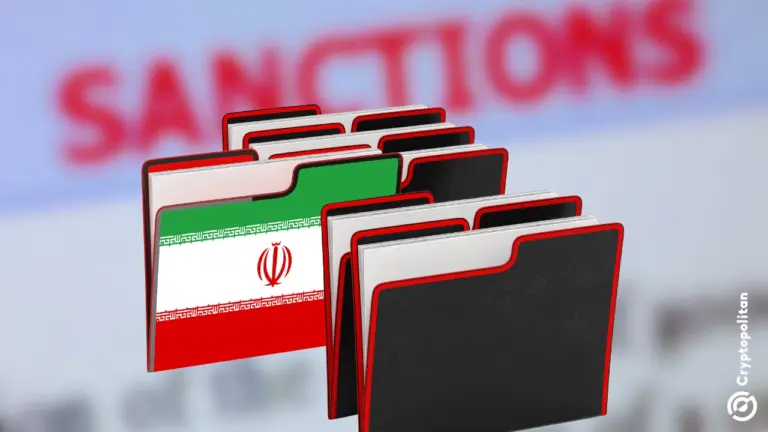
- US-sanctioned Iranian tycoon Babak Zanjani allegedly facilitated around $850 million in crypto transactions on Binance over two years.
- Roughly $425 million is believed to have supported Iran’s military and IRGC operations through his firm Zedcex.
- Iran now holds an estimated $7.7 billion in crypto assets; the US Treasury has frozen nearly $500 million in efforts to disrupt the regime’s use of digital assets to bypass sanctions.
A US-sanctioned Iranian businessman, known to be adept at evading international sanctions, has reportedly been linked to operations using crypto to help Iran finance its armed forces and circumvent sanctions.
Babak Zanjani is believed to be involved in processing finances for the Islamic Revolutionary Guard Corps (IRGC). So far, they have carried out about $850 million in crypto transactions on Binance over the past 2 years using a single trading account.
According to reports, the account has been operational for at least 15 months.
Babak Zanjani tied to major crypto transactions, helping the IRGC
According to internal compliance documents obtained from Binance, in addition to blockchain analysis and information from law enforcement officials, these transactions included both deposits and withdrawals.
As investigators assessed the potential role of an account in the country’s terrorist financing activities, they found that nearly half of those transactions, worth about $425 million, were for the country’s military. Reports said that Zanjani’s network included accounts held by his sister, girlfriend and company director, and were accessed by sharing devices.
The transactions were linked to Zanjani’s crypto business Zedcex, which moved the proceeds from the sale of Iranian oil through banks in Turkey to Binance accounts of its Dubai subsidiary. The transfers were then transferred to other exchanges such as Nobitex in Iran to exchange the funds to rials.
Despite several red flags raised by internal investigators, Binance reportedly proceeded with completing these transactions. These included Iranian involvement and connections, as well as access from Tehran. The main account is still alive.
Binance is under investigation for processing Iranian financial transactions despite promised reforms. Further, there have been other instances not covered by the exchange in which Iran’s central bank transferred $107 million via Binance accounts in 2025, while direct transactions with Binance totaled $260 million between 2024 and 2025.
How did Babak Zanjani get on the US’s sanction radar?
Zanjani initially rose to fame as a sanctions buster through oil transactions that made him rich. In 2013, the United States imposed sanctions on Zanjani for the use of a Malaysian bank in transferring billions of dollars on behalf of the Iranian regime.
Sanctions were suspended in 2016 in the wake of the nuclear agreement but reinstated in 2026 following his role in facilitating financial transfers to the IRGC through crypto exchanges, among other actions related to his management of Zedcex.
Zanjani was tried in Iran and sentenced to death in 2016 for his embezzlement, a sentence that was overturned in 2024. He remains locked in a legal tussle with the Iranian central bank over unpaid loans. In December, he posted wallet addresses on social media and inadvertently revealed details of a broader sanctions-avoidance framework based on Nobitex.
Zanjani describes himself as an “antisanction operator” and an “economic Basij soldier”, publicly endorsing blockchain technology to evade Western financial institutions.
His spokesman denies accusations of money laundering and sanctions evasion through crypto exchanges.
Iran ups crypto strategy amid heightened tensions
Iran holds a significant amount of crypto assets, estimated to be $7.7 billion, to cope with sanctions. The IRGC funnels nearly $3 billion in crypto through digital channels. Among other things, this involves the use of cryptocurrencies for oil trade payments, including payments for shipping tankers through the Strait of Hormuz.
As reported by Cryptopolitan, Iran has launched a new crypto-backed maritime insurance scheme called Hormuz Safe, intended to protect ships transiting the strategically important Strait of Hormuz.
Incepted in mid-May 2026, this Bitcoin-supported initiative aims to serve Iranian shipping businesses and cargo owners moving across this extremely vital energy artery.
As it stands, the DOJ has seized nearly half a billion dollars’ worth of crypto linked to Iran. Warnings have been issued regarding IRGC involvement with crypto. In particular, the USDZ stablecoin created by Iran has been mentioned.
The smartest crypto minds already read our newsletter. Want in? Join them.
Disclaimer. The information provided is not trading advice. Cryptopolitan.com holds no liability for any investments made based on the information provided on this page. We strongly recommend independent research and/or consultation with a qualified professional before making any investment decisions.

Florence Muchai
Florence has been covering for the past 6 years crypto, gaming, tech, and AI news. Her Computer Studies at Meru University of Science and Technology and Disaster Management and International Diplomacy at MMUST amply equip her with language, observation and technical skills. Florence has worked at VAP Group and as an editor for several crypto media houses.









