


LATEST NEWS


Best crypto insights delivered straight to your inbox.
Gold hits yet another new all-time high of $4,800 as Bitcoin crashes to $88,000

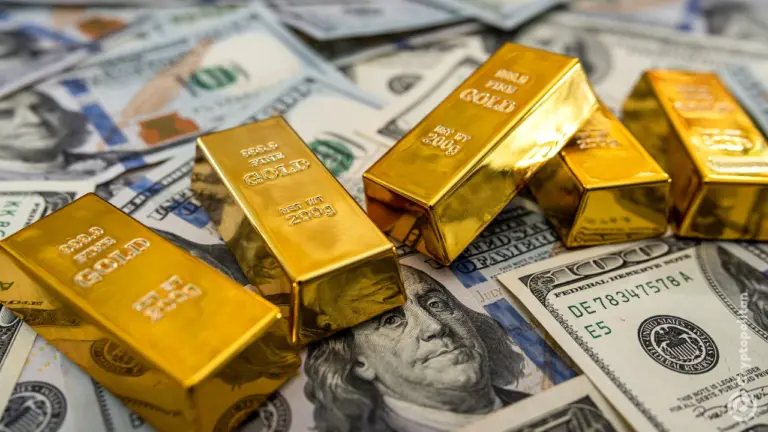

- Gold just smashed to a new record high above $4,800, up +13% YTD, and +92% over the past year.
- Bitcoin broke below $89,000, losing steam with only a +4.90% gain YTD, despite early January strength.
Live Reporting
U.S. stocks tanked on Tuesday as fallout from Donald Trump’s Greenland tariffs deepened. The Dow Jones fell 870 points, or 1.8%, while the S&P 500 lost 2.1% and the Nasdaq dropped 2.4%.
Both the S&P and Nasdaq are now negative on the year, with the S&P down 0.9% YTD and the Nasdaq off 1.2%.
The Cboe Volatility Index (VIX), Wall Street’s main fear barometer, spiked to 20.69, its highest level since November 25, and was still trading above 20 by the close.
At the center of the flight was U.S. Treasurys, which saw sharp yield spikes after investors dumped the debt. The U.S. dollar also dropped, compounding pressure on American assets.
In Europe, AkademikerPension, a Danish pension firm, announced it would exit U.S. Treasurys due to growing concerns around U.S. fiscal health.
In commodities, gold surged to $4,800 per ounce, hitting a new record as the global panic deepened. Bitcoin slipped to $89,389 on Coinbase, after briefly hitting a session low of $88,700.
Silver held steady at $94, still near its all-time high from two days ago. Investors are rotating hard into hard assets as the geopolitical standoff escalates.
Copper prices slid to $12,919 a ton on the London Metal Exchange, down 0.4%, marking the third drop in four sessions.
The metal had just hit a record $13,407 last week, but momentum has flipped as signs of demand destruction emerge in China, the world’s biggest buyer.
Fabricators in China have cut back purchases sharply after the surge, and it’s starting to show. The Yangshan premium, a key gauge of Chinese import appetite, has been slashed in half over the past month, now sitting at its lowest since mid-2024.
Last year, copper surged over 40% as supply problems collided with massive buying tied to the energy transition. In 2026, it kept climbing as mine disruptions dragged on and the U.S. floated new import tariffs, which squeezed availability and drove more buyers into London.
Other base metals also slipped. Aluminum fell 0.7% to $3,136 a ton, while nickel dropped 1.3% to $17,895.
Gold futures pushed to a new all time high of $4,739 per ounce, extending a brutal rally that now has the metal up 81% over the past 12 months, the strongest run gold has ever seen.

Bitcoin slid to $91,525 on Coinbase, continuing a weak stretch that has traders on edge as volatility picks up across markets. Over $83 million in leveraged positions were liquidated. $49.5 million came from Bitcoin longs/
The selloff followed fresh comments from U.S. President Donald Trump, who said tariffs would be imposed on goods from eight European countries until a deal is reached for what he called the “Complete and Total purchase of Greenland.”

Trump’s renewed push around annexing the Arctic island rattled global markets and hit futures hard. Dow Jones futures pointed to a 378-point drop at the open, while S&P 500 futures fell 0.9% and Nasdaq 100 futures were down about 1.1%, signaling a rough start to the session.
Bond markets were hit at the same time. Japan’s 40-year government bond yield jumped to a record high, as investors sold off long-dated debt over concerns that proposed food sales tax cuts could further strain the country’s finances.
The 40-year yield rose more than 5 basis points to 4%, the highest level since the maturity was introduced. Shorter maturities sold off even harder.
The 10-year Japan government bond yield climbed over 6 basis points to 2.3%, the highest since 1999, while the 20-year yield surged roughly 9 basis points to 3.35%.
What to know
Gold has done it yet again. It is now worth $7,800 for the first time in history. Bitcoin stays in the red.
TABLE OF CONTENT
Share this article

MORE … NEWS










DEEP CRYPTO
CRASH COURSE
- Which cryptocurrencies can make you money
- How to boost your security with a wallet (and which ones are actually worth using)
- Little-known investment strategies that the pros use
- How to get started investing in crypto (which exchanges to use, the best crypto to buy etc)