


LATEST NEWS
SELECTED FOR YOU


Best crypto insights delivered straight to your inbox.


Live Reporting
Tuesday’s close brought some relief to a shaken market. After a messy Monday, U.S. stocks bounced, powered by Bitcoin’s 7% recovery and strength in AI-linked tech stocks.
The Dow Jones Industrial Average rose 229 points (+0.5%), the S&P 500 gained 0.4%, and the Nasdaq Composite led the charge with a 0.8% climb, snapping a brief intraday wobble that saw all three indexes flirt with red.
Crypto’s rebound played a major role. Bitcoin’s sharp comeback after Monday’s liquidation chaos helped stabilize sentiment across risk assets. That lift spilled into tech, especially names tied to the AI trade.
Nvidia added nearly 1%, continuing its run as the market’s top AI chip bellwether. But the real standout was Credo Technology, which soared 12% to an all-time high after reporting stronger-than-expected earnings, cementing its spot as an emerging play in AI infrastructure.
Markets chopped around most of the day, with the S&P and Dow briefly slipping negative, and the Nasdaq hovering near flat before staging a late-session push.
Retail traders have been the lifeblood of the 2025 stock rally, but that energy is now fading.
Bitcoin has plunged over 30% since its $126,279 peak in early October, dragged down by a cocktail of rate hike fears, fading AI hype, and pure valuation fatigue.
That same pain is rippling into meme stocks. The Roundhill Meme Stock ETF (MEME), which relaunched October 8, has dropped 35%, moving almost tick-for-tick with Bitcoin’s retreat.
This relationship isn’t random. As John Flood of Goldman Sachs put it: “Crypto under pressure not helping sentiment within the retail community.”
Retail sentiment isn’t dead yet though. According to JPMorgan’s trading desk, despite Monday’s bloodbath, last Friday was the first net selling day by retail in over three months, and that came after a five-month record buying day the Monday before.
The desk cautioned that headlines may look bearish, but there’s no concrete shift in narrative… at least not yet.
Tuesday, tokens tied to President Donald Trump and his family were obliterated in the aftermath of Monday’s crypto wreck.
TRUMP, the official memecoin launched in January, nosedived from a $73.40 peak to just $5.80, according to CoinGecko. That’s a 92% collapse.
WLFI, tied to the Trump-aligned World Liberty Financial, has shed 32% since September’s high, while MELANIA, linked to the First Lady, now trades at $0.12, nearly worthless after peaking earlier this year.
Across the market, traders are moving to the sidelines. Balances of USDT and USDC on exchanges are climbing, signaling capital is being parked, not deployed. Bitfinex analysts said it’s a clear sign of caution.
That caution is everywhere. The Crypto Fear and Greed Index stayed stuck in “extreme fear” on Tuesday, where it’s lingered for three straight weeks. Meanwhile, shares of Strategy, led by Michael Saylor, dropped sharply. Traders worry the firm might be forced to dump Bitcoin.
To calm nerves, Strategy said it’s set aside a $1.4 billion reserve to cover future dividend and interest payments. As of Tuesday, its modified NAV (mNAV) sat at 1.18, according to its website.
Bitcoin clawed back 4%, trading as high as $91,449, while Ether lifted nearly 2.9% to $2,873, following Monday’s bruising wipeout.
That recovery comes less than 24 hours after a violent plunge saw Bitcoin dive 8%, its worst intraday drop in months, triggered by a global wave of risk-off sentiment. Almost $1 billion in leveraged crypto positions were liquidated during the crash, shaking confidence and flattening bulls.
Even now, the bounce looks more like short-covering than conviction. Funding rates for Bitcoin perpetual futures have flipped negative, according to CryptoQuant, a sign traders are still more eager to bet against BTC than load up on long positions.
In fact, Bitcoin’s current surge might be less about buying the dip, and more about shorts getting squeezed. Over just the past hour, about $140 million in short positions have been liquidated, compared to a measly $3 million in longs, per aggregated data.
That dynamic is pushing Bitcoin toward its biggest daily gain since May, but the base remains fragile.
Since peaking in early October, Bitcoin has shed nearly 30%, with nearly $19 billion in leveraged bets erased during the correction.
According to flash estimates from Eurostat, consumer prices in the euro area rose 2.2% year-on-year in November, just a notch above the European Central Bank’s 2% target.
That’s slightly hotter than the 2.1% economists surveyed by Reuters had expected.
The jump was mostly driven by services inflation, which climbed to 3.5% from 3.4% in October.
However, core inflation, which strips out volatile items like food and energy, held steady at 2.4%, matching October’s pace. That means underlying price pressures may be more stubborn than headline numbers suggest.
Despite that, the ECB has kept its deposit rate unchanged at 2% since October, marking the third straight hold since it started trimming rates back in June, when inflation first touched its 2% goal.
That June move ended the ECB’s tightening cycle after last year’s peak at 4%, and now policymakers appear to be in wait-and-see mode heading into year-end.
On the equity front, European stocks were marginally higher by mid-morning London time, though gains were thin. At 9:34 a.m. local (4:34 a.m. ET), the pan-European Stoxx 600 index ticked up 0.16%, with all major national indexes in the green but lacking real momentum:
- France’s CAC 40 rose 0.16%
- Germany’s DAX climbed 0.50%
- U.K.’s FTSE 100 added 0.22%
- Italy’s FTSE MIB jumped 0.58%
- Spain’s IBEX 35 outperformed with a 0.90% gain
In banking, U.K. financial stocks got a small boost after the Bank of England delivered two positive surprises: it reduced capital buffer estimates for banks for the first time in over a decade, and confirmed all major British lenders passed its latest stress tests.
That pushed the FTSE 350 Banks Index up 0.8% in early trade.
U.S. stock futures were treading water Monday night, refusing to commit after a rocky start to the month. Futures tied to the Dow Jones Industrial Average hovered near break-even. S&P 500 futures and Nasdaq 100 futures also sat motionless, digesting Monday’s red close.
All three major indexes snapped a five-day winning streak to start the week, slammed by a pileup of bearish signals: cooling AI euphoria, nervous glances at corporate valuations, and stubborn inflation that just won’t die. The risk-off tone is back. And for now, it’s in charge.
Over in crypto land, Bitcoin tanked 6% on Monday, its worst single-day drop since March, dragging names like Coinbase and Robinhood more than 4% lower.
Even Alphabet, which had soared in November, gave up 1.7%, its biggest slide in weeks. Palantir and Broadcom joined the retreat. Meanwhile, gold prices climbed and Treasury yields edged higher as traders ducked for safety.
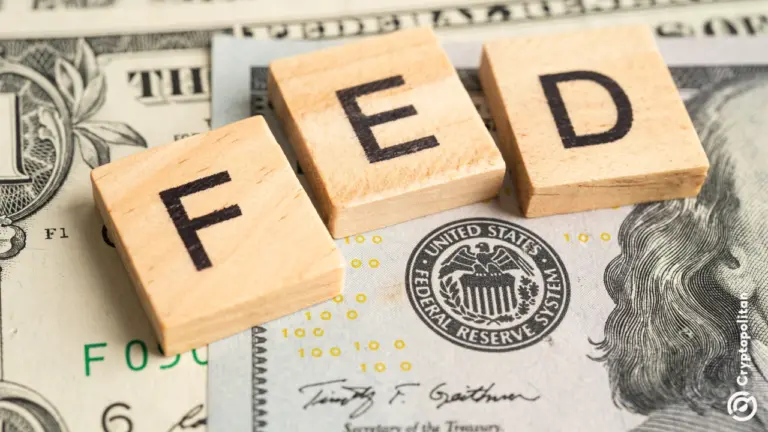
This comes as the Federal Reserve slammed the brakes on Quantitative Tightening (QT), officially ending the multi-year policy on December 1. The Fed’s balance sheet is now frozen at $6.57 trillion, halting its long, slow removal of liquidity from the financial system.
Since the start of QT back in June 2022, the Fed and its central bank peers have sucked $2.4 trillion out of global markets. That liquidity drain helped drive up rates, but also built fragile scaffolding under asset prices and debt.
To make things worse, warning lights are flashing across the economy. One ugly stat: the Cass Freight Index, a barometer of U.S. shipping and logistics, just logged its 33rd consecutive monthly decline. In October, the index dropped 7.8%, the worst reading since the depths of the 2009 recession.
Yet despite the mess, markets are clinging to one hope: a rate cut. Traders are currently pricing in an 87.6% chance the Fed will lower rates at its December 10 policy meeting, according to CME’s FedWatch.
What to know
Stocks stalled, crypto bounced, Trump memecoins crashed, and traders stayed on edge as the Fed ended QT and fear gripped global markets.
TABLE OF CONTENT
Share this article

MORE … NEWS










DEEP CRYPTO
CRASH COURSE
- Which cryptocurrencies can make you money
- How to boost your security with a wallet (and which ones are actually worth using)
- Little-known investment strategies that the pros use
- How to get started investing in crypto (which exchanges to use, the best crypto to buy etc)