


LATEST NEWS


Best crypto insights delivered straight to your inbox.
LIVE: Federal Reserve keeps interest rates unchanged in Kevin Warsh’s first meeting


- The Fed held rates at 3.5% to 3.75%, but nine policymakers now expect at least one increase this year.
- Kevin Warsh removed forward guidance, skipped the dot plot and launched five reviews of how the Fed operates.
- Markets now price a 78% chance of a December hike, while Treasury yields and the dollar climbed and gold fell.
- The Dow, S&P 500 and Nasdaq dropped, while SpaceX lost 4.95% after its strong post-IPO rally.
Live Reporting
U.S. stocks moved sharply lower after the Federal Reserve’s decision. The Dow Jones Industrial Average dropped 544 points, or 1.1%, after setting another intraday record earlier in the session. That marked its third straight day of reaching a new high.
The S&P 500 lost 1.4%, while the Nasdaq Composite fell 1.5%. Microsoft, Meta Platforms, Alphabet and Amazon were among the large technology companies trading lower.
Chipmakers offered some support to the broader market. Intel and Micron Technology rose, helping prevent an even steeper decline.
The reaction also spread to government bonds. The two-year Treasury yield climbed 15 basis points to 4.205% as traders adjusted their rate expectations.
SpaceX shares fell 4.95% on Wednesday, recording their first decline since the company entered the public market on Friday. The stock had climbed roughly 42% from its $135 IPO price during its first few trading sessions.
That early rally lifted SpaceX’s value above Amazon on Tuesday. The company also briefly overtook Microsoft, placing it fourth among the most valuable U.S. companies.
SpaceX ended Tuesday with a $2.66 trillion market capitalization, as investors continued backing Elon Musk’s long-term plans for the business.
Elon wrote on X on Sunday that SpaceX “might be able to reach approximately” $1 trillion in annual revenue by 2030.
The company remains deeply unprofitable. SpaceX recorded a $4.9 billion net loss in 2025 and lost another $4.28 billion during the first quarter of 2026.
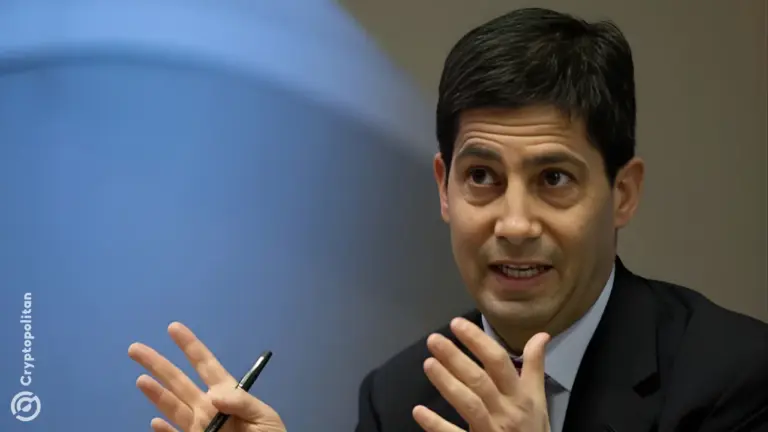
Federal Reserve Chair Kevin Warsh said officials broadly view the U.S. jobs market as steady, while some believe conditions are improving. He said policymakers are paying more attention to the direction of the data over several months than to any single report.
“What’s happening over three or six months matters more than any one data point, any one data release, and I’d say the jobs data has been moving in a good direction.”
Kevin also addressed questions about the future of the Fed’s dot plot, which shows where individual policymakers expect interest rates to go. He said the Federal Open Market Committee has committed to publishing those forecasts and should continue doing so for now.
“But between now and then, I would continue to expect colleagues to submit their SEPs.”
Kevin said that process could change after one of the Fed’s new task forces completes its work. He said a different communications system could be introduced before the end of the year.
Gold swung lower after the rate announcement, dropping by more than 1% at one point on Wednesday. Spot gold was down 0.7% at $4,299.89 an ounce by press time. U.S. gold futures ended the session 0.6% higher at $4,381.40.
Traders raised the probability of a December rate increase to 78%, up from 61% before the Fed released its decision, based on the CME FedWatch Tool.
The U.S. dollar added to its gains after the announcement, increasing the cost of dollar-priced gold for buyers using other currencies. Oil prices also moved higher, keeping concerns about inflation in focus.
Gold is commonly used as protection against rising prices, but higher interest rates can weigh on the metal because it does not pay interest.
Federal Reserve Chair Kevin Warsh, who took office in May, said he has already held three meetings with U.S. Treasury Secretary Scott Bessent.
Kevin said the Fed chair and Treasury secretary traditionally meet every week. He described his talks with Scott as useful, while stressing that decisions on monetary policy remain independent. He added that the central bank still needs to understand what fiscal officials are doing because government policy can affect the wider economy.
When asked whether he had spoken with Trump since taking office, Kevin declined to provide details.
“On the president, I don’t have anything for you.”
The committee also discussed artificial intelligence and productivity. Kevin said AI brings major economic possibilities but also creates risks that policymakers cannot ignore.
He noted that spending on data centers and related infrastructure is already lifting demand and appearing in GDP data. However, the Fed still cannot say with confidence when those investments will translate into stronger production capacity or how large that effect will eventually be.
Kevin was also questioned about the costly renovation of the Fed’s headquarters in Washington. He said the central bank’s inspector general expects to publish a report this summer examining the project’s budget overruns.
The construction dispute became politically charged after the Trump administration launched a criminal investigation involving former Fed Chair Jerome Powell. That investigation has since been dropped.
The Fed’s new policy statement gave investors no clues about where interest rates may go next. During the press conference, Federal Reserve Chair Kevin Warsh was asked whether removing that guidance could make financial markets more volatile.
Warsh said markets work better when investors focus on incoming economic data rather than trying to predict how the Federal Reserve will respond to every new development. He argued that paying closer attention to what is happening in the real economy helps markets make more accurate judgments about future outcomes.
Trump repeatedly pushed Jerome Powell for steep interest-rate cuts while Jerome was leading the central bank. Warsh was later asked whether officials had considered cutting rates at this week’s meeting.
“There was one proposal on the table. There was no discussion of any other proposals,” he said, adding that discussion of the proposal was limited and that policymakers were unanimous in their decision.
Even so, Warsh said officials still had what he described as “a good family fight” during their two days of discussions.
Federal Reserve Chair Kevin Warsh confirmed that he left his interest-rate forecast out of the central bank’s latest quarterly projections.
“I did not submit a dot. For me, it’s not helpful in the conduct of policy.”
Kevin said the Fed will likely examine how it communicates with the public before the end of the year. That review is expected to cover press conferences, rate projections, policy meetings, transcripts and meeting minutes.
“I suspect by year end, as I mentioned in my opening statements, there’ll be a review about communications. Broadly, press conferences, dots, meetings and the like. Transcripts, minutes. This will be part of that.”
Kevin described press conferences as a useful channel for reaching households and companies, but said they should only be held when the Fed has something meaningful to announce.
“When you have one, you want to make sure you have something important to say. Today, I think we had something important to say about our commitment to deliver on price stability, our commitment to rethink practices.”
He said further changes are expected, and some could be significant enough to require their own press conferences.
Kevin was also asked about the longer-term inflation outlook. He repeated part of the Fed’s policy statement before giving a direct response.
“That’s what we’re prepared to say about inflation. But the commitment to deliver is strong, unanimous and unambiguous. And that’s, I think, an important message we’ve missed for five years. And we’re going to fix that.”
Federal Reserve Chair Kevin Warsh has started his first press conference since taking charge of the central bank.
“This week’s FOMC meeting exemplified the very best of the Fed’s traditions: rigorous debate, open mindedness, commitment to mission, responsibility, and accountability for performance.”
Kevin said the leadership change gives the Fed a chance to examine how it works and identify changes that could strengthen monetary policy.
“A change in leadership is a natural and timely opportunity to reaffirm its mission, to review current practices and to consider whether those practices best meet our objectives.”
The Fed’s first policy statement under Kevin was noticeably shorter than those released during Jerome Powell’s tenure.
“It’s a bit shorter, a bit simpler, and it dispenses with some older language. That statement just gives you the facts as best we can judge it.”
“Absent also is so-called forward guidance, which we agreed was not well suited to the current policy conjuncture.”
Kevin also announced five task forces that will review major parts of the central bank’s work.
Their focus areas will include Fed communications, the size and structure of its balance sheet, how officials use existing economic data, productivity and employment during a period of rapid change, and the framework used to assess inflation.
“For each of these independent task forces, I’m enlisting some of the very best minds, both inside and outside the economics profession.”
Fed employees will support the groups as they carry out their reviews.
“My expectation is the task forces will begin work in the next couple of weeks, and we’ll start to get some more information from them, some more framing of how they see things, starting in the fall. And hopefully most, if not all of them, concluding by year end.”
The Federal Reserve kept its benchmark interest rate at 3.5% to 3.75% in Federal Reserve Chair Kevin Warsh’s first meeting, with all 12 voting members supporting the decision. The central bank also reaffirmed its plan to keep enough reserves available across the banking system as it works toward maximum employment and stable prices.
Officials said the U.S. economy continues to grow at a solid pace, even as uncertainty remains high partly because of the conflict in the Middle East. The statement noted that business investment and productivity are strong, while hiring has kept up with growth in the labor force. The unemployment rate has also shown little movement.
Inflation remains above the Fed’s 2% target, with officials pointing to supply disruptions that have pushed up prices in areas such as energy. The central bank said it remains committed to restoring price stability.
The decision to hold rates was widely expected, but the Fed’s latest projections revealed a major change in how policymakers view the rest of the year. Nine of the central bank’s 19 policymakers now expect at least one rate increase in 2026, compared with none when the projections were last released three months ago.
Six of those nine officials believe borrowing costs may need to rise by more than a quarter percentage point before the end of the year. Eight policymakers expect rates to remain where they are, while one supports a single cut. Another official did not submit a forecast for the policy rate.
The shift suggests that nearly half of the committee is no longer convinced that simply keeping borrowing costs unchanged will bring inflation back under control. The sharp rise in oil prices following the Iran war has added to concerns that energy costs could keep inflation elevated for longer.
Kevin’s impact was also evident from the format and language of the policy statement. For once, there were no hints as to what the direction of rates would be for the future, making it unclear whether the Fed intends to raise interest rates, lower them or just keep them at their current level.
The new, concise format dealt largely with the interest rate decision, the reserves system, and the economic assessment by the Fed. It was similar to statements released during the reign of the former chairman Alan Greenspan.
Kevin was appointed earlier this year by Trump, who expected him to support the interest-rate cuts the president has repeatedly demanded. However, the new projections show that a growing share of the committee is now considering tighter policy instead.
The statement also gave more attention to themes Kevin has stressed since taking over, including the strength of capital spending and productivity growth. Officials linked part of the current inflation pressure to sector-specific supply shocks, particularly the rise in energy prices.
What to Know
The Fed stayed on hold, but its tougher rate outlook and Kevin’s early changes triggered a sharp reaction across markets.
TABLE OF CONTENT
Share this article

MORE … NEWS










DEEP CRYPTO
CRASH COURSE
- Which cryptocurrencies can make you money
- How to boost your security with a wallet (and which ones are actually worth using)
- Little-known investment strategies that the pros use
- How to get started investing in crypto (which exchanges to use, the best crypto to buy etc)