





- Ethereum gas fees have dropped to five-year lows, but this means more ETH in circulation, which might hurt prices.
- Aave’s demand for collateralized loans tanked in August after a massive sell-off, reversing months of steady inflows.
- The much-hyped AI crypto token merger isn’t catching on with traders, leading to a sharp drop in trading volumes and concerns over its future.
Ethereum’s gas fees are in the toilet, hitting levels we haven’t seen in five years. That’s right, those transaction fees that used to make your wallet cry are now way down, and it’s all thanks to a combination of increased layer 2 activity and the Dencun upgrade back in March.
This upgrade slashed fees on layer 2 networks, making transactions cheaper and quicker. Now, if you’re thinking that the lower gas fees are just a footnote, think again.
This change is transforming things up across the entire Ethereum network, especially as the growing supply of ETH has some real implications for where the price might head next.
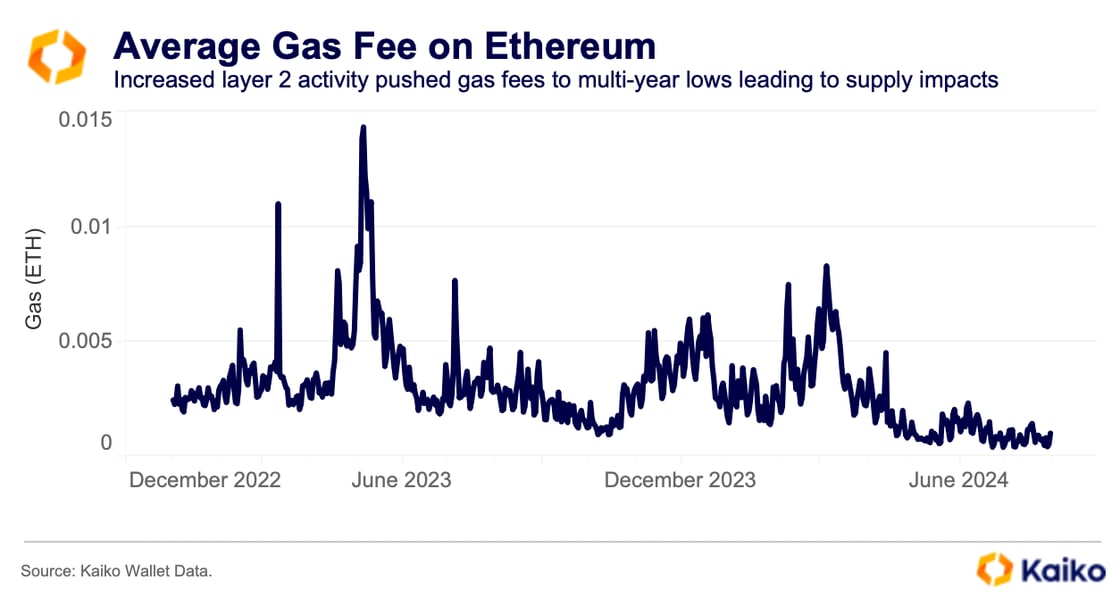
With fees being lower, you’d think the whole Ethereum ecosystem would be celebrating, but that’s not the case.
The increase in supply, driven by lower fees, might just be enough to keep a lid on any major price action, even as other factors, like those spot ETH ETFs, try to push things higher.
Aave’s collateralized loans hit a wall
August hasn’t been kind to Aave V3, the biggest DeFi lending protocol by total value locked (TVL). The demand for collateralized loans on Aave has cooled off, and it’s not hard to see why.
Over $260 million got liquidated as crypto prices took a nosedive, starting with a broad market sell-off on August 5th. Aave had been riding high between May and July, with borrowings outpacing repayments.
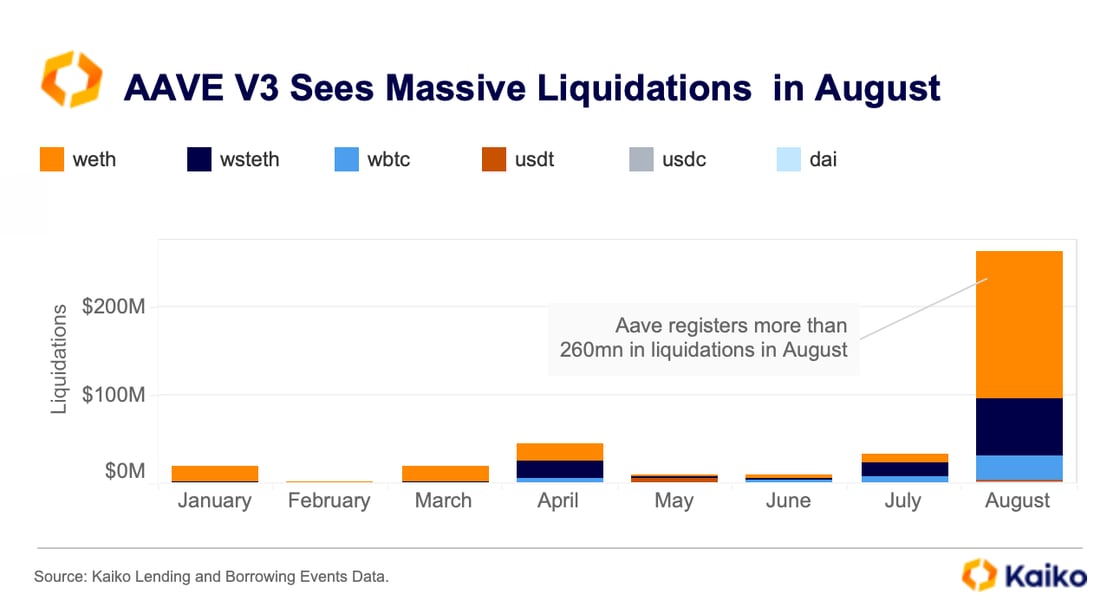
In July alone, stablecoin borrowing volumes hit a yearly high of $1.4 billion. But then came August, and everything went to hell.
The trend reversed, and now we’re looking at more than $200 million in net outflows since the beginning of the month. It’s like Aave’s borrowers collectively decided to hit the panic button.
AI crypto merger fails to spark interest
You’d think merging three of the top AI-focused crypto projects—Fetch.AI, SingularityNET, and Ocean Protocol—would get people excited, right? Wrong.
The merger, which kicked off last month, was supposed to create a new token called Artificial Super Intelligence (ASI).
This grand plan was meant to develop a new AI platform that wasn’t controlled by Big Tech. Sounds good on paper, but the market isn’t buying it.
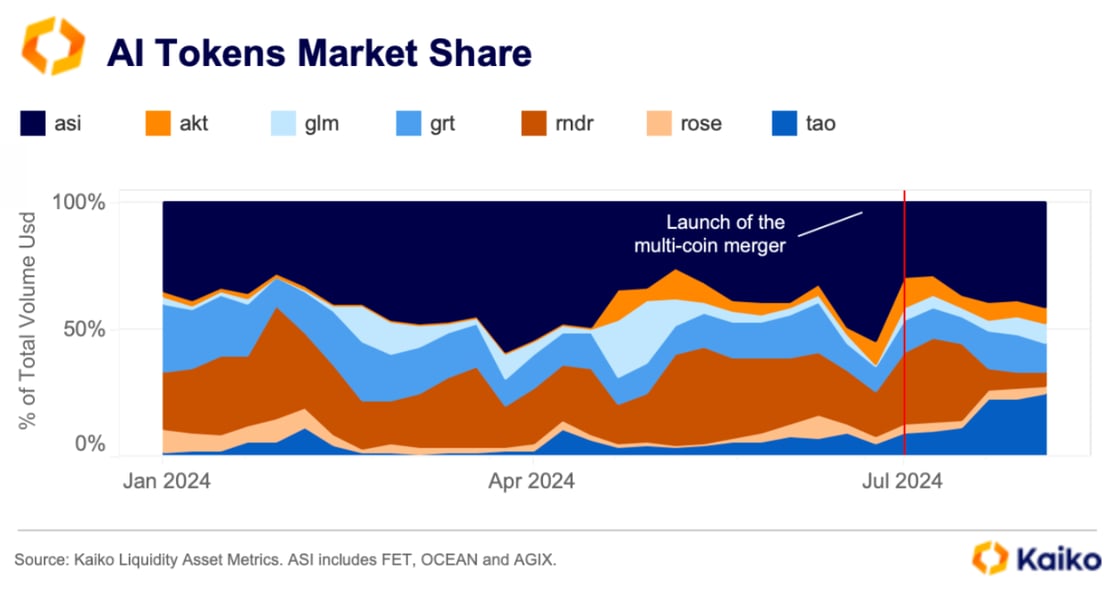
What’s worse, these AI-related tokens aren’t even showing strong correlations with Nvidia (NVDA), the chipmaker that’s seen as a bellwether for the AI boom. The correlation between these tokens and Nvidia has slipped to around 0.1-0.2, down from 0.3-0.4 in March.
Meanwhile, their correlation with Bitcoin remains strong, sitting between 0.5 and 0.7. In other words, traders are treating these tokens like high-risk crypto bets, not the next big thing in AI. So much for that decentralized AI revolution.
Interestingly, Ethereum’s share of trade volume on Japanese exchanges briefly jumped to over 30% on Saturday evening, right before the market went into full panic mode.
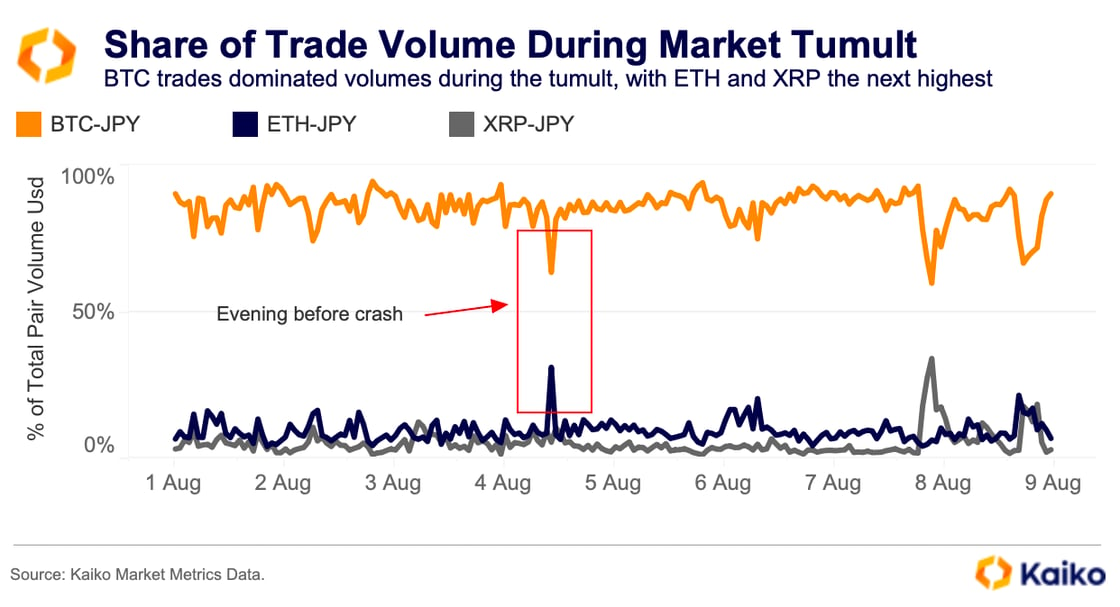
What’s behind all this chaos in the Japanese markets? A lot of it ties back to the Japanese Yen carry trade, where traders borrow Yen at low rates and reinvest it in higher-yielding assets like US Treasuries.
When the Bank of Japan hiked rates, this trade lost its appeal, and the fallout was swift. The carry trade works best when markets are calm, but the moment volatility kicked in, traders started scrambling to unwind their positions, leading to the massive sell-off we saw on August 5th.
The smartest crypto minds already read our newsletter. Want in? Join them.
Disclaimer. The information provided is not trading advice. Cryptopolitan.com holds no liability for any investments made based on the information provided on this page. We strongly recommend independent research and/or consultation with a qualified professional before making any investment decisions.

Jai Hamid
Jai Hamid has been covering crypto, stock markets, technology, the global economy, and the geopolitical events that affect markets for the past 6 years. She has worked with blockchain-focused publications including AMB Crypto, Coin Edition, and CryptoTale on market analyses, major companies, regulation, and macroeconomic trends. She has attended London School of Journalism and thrice shared crypto market insights on one of Africa’s top TV networks.









