






Can this ‘Digital Camouflage’ shirt hide you from AI surveillance cameras?

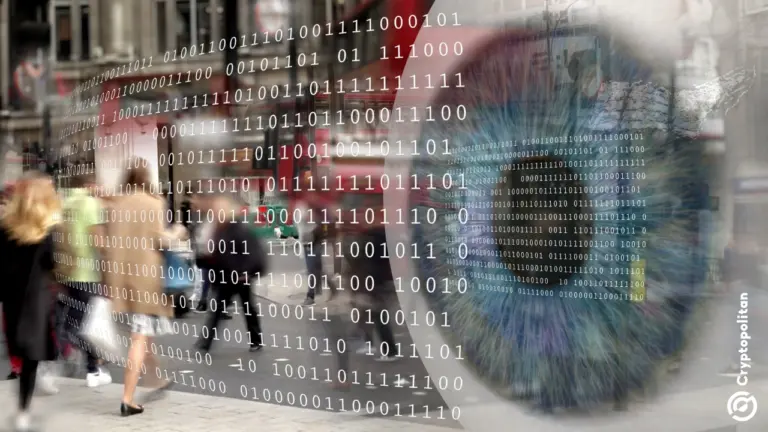
- Simon Weckert has released Digital Camouflage, a patterned shirt that stops AI object-detection cameras from recognizing the wearer as a person.
- The shirt was released in response to new AI surveillance at Berlin’s Kottbusser Tor.
- It arrives amid a broader 2026 backlash against camera networks like Flock in the US.
Berlin artist Simon Weckert has built a button-up shirt called Digital Camouflage that AI surveillance cameras fail to register as a human being.
The creation of the garment is a direct response to the AI-powered video system switching on this month at the city’s Kottbusser Tor transit hub.
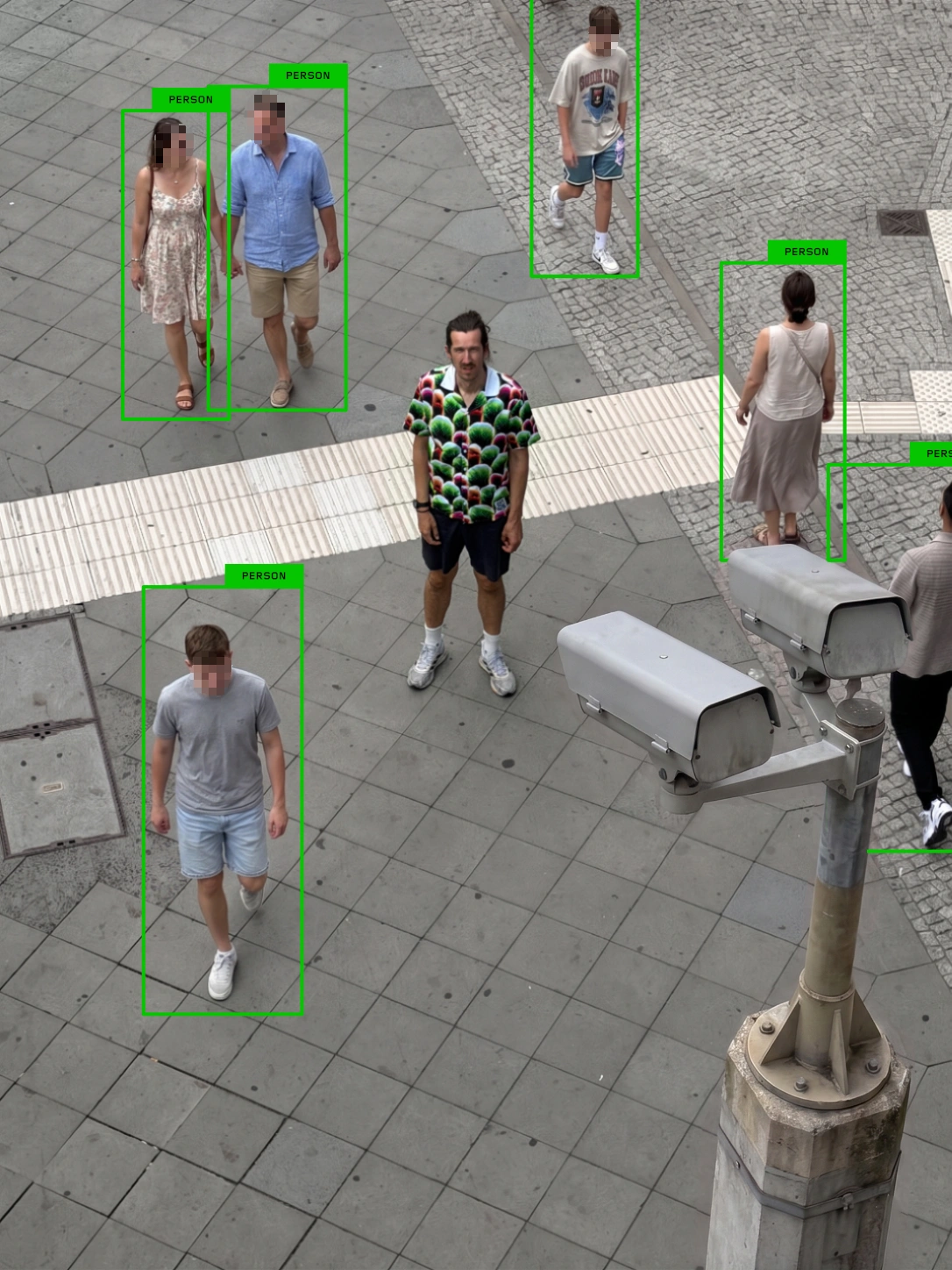
How can a shirt protect you from surveillance?
Simon Weckert, an artist from Berlin has released a shirt called Digital Camouflage, which can reportedly reduce an object-detection software’s confidence in recognizing a human being.
Weckert stated that these systems never actually learned what a person is, and only learned what people tend to look like across millions of training photos; edges and texture in the early layers, then the head-and-shoulders outline and limb proportions deeper in.
Digital Camouflage exploits that training method with a loud tangle of pink, orange, and green shapes.
Weckert explained that the saturated colors light up a network’s first layers while the overlapping forms distort the body’s outline to the point where the detector cannot stitch the pieces back into a single figure.
To a human, the shirt looks like a hypnotic Hawaiian print, but to surveillance models, it reads as nothing.
Weckert built the pattern through an “adversarial loop,” in which he would generate a candidate print, show it to a detector, measure how sure the software still was that it saw a person, then adjust and repeat until he got satisfactory results.
He reportedly used a generative method labeled TC-EGA (Toroidal-Cropping-based Expandable Generative Attack) to run those rounds and tested the results against YOLO, an open-source, real-time detection system built on the same class of technology behind many commercial surveillance products.
However Weckert clarified that the shirt was not engineered to beat one particular government camera, but to ask how much trust a system deserves if cheap fabric can defeat it.
On his own site, he stresses the shirt is “not a promise of anonymity” and makes no claim about any specific deployment, precisely because outsiders cannot test those systems. The garment sells for roughly $88, with a cut of each sale going to digital civil-rights groups.
Why are people suddenly looking for protection from surveillance?
Weckert’s website explains that cameras, which he calls behavior scanners, are set to be installed at Kottbusser Tor, a busy U-Bahn station in Berlin’s Kreuzberg district. The software is meant to sort passers-by into “normal” and “suspicious.” He believes that three more Berlin locations are next in line.
In the United States, Texas Governor Greg Abbott ordered state agencies on a Thursday night to stop funding Flock Safety, whose license-plate readers number more than 120,000 across 49 states. Republican Senator Josh Hawley also opened an investigation into how the company handles captured data.
Flock Safety’s license-plate readers have received significant backlash following reports of law enforcement officers severely abusing the system for personal purposes like tracking ex-girlfriends, spouses, and romantic rivals.
In one extreme case, a Kentucky officer accessed the Flock system approximately 2,000 times to monitor his former partner’s movements. Another officer in Georgia, who was also a police chief, conducted over 600 searches of his ex-girlfriend and her daughter before later taking his own life while he faced charges for stalking and misuse of police equipment.
The shirt is not Weckert’s first attempt at fighting back against the system or sending a message. Back in 2020, he dragged a wagon of 99 phones through Berlin to fake a Google Maps traffic jam, showing that AI-driven systems are easily manipulated.
The smartest crypto minds already read our newsletter. Want in? Join them.
FAQs
Who created the Digital Camouflage shirt and why?
Berlin-based artist and technologist Simon Weckert created it in response to the AI video surveillance planned for Berlin's Kottbusser Tor, aiming to question how much trust such systems deserve if a simple garment can defeat them.
How does the shirt hide people from AI cameras?
Its saturated colors and overlapping shapes form an adversarial pattern that overloads a detection network's early layers and breaks the body's outline, so the software can no longer bind the parts into a single human figure, according to Weckert's explanations.
How much does it cost and does it guarantee anonymity?
The shirt sells for about $88, and Weckert states on his site that it is not a promise of anonymity and makes no claim about defeating any specific government surveillance system.

Hannah Collymore
Hannah is a writer and editor with nearly a decade of blog writing and event reporting experience in the crypto space. At Cryptopolitan, Hannah contributes to the news page, reporting and analyzing the latest developments in DeFi, RWA, crypto regulation, AI and frontier tech industries. She graduated from Arcadia university with a degree in Business Administration.









