






Big banks shut out crypto, says OCC, as it hands crypto firms charters of their own

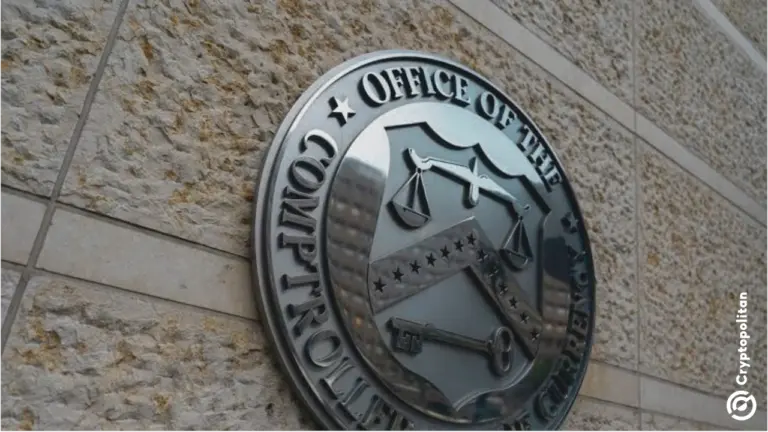
- The OCC’s debanking report found that the nine largest US banks restricted services to crypto and other lawful industries from 2020 through September 2025.
- The agency did not give any specific crypto examples of and could not measure the scale of the restrictions.
- The same agency is simultaneously approving national trust charters for crypto firms.
The Office of the Comptroller of the Currency (OCC) said Wednesday that the nine largest U.S. banks restricted services to crypto firms and other lawful businesses between 2020 and September 2025.
Meanwhile, the OCC keeps granting crypto firms national bank charters of their own.
Did U.S. banks restrict services to crypto companies?
The Office of the Comptroller of the Currency (OCC) released a report stating that some U.S. banks ran reputation risk policies that lacked clear, risk-based standards and ended up penalizing customers over their beliefs or line of work after reviewing nearly 100,000 complaints and roughly 420,000 pages of documents pulled from JPMorgan Chase, Bank of America, Citibank, Wells Fargo, U.S. Bank, Capital One, PNC, TD Bank and BMO.
The sectors that drew restrictions included the oil and gas sector and coal, firearms, tobacco, private prisons, and digital assets.
At a press conference in Lexington, Kentucky, Comptroller Jonathan Gould called the findings “irrefutable evidence” that the country’s biggest banks had “denied, debanked and discriminated against customers and lawful businesses.”
The review was ordered under President Trump’s Executive Order 14331, which was signed in August 2025.
Congressman Andy Barr and representatives from the state’s coal and firearms industries were also at the press conference.
The 47-page document lists digital assets as a restricted sector but offers no specific crypto cases. The OCC simply says that banks limited services to crypto “issuers, exchanges, or administrators.” It also often cited financial crime concerns.
The agency admitted it could not measure how widespread the practice was. Gould spent most of his remarks on coal and firearms, where the report details how banks cited negative press and public pressure rather than financial risk.
There are cases of banks restricting service to companies, but so far none have involved crypto. For instance, PNC declined a credit line to a media company in 2021 due to its conservative owners. Capital One turned away a gun rights group and organizations backing abortion rights. JPMorgan repeatedly refused a conservative retailer between 2021 and 2023, then got rid of internal records of the political notes.
Trump sued JPMorgan and chief executive Jamie Dimon in January, alleging his accounts were closed for political reasons.
What is the OCC granting crypto companies?
In December 2025, the OCC conditionally approved five national trust bank charters, including applications from Ripple, BitGo, Fidelity Digital Assets, Paxos and First National Digital Currency Bank.
These trust charters allow a firm to hold and manage client assets and settle payments, but it cannot take deposits or make loans. The charters also do not carry FDIC insurance or automatic Federal Reserve access.
Gould has said the agency responded to 40 new-bank charter applications in roughly 18 months, with 23 tied to digital assets, which is eight times the volume of the prior four years. The increase in activity comes after the enactment of the GENIUS Act on July 18, 2025.
Notably, the OCC was sued earlier in October by the Independent Community Bankers of America. Their argument is that the regulator overstepped its authority by giving crypto firms bank-like legitimacy without full bank rules.
Senator Elizabeth Warren raised the same concern in a May 18 letter, saying the OCC had cleared at least nine crypto trust charters since December 2025 and calling the recipients “effectively crypto banks” dodging the obligations of real ones. The OCC counters that its rules neither expanded nor narrowed its chartering powers.
Don’t just read crypto news. Understand it. Subscribe to our newsletter. It's free.
FAQs
Which banks did the OCC name in its debanking report?
The report covered the nine largest national banks the OCC supervises: JPMorgan Chase, Bank of America, Citibank, Wells Fargo, U.S. Bank, Capital One, PNC, TD Bank and BMO.
Did the report prove banks debanked crypto firms?
It listed digital assets among restricted sectors and described limits on crypto issuers, exchanges and administrators, but it gave no specific crypto cases and said it could not quantify the full extent of debanking.
How many crypto firms has the OCC granted charters to?
Senator Elizabeth Warren said the OCC approved at least nine national trust charters for crypto companies since December 2025, and Gould said the agency received 40 new-bank applications in about 18 months, 23 of them tied to digital assets.
Disclaimer. The information provided is not trading advice. Cryptopolitan.com holds no liability for any investments made based on the information provided on this page. We strongly recommend independent research and/or consultation with a qualified professional before making any investment decisions.

Hannah Collymore
Hannah is a writer and editor with nearly a decade of blog writing and event reporting experience in the crypto space. At Cryptopolitan, Hannah contributes to the news page, reporting and analyzing the latest developments in DeFi, RWA, crypto regulation, AI and frontier tech industries. She graduated from Arcadia university with a degree in Business Administration.









