






China downplays record $1.2T trade surplus, opens domestic market to partners

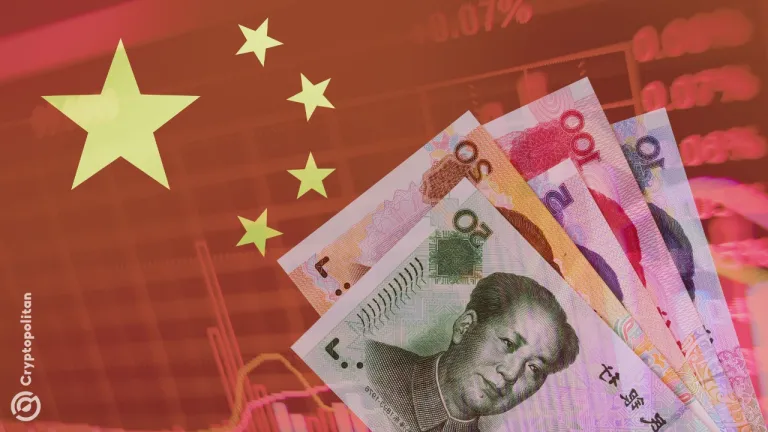
- Chinese Vice Premier He Lifeng told Davos leaders, “We never seek a trade surplus” despite China’s record $1.2 trillion gap.
- A fragile one-year trade truce between the US and China holds after five negotiation rounds last year.
- China hit its 5% growth target driven by exports, but faces domestic troubles, including property decline and deflation.
Chinese Vice Premier He Lifeng pushed back against criticism of his country’s trade practices during a Tuesday address at the World Economic Forum in Davos, offering potential market access to tackle trade imbalances.
He, who handles economic policy and trade negotiations for China, spoke to business executives and political figures gathered in Switzerland, attempting to calm worries about the flood of goods coming from the manufacturing giant.
Last year, China recorded a $1.2 trillion trade surplus, as reported by Cryptopolitan earlier. Yet, He insisted his country views itself as a commercial partner rather than a competitor.
“We never seek a trade surplus,” He told the audience as reported by Bloomberg. “On top of being the world’s factory, we hope to be the world’s market too.”
The vice premier’s message stood in stark opposition to recent warnings from Donald Trump, who threatened severe tariffs on French wine after President Emmanuel Macron declined to support his peace proposal.
He painted China as a supporter of cooperation, open trade and working together internationally, repeating arguments Beijing frequently makes.
“The world must not return to the law of the jungle where the strong prey on the weak,” he stated. “China’s development presents an opportunity, not a threat to the world economy.”
Fragile peace holds between economic powers
He was among the Chinese officials who participated in discussions with the United States last year aimed at reducing friction after Trump launched a tariff battle. The negotiations with the American team, headed by Treasury Secretary Scott Bessent and Trade Representative Jamieson Greer, resulted in a temporary agreement last October following five rounds of talks.
The one-year deal has lowered tensions between the two largest economies globally, though Trump’s recent moves in nations friendly with China, including Venezuela and Iran, could challenge the delicate truce.
For now, the agreement remains intact. President Xi Jinping and Trump plan to meet four times during the year, with an April summit potentially making Trump the fifth leader from a Group of Seven nation to visit China within six months.
At the forum, He urged China and the United States to take advantage of chances to work together for mutual benefit. Without directly naming technology restrictions imposed on Beijing, he mentioned China frequently wants to purchase foreign products, but “others don’t want to sell.”
“Trade issues often become security hurdles,” he said.
However, suggesting warming ties with America, the Trump administration has moved toward permitting Nvidia Corp. to sell more sophisticated chips to China while still blocking its most advanced offerings.
Under former President Joe Biden, the United States had worked with allies to limit Beijing’s access to advanced semiconductors considered important for its military ambitions.
He’s trip to Switzerland happens as America sends its largest ever group to the forum. Trump will address attendees on Wednesday, joined by Bessent and Secretary of State Marco Rubio.
Economic growth masks deeper problems
China’s economy reached the official target of around 5% growth last year, based on data released Monday. Although exports have driven the world’s second-largest economy, its extended real estate decline and dropping investment are limiting the country’s demand for imports.
Falling prices domestically also caused the yuan to lose value when adjusted for inflation, making Chinese goods more attractive internationally.
This situation is creating concerns overseas as China sends exports to Africa, Latin America and other regions, with Macron describing it as “life or death” for European manufacturing.
He said China plans to develop its consumer sector as a major driver of economic growth by increasing incomes and spending at home.
Officials are working toward making China “a consumption powerhouse on top of a manufacturing powerhouse,” he explained.
The country’s economic progress primarily comes from “reform and opening up and innovation, rather than so-called government subsidies,” according to He.
Don’t just read crypto news. Understand it. Subscribe to our newsletter. It's free.
Disclaimer. The information provided is not trading advice. Cryptopolitan.com holds no liability for any investments made based on the information provided on this page. We strongly recommend independent research and/or consultation with a qualified professional before making any investment decisions.

Noor Bazmi
Noor Bazmi contributes to Cryptopolitan news team equipped with a Media Studies degree. Noor covers news on blockchain, cryptocurrency, artificial intelligence, Big Tech, EV markets, global economics, and government policy shifts. She is taking studies in marketing to connect with global audiences.









