






Canada leads the G7 in peer-to-peer crypto as Asia remittances jump 141%


- Chainalysis ranked Canada the G7’s leading peer-to-peer crypto economy.
- Crypto remittances from the country to India, China and the Philippines are rising 141% to $2.36 billion in the year to June 2026.
- Canada’s large immigrant population is turning to stablecoins and Bitcoin to cut the cost of sending money home.
Canada has been named as the foremost peer-to-peer crypto economy amongst the Group of 7 nations by blockchain analytics firm Chainalysis.
This comes in light of an increase in remittance-sized transfers from Canada to India, China, and the Philippines. Those transfers went up by 141% year-over-year to $2.36 billion from July 2025 to June 2026.
The report is of particular importance to the millions of Canadians who send funds to family members overseas. This is a demographic that has turned to routing payments using cryptocurrencies as opposed to banks and wire services.
Why Canada leads the G7 on peer-to-peer crypto
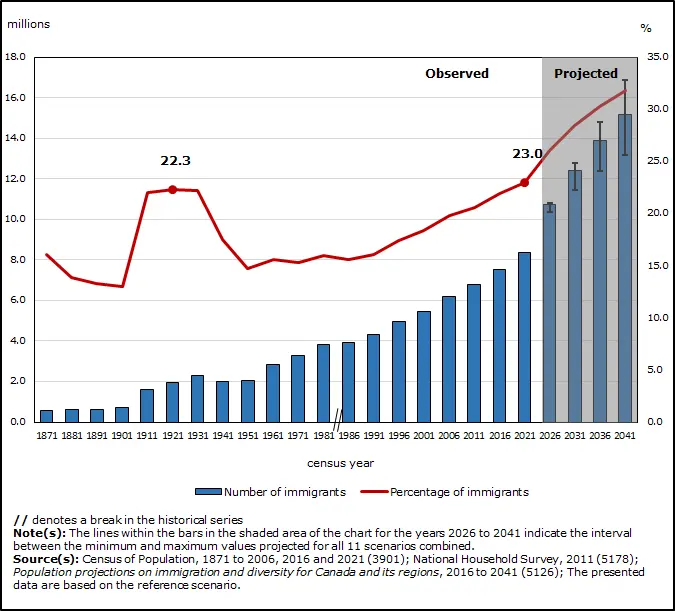
Canada sits on top for two main reasons: the country has a vast and growing immigrant population and conventional money transfers have become more expensive. It also has the largest share of foreign-born residents (~23%) among the G7 nations.
In 2021 alone, over 8.3 million people were regarded as landed immigrants or permanent residents, the largest proportion in the nation since Confederation.
“Remittance corridors to India, the Philippines, Nigeria, Pakistan, and China are heavily used,” Morva Rohani, executive director of the Canadian Web3 Council, said in the report.
Inside the India, China and Philippines corridors
India, China and the Philippines received around $2.36 billion in transfers in approximately 3.56 million transactions. That is an average of $663 per transfer. Transfers from Canada to the Philippines peaked at $61.04 million across 73,564 transactions, a 28% increase in value and a 34.7% increase in the number of transactions.
The report covered P2P transfers in Bitcoin and stablecoins above the $10,000 mark. Head of research, Eric Jardine, stated that the firm made a conscious effort to ignore the smallest payments to avoid “omitting real remittance value.”
Stablecoins gain on the order book
Based on the report, dollar-pegged stablecoins have taken up a sizeable chunk of Canadian crypto trading. Stablecoins accounted for 44% of Canadian dollar-based order book volume in June, a 30% increase from the previous year.
Based on a World Bank estimate cited in the report, sending money from Canada costs an average of 6.7%, though the firm stated that low-cost blockchain settlement fees do not take into account currency conversion and cash-out costs.
Also, Canada’s domestic P2P activity has gone in the same direction as its temporary visa-holder population since mid-2021, even though the link remains correlational and not causal.
Canada’s place in the global picture
Canada’s increase in remittances is only one piece of a larger stablecoin puzzle. From June 2025 to June 2026, Global cross-border stablecoin transactions increased by 77.5% to $220.3 billion.
Canada sits in the top ten globally in the firm’s 2026 Global Crypto Adoption Index. The index ranks countries on service flows, domestic peer-to-peer activity, cross-border flows, and on-chain balances.
The smartest crypto minds already read our newsletter. Want in? Join them.
FAQs
How much did Canada's crypto remittances to Asia grow?
Remittance-sized crypto transfers from Canada to India, China and the Philippines rose 141% year-over-year to $2.36 billion across 3.56 million transactions in the 12 months ending June 2026, according to Chainalysis.
Why is Canada the G7's strongest peer-to-peer crypto economy?
Chainalysis pointed to Canada's large foreign-born population, about 23% of residents per Statistics Canada, and the high cost of traditional remittance services, which the World Bank estimates at an average of 6.7% when sending money from Canada.
What did the Chainalysis report cover?
The analysis tracked Bitcoin and stablecoin transfers above $10,000 moving to and from personal wallets, and formed part of the firm's 2026 Global Crypto Adoption Index, which ranked Brazil first and placed Canada in the global top ten.
Disclaimer. The information provided is not trading advice. Cryptopolitan.com holds no liability for any investments made based on the information provided on this page. We strongly recommend independent research and/or consultation with a qualified professional before making any investment decisions.

Hannah Collymore
Hannah is a writer and editor with nearly a decade of blog writing and event reporting experience in the crypto space. At Cryptopolitan, Hannah contributes to the news page, reporting and analyzing the latest developments in DeFi, RWA, crypto regulation, AI and frontier tech industries. She graduated from Arcadia university with a degree in Business Administration.









