





Bolivia studies letting USDT circulate alongside the boliviano and dollar

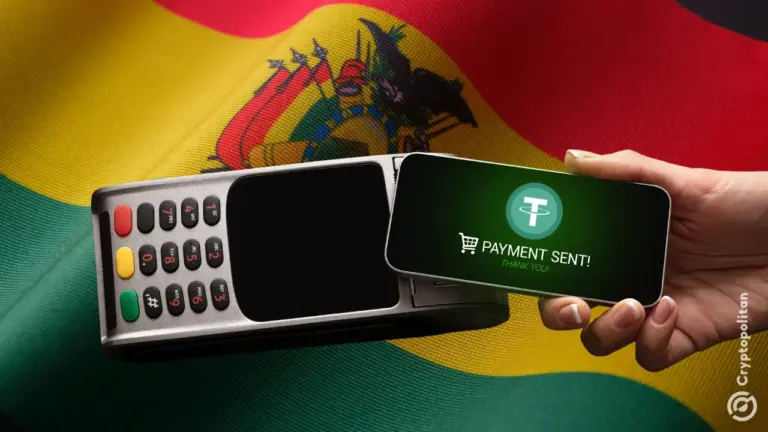
- The Bolivian government is evaluating whether to include Tether’s USDT as an official payment option alongside the local boliviano and the US dollar.
- USDT has surged as a way for citizens to bypass dollar shortages, with several major banks and businesses already adopting it for services and sales.
- Before full official approval, the government must address concerns regarding anti-money laundering standards.
Bolivia is considering adding Tether’s USDT stablecoin to its official payments system. Economy Minister José Gabriel Espinoza confirmed today that the government is looking into whether USDT could be approved as a payment option, along with the boliviano and the US dollar.
Speaking at a recent press conference, Espinoza shared that the proposal covering banks, digital wallets, and payment providers is still under review. However, USDT does not have official rules or legal-tender status as things stand.
“We are working on and technically evaluating the possibility of including USDT in the Bolivian payment system, so that it circulates as just another currency, like the dollar, like the Bolivian boliviano,” Espinoza said, describing the goal as letting the token move through the economy “as one more currency.”
Why does Bolivia need USDT?
For many Bolivians, this is already a real concern. Because of the scarcity of physical US dollars, many people started using USDT to protect their savings, pay for imports, and send remittances without the need for cash or traditional banks.
As such, if USDT becomes an official payment option, these transactions would be regulated and part of the formal Bolivian financial system.
This change comes after the central bank ended its ban on crypto transactions in June 2024. According to central bank data, crypto transaction volumes rose from $46.5 million in the first half of 2024 to $294 million by 2025 (a 630% increase). Earlier this year, Bolivia also moved from a fixed dollar peg to a floating exchange rate, reflecting its shift in financial policy.
President Rodrigo Paz Pereira, who took office last November, has said his administration wants digital assets to have a bigger role in Bolivia’s banking system. The plans go beyond payments and include savings accounts and loans linked to digital tokens.
Banks have already started incorporating these USDT services. In October 2024, Banco Bisa launched USDT custody.
In April, State-owned Banco Unión began letting customers buy USDT through its Yasta wallet, and Banco FIE opened a ‘Cuenta Cripto’ for buying and selling USDT that same month. Car dealerships are also accepting USDT.
Last September, Tether’s CEO posted that Toyota, BYD, and Yamaha dealers in Bolivia were now taking USDT for vehicle sales.
Still waiting for the all-clear
There are still many challenges before any approvals can happen though. For one, Bolivia remains on the Financial Action Task Force grey list, which reflects international concerns about weaknesses in anti-money-laundering controls.
If USDT is to be added to the official payments system, the government will need to put stronger safeguards in place to prevent any issues.
Analysts also pointed out that the proposal would not make USDT (or stablecoins) the legal tender instead of the boliviano.
Instead, it would allow regulated banks offer crypto-related services while businesses would be able to choose whether they accept USDT or not. There are also several concerns around stablecoin liquidity, custody safety and how well banks enforce anti money-laundering standards, along with the fact that many Bolivians also do not have bank accounts or reliable internet, which stablecoins alone cannot fix.
If you're reading this, you’re already ahead. Stay there with our newsletter.
FAQs
What is Bolivia proposing to do with USDT?
Bolivia is evaluating a framework to integrate Tether's USDT into its national payments system so it could circulate as a regulated option alongside the boliviano and the US dollar, according to Economy Minister José Gabriel Espinoza. The plan is under technical review and has not been given legal-tender status or published rules.
Why is USDT use rising in Bolivia?
Bolivians have turned to the dollar-pegged token to protect savings and pay for imports and remittances amid a shortage of physical US dollars. Central bank data shows crypto transaction volume rose from $46.5 million in the first half of 2024 to $294 million a year later after restrictions were lifted in June 2024.
What is holding back official adoption?
Bolivia remains on the Financial Action Task Force grey list, so any formal rollout would require stronger anti-money-laundering controls to prevent illicit use. Espinoza also noted the country still lacks clear, in-depth regulation for the sector.
Disclaimer. The information provided is not trading advice. Cryptopolitan.com holds no liability for any investments made based on the information provided on this page. We strongly recommend independent research and/or consultation with a qualified professional before making any investment decisions.

Hannah Collymore
Hannah is a writer and editor with nearly a decade of blog writing and event reporting experience in the crypto space. At Cryptopolitan, Hannah contributes to the news page, reporting and analyzing the latest developments in DeFi, RWA, crypto regulation, AI and frontier tech industries. She graduated from Arcadia university with a degree in Business Administration.









