






Intel bets over 5 billion on Ireland despite Trump’s push to bring chip money home

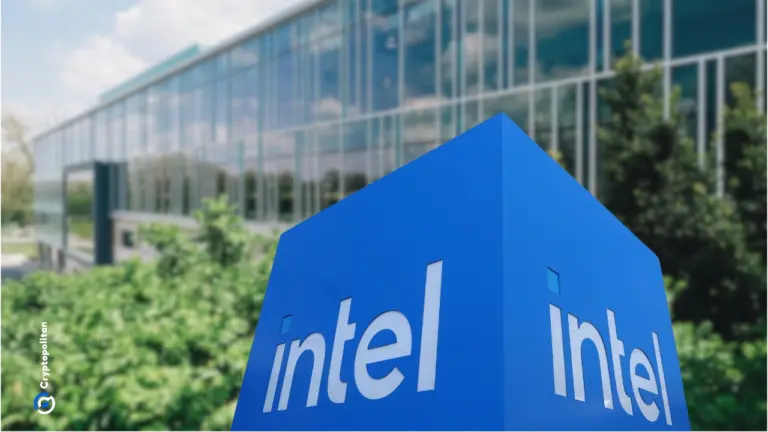
- Intel is spending €5 billion ($5.7 billion) to upgrade its Leixlip campus in Ireland.
- Despite U.S. tariff pressure and warnings from the Trump administration, Ireland keeps pulling in record foreign investment.
- U.S. chip stocks have had a rough July, shedding 11% from recent highs.
Intel (NASDAQ: INTC) has started a €5 billion ($5.7 billion) upgrade of its Irish campus outside Dublin, the U.S. chipmaker announced Monday.
The work is underway at the company’s Leixlip facility. Intel says it is the most advanced semiconductor manufacturing site in Europe.
The plant produces Intel 3 silicon wafers. The investment will connect the Leixlip factory to other plants at the same campus, push forward research, and fund worker retraining.
Naga Chandrasekaran, executive vice president of Intel Foundry, said it was the rising demand that motivated the company for this investment.
Intel started in Ireland in 1989. Since then, it has invested €30 billion into the country. Most of its chunk was spent between 2019 and 2023 on a fabrication plant that doubled its production capacity there. Intel recently bought back the 49% stake in its Irish Fab 34 facility it had sold to Apollo Global Management in 2024, as previously reported by Cryptopolitan, signaling renewed confidence in its Ireland operations.
New manufacturing equipment now being installed will support Intel Xeon 6 processors and the next generation of Intel Xeon chips, both produced on the Intel 3 process.
Chandrasekaran said the project will add “several hundred” jobs to the 4,900 people Intel already employs in Ireland. Most of the spending will be done by the end of 2027 and accounts for about 30% of Intel’s $17 billion planned capital expenditure for 2026.
Irish Prime Minister Micheál Martin called the investment a strong vote of confidence in Ireland and its place as a home for advanced manufacturing.
Ireland leans heavily on foreign multinationals for jobs and tax revenue
Over the past decade, foreign-owned companies have nearly doubled their Irish workforce and now make up 11% of the country’s entire labor market.
Companies investing in Ireland tend to point to the skilled workforce and stable policy setting. What gets less airtime is the country’s low corporate tax rate, officials tend to avoid the subject to keep things smooth in Brussels and Washington.
Whatever the reasons, Ireland’s investment results have been strong. The country’s inward investment agency, IDA Ireland, has just wrapped up its best three-year stretch on record.
In 2023, it secured 248 investments, up 2.5% on the prior year, supporting 19,000 jobs. In 2024, it won 234 projects tied to 13,500 jobs. Last year, with Trump’s tariff threats filling the headlines, it posted record numbers: 323 foreign investments with the potential to create 15,300 jobs, a 38% rise from 2024. Some 65% of the deals came from the U.S., and 78 were first-time investors.
That run has continued into 2026. The IDA’s latest half-year figures show 190 investments in the first six months, up 6% on the same period in 2025.
Trump’s pressure has not slowed the flow
Trump’s second term brought pressure on multinationals to produce in the U.S. or face tariffs. Most EU imports were hit with a 15% tariff. U.S. Commerce Secretary Howard Lutnick called Ireland’s tax approach a “scam.” Yet the feared drop in investment has not materialized.
Peter Vale of Grant Thornton said Ireland’s appeal goes beyond tax. “You could also argue that for a US group to expand its Irish operation or set up something new here, notwithstanding the less-competitive tax environment here, shows how Ireland is about so much more than tax,” he said.
A housing shortage, high energy costs, and grid capacity remain the biggest concerns for investors, though the IDA has been able to hold them at arm’s length while the numbers stay positive.
Back on markets, U.S. chip stocks have had a shaky start to July. The Philadelphia Semiconductor Index has dropped more than 11% since hitting a record high in June, though it still sits 83% higher for the year. Funds tracking U.S. semiconductor stocks saw outflows of around $11 billion in the week ending June 24, the biggest weekly exit this century, according to LSEG Lipper data.
Analyst price targets remain high. Micron (NASDAQ: MU) carries the biggest expected upside among S&P 500 chipmakers at over 60%, while Nvidia is expected to gain more than 40%. Memory chipmaker SK Hynix rose more than 10% in its U.S. trading debut following a $26.5 billion share sale.
Global cloud and AI infrastructure spending is expected to reach nearly $1.5 trillion by 2027, a 40% to 50% jump year on year, according to BofA Securities.
Steve Sosnick, chief market analyst at Interactive Brokers, captured the mood: “We’ve never seen this kind of extreme earnings growth. But the question then becomes, how long can we expect this to continue.”
Don’t just read crypto news. Understand it. Subscribe to our newsletter. It's free.

Noor Bazmi
Noor Bazmi contributes to Cryptopolitan news team equipped with a Media Studies degree. Noor covers news on blockchain, cryptocurrency, artificial intelligence, Big Tech, EV markets, global economics, and government policy shifts. She is taking studies in marketing to connect with global audiences.









