






Aave will be fine: Stakeholders back DeFi to recover from KelpDAO crisis

- Aave has received public backing to ride out the storm from the $292 million KelpDAO hack.
- The $71 million recovery gives Aave a lot of breathing room on the very difficult decisions that it faces.
- Drift Protocol has already received about $150 million in backing to relaunch its platform after its $285 million exploit.
Crypto stakeholders have started to strike a defiant tone days after the KelpDAO exploit, which has caused Aave to hemorrhage more than $10 billion in total value locked (TVL), backing the leading lending platform to come back stronger because “DeFi learns through failures” and improves with every failure.
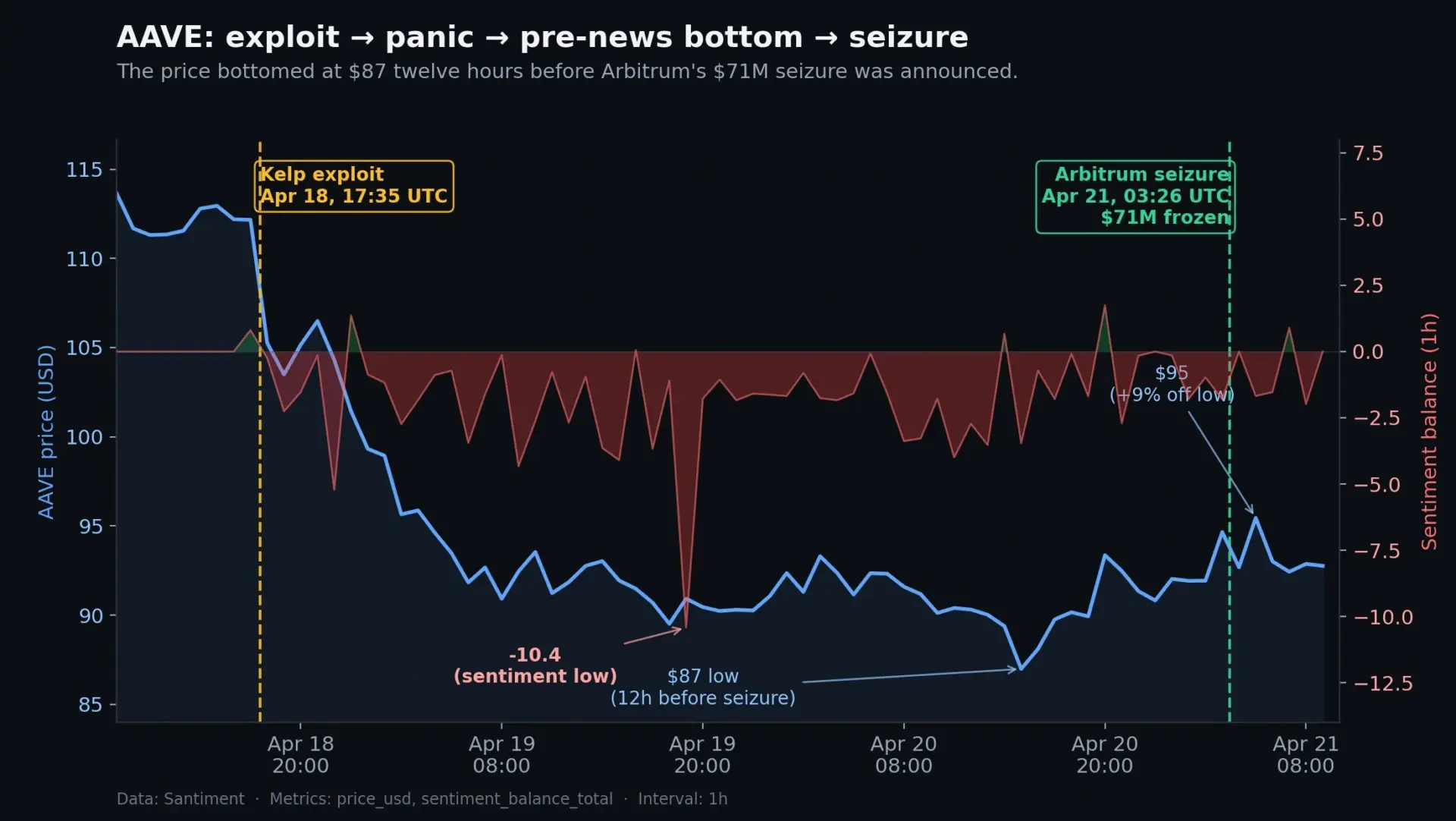
Cryptopolitan reported that Arbitrum’s security council froze 30,776 ETH, valued at $71 million at the time, from addresses linked to parties who hit KelpDAO for over $290 million.
The coordinated action and previous events that have rocked the space and eventually turned into learning experiences are part of the optimism that has begun to take root within DeFi and crypto circles, with Santiment reporting that Aave sentiment stopped dropping to new lows after news of the Arbitrum Security Council’s confiscation hit the headlines.
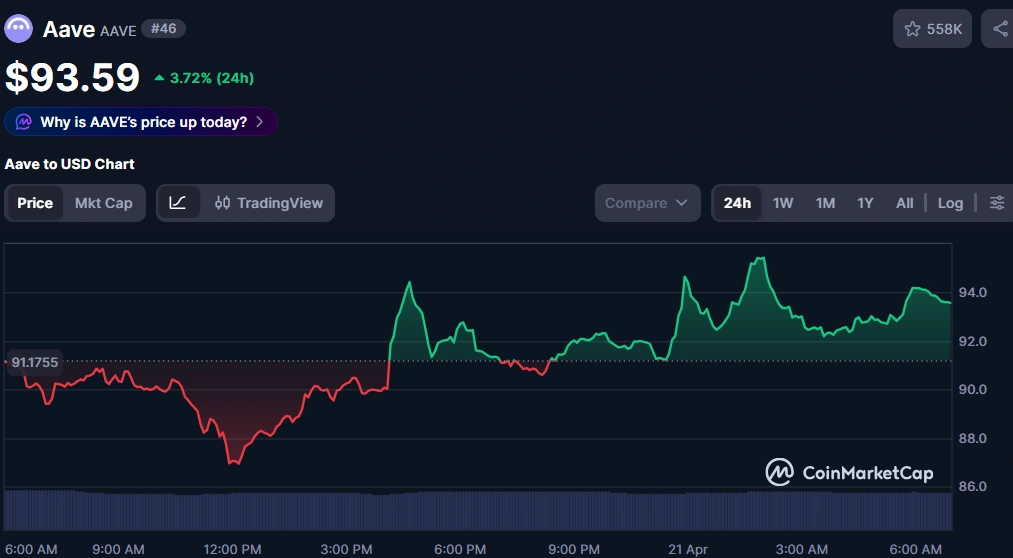
Aave is currently trading at $93.59, up from its $80 bottom from April 20, while the TVL decline has started to flatten.
Aave receives backing to ride out the storm
Defillama’s founder continues to pontificate on how the KelpDAO impacts Aave, with his latest comments focusing on how Arbitrum manages the seized ETH tokens will affect how much bad debt Aave will deal with.
According to the anonymous founder @0xngmi, Arbitrum has two options, where one completely solves its problems, and the other minimizes them.
Option one: if Arbitrum prioritizes its Aave market, there will be virtually zero bad debt on Arbitrum if it socializes losses.
In the other scenario, where it makes rsETH holders on L2s bear the losses by continuing to hold their now worthless tokens, Aave on Arbitrum bad debt will reduce from about $88 million to $17 million, an 80% reduction in its obligation.
if they return to kelp and kelp adds it to the pool to cover losses the bad debt on arbitrum will be higher as well, as this recovered money will need to be split among all l2s
— 0xngmi (@0xngmi) April 21, 2026
The $71 million recovery gives Aave a lot of breathing room on the very difficult decisions that it faced, according to an April 19 analysis by the Defillama headman.
For example, in the first case, where every rsETH holder is treated equally, whether they are on L1 or L2, everybody is automatically down 18.5% on their holdings, which is the amount of rsETH supply that was stolen before the Arbitrum ETH recovery.
Aave will be on the hook for about $216 million and will have to deplete its treasury and Umbrella fund, and maybe even liquidate tokens to cover those debts.
The other scenario, where losses are localized to rsETH holders on L2s since that was where the exploit happened, would leave Aave with about $341 million bad debt on its $359 million exposure. The kicker here is that Aave’s Umbrella fund doesn’t cover all L2s, so it will have the discretion to choose which markets to save and which to allow to fail.
Of course, that could lead to dissatisfaction and potential litigation.
Dragonfly and Defillama execs back DeFi
In another post, the Defillama founder called out the ignorance of those who believe the KelpDAO exploit will be the proverbial nail in DeFi’s coffin.
The critical side of the aisle will point to recent large exploits that have spread contagion across protocols, including the $285 million loss by Drift Protocol, as well as the Truebit, Step Finance, and Resolv Labs incidents.
However, according to 0xngmi, “DeFi is gonna take a hit, but it will not die,” insisting that Aave and other affected protocols are in “completely recoverable” positions with a little maneuver from protocol treasuries and loans.
Cryptopolitan reported that Drift Protocol had struck a deal with Tether and other parties to relaunch its platform with about $150 million in backing.
A day earlier, even before any recoveries were announced, managing partner at Dragonfly Haseeb Qureshi shared similar sentiments, backing DeFi to learn from its failures.
In his words: “AAVE might take on some bad debt, but it has the equity to pay it.”
Don’t just read crypto news. Understand it. Subscribe to our newsletter. It's free.
Disclaimer. The information provided is not trading advice. Cryptopolitan.com holds no liability for any investments made based on the information provided on this page. We strongly recommend independent research and/or consultation with a qualified professional before making any investment decisions.

Hannah Collymore
Hannah is a writer and editor with nearly a decade of blog writing and event reporting experience in the crypto space. At Cryptopolitan, Hannah contributes to the news page, reporting and analyzing the latest developments in DeFi, RWA, crypto regulation, AI and frontier tech industries. She graduated from Arcadia university with a degree in Business Administration.









