







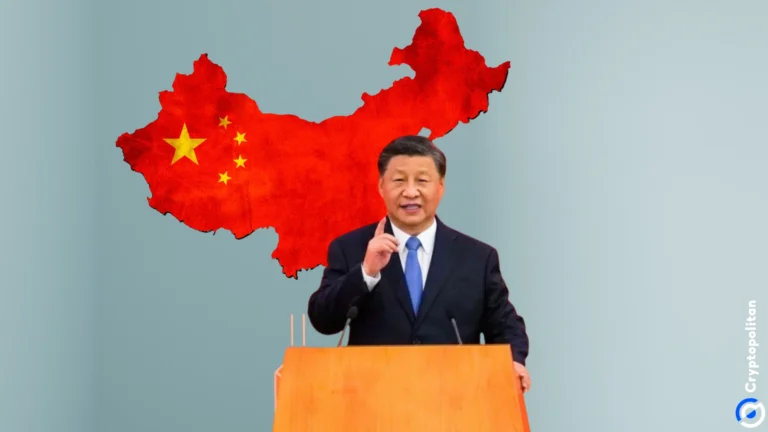
- Xi Jinping did a complete 180 on China’s economy, launching one of the biggest fiscal stimulus efforts in years after resisting for a long time.
- China’s property market crash and rising debt from local governments forced Xi’s hand, with GDP growth falling to 4.6% in the third quarter.
- Youth unemployment has skyrocketed to 18.8%, and local governments are drowning in $8.4 trillion of debt, which Beijing is trying to manage with bailouts.
China’s leadership stunned markets by pulling a 180 on its approach to economic stimulus. Xi Jinping, who for years stood firm against massive fiscal injections into the economy, now leads one of the most aggressive stimulus efforts since the pandemic.
Brokers in Shanghai spent the week-long national holiday trapped in their offices, testing systems after September’s market crash.
Retail investors rushed back into stocks when China announced its biggest stimulus yet, causing the Shanghai Stock Exchange to overload and shut down.
China’s property crisis pushed Xi’s hand
The crash was the beginning of a new era for China’s economic strategy. After three years of declining markets, this sudden U-turn by Xi and his policymakers shows they’re now focused on saving the world’s second-largest economy.
China’s leadership could no longer ignore the real estate slump and mounting debt from local governments that have been bleeding money for years.
The country’s property market (once the bedrock of economic growth) accounts for about 30% of the country’s economy. Now it’s a mess. Prices refuse to stabilize, and local governments can’t cover their bills.
Beijing faced the real possibility of missing its official GDP growth target of 5% this year. Instead, the latest data shows growth at 4.6% for the third quarter, the lowest in a year and a half.
To address the economic disaster, China’s central bank and financial regulators launched a wave of stimulus measures. Interest rates were slashed, homeowners got support, and the stock market received an unprecedented level of assistance.
Two weeks later, the finance ministry announced another layer of fiscal stimulus. Plans were laid out to bail out local governments, recapitalize banks, and buy up millions of unsold apartments.
Nobody knows the full size of this fiscal package, but Beijing promises it’ll be the biggest in “recent years.” Xi calls it a “combination punch,” hoping to knock out the economic issues.
However, the real question is whether these punches will land hard enough. Economists have their doubts, considering the many issues China faces—high government debt, demographic decline, and growing tensions with trade partners.
Youth unemployment, debt, and deflation
Youth unemployment jumped to 18.8% in August, up from 13.2% just two months earlier, and people are more focused on saving than spending.
Chinese producers have also been dealing with deflation for two years in a row. Corporate profits are under immense pressure, and exports unexpectedly dropped in September.
This dire situation forced Xi and his inner circle to act. Back in July, China’s leadership started to worry about missing growth targets after their third plenum—a closed-door policy meeting held every five years.
Publicly, Xi remained confident, even appearing relaxed while visiting the Gansu province in September. But behind the scenes, the alarm bells were ringing. The president knew something had to be done.
Xi is treading a fine line between reviving the economy and avoiding past mistakes. He’s reluctant to return to the old playbook of piling on debt in low-tech sectors to drive growth. Instead, he’s eyeing “new productive forces,” like green energy and advanced semiconductors.
Beijing is now focusing on reforms like raising the retirement age and loosening the hukou system, which restricts migrant workers’ access to services. These changes aim to tackle long-term issues, but they sidestep the immediate need to stimulate consumer spending.
The smartest crypto minds already read our newsletter. Want in? Join them.
Disclaimer. The information provided is not trading advice. Cryptopolitan.com holds no liability for any investments made based on the information provided on this page. We strongly recommend independent research and/or consultation with a qualified professional before making any investment decisions.

Jai Hamid
Jai Hamid has been covering crypto, stock markets, technology, the global economy, and the geopolitical events that affect markets for the past 6 years. She has worked with blockchain-focused publications including AMB Crypto, Coin Edition, and CryptoTale on market analyses, major companies, regulation, and macroeconomic trends. She has attended London School of Journalism and thrice shared crypto market insights on one of Africa’s top TV networks.









