






OKX X Layer DeFi TVL, stablecoin volume ride Aave, Uniswap to record levels


- OKX says its X Layer network has passed $100 million in DeFi TVL and $2 billion in stablecoin supply.
- The growth came after hosting Aave and Uniswap, protocols that drove Robinhood Chain’s rise.
- The growth shows a repeatable pattern where chains that land proven liquidity venues tend to attract activity fast.
The Ethereum layer-2 network built by the OKX exchange, X Layer, has become the latest DeFi breakout star of the 2026 summer after the chain broke past the $100 million DeFi total value locked (TVL) and $2 billion stablecoin supply levels.
The X Layer milestones came after the network integrated the Aave and Uniswap DeFi protocols, with one half of the duo among the major catalysts that powered Robinhood Chain’s hot debut after its July 1 launch.
While Robinhood Chain has not yet integrated Aave, as Cryptopolitan reported around the time, Robinhood Chain topped 220,000 daily traders and $1 billion in cumulative volume within nine days of going live with Uniswap and rival lending protocol Morpho onboard.
The rewards were double-sided as well, as DeFiLlama data cited by Uniswap founder Hayden Adams in mid-July showed that $4.38 million of Uniswap’s $5.16 million in daily fees came from Robinhood Chain alone.
OKX’s X Layer has broken out in recent months
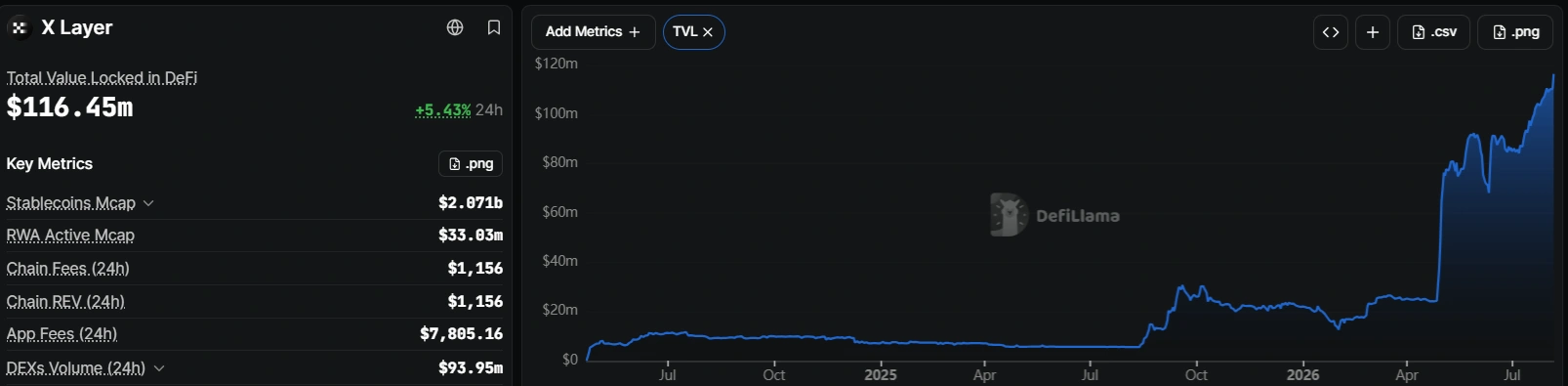
OKX Wallet announced on August 6 that the X Layer Ethereum L2 network’s DeFi TVL broke the $100 million mark, capping a tenfold growth in the last six months. The account also touted how the chain broke into the top ten for stablecoins issued on a public blockchain when it smashed through the $2 billion level around the same time.
Cumulative active addresses and on-chain transactions are also climbing, at more than 4.2 million and 400 million, respectively.
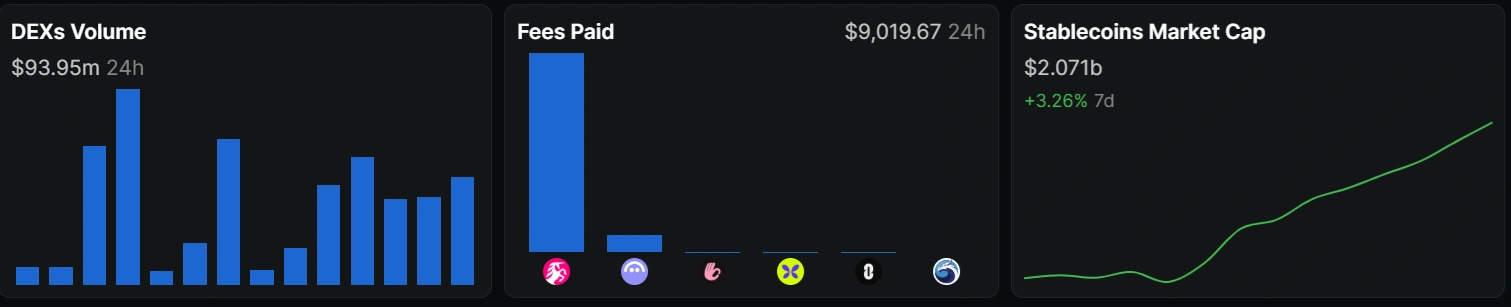
DeFiLlama data backs up the X Layer growth, too. As of this report, TVL is $116.27 million, up 5.26% on the day, and the stablecoin market cap is $2.07 billion. Unlike most chains where USDT and USDC swap leads, OKX’s USDG has a 94.11% dominance on X Layer.
The $520.65 million DEX volume reported over the last week is also a 25% gain.
Aave and Uniswap lead X Layer DeFi activity
Uniswap landed on X Layer on January 19, 2026. Aave came a little over two months after, on March 30, running version 3.6 with six dedicated efficiency modes, according to an official press release.
“By expanding to X Layer, Aave connects its liquidity to a growing ecosystem of users and applications,” Aave Labs founder Stani Kulechov said in that release.
On DeFiLlama’s protocol table for the chain, the two now sit at the top. Aave V3 leads with $85.34 million locked, and Uniswap holds $21.24 million, up nearly 59% over the past week. Together, they account for the bulk of X Layer’s DeFi footprint.
Network fees often carry caveats
An important bit of context that needs to be applied to fee totals is that they do not always translate into protocol income.
Cryptopolitan noted that of Uniswap’s roughly $5.2 million in daily fees during its Robinhood Chain surge, DeFiLlama put actual 24-hour revenue at just $73,454, because most of that money flows to liquidity providers rather than the treasury or token holders.
The same distinction applies on X Layer. Deep pools and high volume signal a chain that people use, not necessarily a chain that mints profit.
If you're reading this, you’re already ahead. Stay there with our newsletter.
FAQs
What is X Layer?
X Layer is OKX's Ethereum-compatible layer-2 network, described as a ZK-based rollup that settles transactions faster and more cheaply than Ethereum mainnet while remaining compatible with Ethereum tooling.
How much DeFi value is locked on X Layer?
DeFiLlama currently shows about $116 million in total value locked on X Layer, and OKX says the figure grew close to tenfold over six months to cross the $100 million mark, alongside more than $2 billion in stablecoin supply.
When did Aave and Uniswap launch on X Layer?
Uniswap went live on X Layer on January 19, 2026, and Aave followed on March 30, 2026, deploying its version 3.6 lending markets.
Disclaimer. The information provided is not trading advice. Cryptopolitan.com holds no liability for any investments made based on the information provided on this page. We strongly recommend independent research and/or consultation with a qualified professional before making any investment decisions.

Hannah Collymore
Hannah is a writer and editor with nearly a decade of blog writing and event reporting experience in the crypto space. At Cryptopolitan, Hannah contributes to the news page, reporting and analyzing the latest developments in DeFi, RWA, crypto regulation, AI and frontier tech industries. She graduated from Arcadia university with a degree in Business Administration.









