






Wall Street downgrades Warren Buffett’s Berkshire Hathaway with a rare “sell” signal

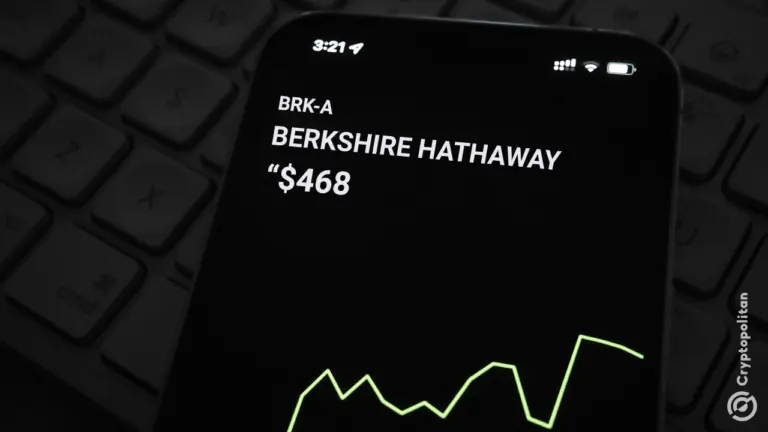
- Berkshire Hathaway was downgraded to a “sell” by KBW due to succession uncertainty and expected earnings weakness.
- Core businesses like Geico, Burlington Northern Santa Fe, and Berkshire Hathaway Energy are facing simultaneous financial pressures.
- Berkshire’s stock is underperforming the S&P 500, widening the gap as Warren Buffett prepares to step down.
According to a note from Keefe, Bruyette & Woods, Berkshire Hathaway just got hit with something it rarely ever sees: a sell call.
The brokerage downgraded Warren Buffett’s company from neutral to underperform, saying a perfect storm of executive uncertainty and business-specific problems could hurt both earnings and stock performance in the year ahead.
This is what happens when the man called “the greatest investor alive” and “the Oracle of Omaha” finally steps off the stage.
The new price target on Berkshire’s Class A shares has been cut from $740,000 to $700,000, around 5% below where it closed on Friday at $738,500.
“Beyond our ongoing concerns surrounding macro uncertainty and Berkshire’s historically unique succession risk … we think the shares will underperform as earnings challenges emerge and/or persist,” wrote analyst Meyer Shields in the client note.
Warren, who has run Berkshire for way over six decades, announced in May that he’s stepping down as CEO at the end of the year. He’s 95. This decision didn’t just unsettle investors; it cracked the floor.
Berkshire’s stock has already dropped from all-time highs, and KBW believes part of the decline is tied to what they called the “Buffett premium,” the price investors were always willing to pay simply because Warren was the one steering the ship.
Without him, they’re not sure who or what they’re really investing in anymore.
Geico, BNSF, and energy units face performance pressure
KBW said that Berkshire’s core businesses are not showing the strength they used to. The auto insurance unit Geico, the Burlington Northern Santa Fe railroad, and the massive energy segment are all facing different types of pressure, and they’re happening all at once. It’s a mix of short-term market cycles and deeper long-term issues.
On the insurance side, the firm pointed to softer investment income and predicted Geico would likely post weaker profits. The unit is cutting personal auto rates and pushing more money into marketing to try and take back market share it lost. KBW believes that’s going to hit earnings hard.
The reinsurance division isn’t helping. A light hurricane season this year has dragged down prices in the property-catastrophe market. That means Berkshire Hathaway Reinsurance Group could see both premium volume and profits slide further over the next few quarters.
Shields said the trends in insurance are “working against them right now, and not likely to ease up anytime soon.”
One of Berkshire’s biggest cash cows in recent quarters has been investment income, but that too is about to take a hit. As short-term interest rates move lower, returns from the company’s massive cash and U.S. Treasury holdings are likely to shrink.
At the end of June, the company’s cash pile stood at $344.1 billion, still near record highs, but those dollars aren’t going to earn what they used to.
Succession, trade, and tax policy collide across operations
The railroad business isn’t looking any better. Burlington Northern Santa Fe’s inflation-adjusted revenue has always moved with the flow of trade, especially between the U.S. and China.
But that relationship has been rocky under the Trump administration. KBW warned that continued tariff tensions and slower trade could keep growth on pause.
Berkshire Hathaway Energy, another key segment, is also running into policy friction. The “One Big Beautiful Bill Act” is accelerating the wind-down of federal clean-energy tax credits.
That means future renewable projects will likely see lower returns, and the company’s long-term energy profits could suffer. The analysts noted that without those credits, the economics of new green investments simply won’t look as good.
The B shares of Berkshire are still in positive territory for the year, up 8.6% as of Friday. But they’re trailing the S&P 500 by 6.9 percentage points, the widest lag this year. While the broader market climbs, Berkshire is falling behind.
The note from KBW was titled “Many Things Moving in the Wrong Direction.” It didn’t sugarcoat the concern that once Buffett exits, investor trust might follow.
“Warren Buffett’s likely unrivaled reputation and what we see as unfortunately inadequate disclosure that will probably deter investors once they can no longer rely on Mr. Buffett’s presence at Berkshire Hathaway,” Shields wrote.
If you're reading this, you’re already ahead. Stay there with our newsletter.

Jai Hamid
Jai Hamid has been covering crypto, stock markets, technology, the global economy, and the geopolitical events that affect markets for the past 6 years. She has worked with blockchain-focused publications including AMB Crypto, Coin Edition, and CryptoTale on market analyses, major companies, regulation, and macroeconomic trends. She has attended London School of Journalism and thrice shared crypto market insights on one of Africa’s top TV networks.









