




Oil prices surge by over 2% as Trump vows ‘there won’t be anything left of Iran’

Oil prices shot higher on Monday after U.S. President Donald Trump turned up the pressure on Iran, warning Tehran that it had little time left to break the deadlock with Washington.
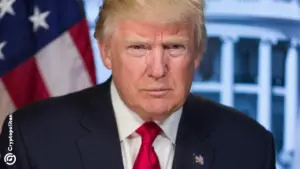
“For Iran, the Clock is Ticking, and they better get moving, FAST, or there won’t be anything left of them. TIME IS OF THE ESSENCE!” said Trump on Truth Social.
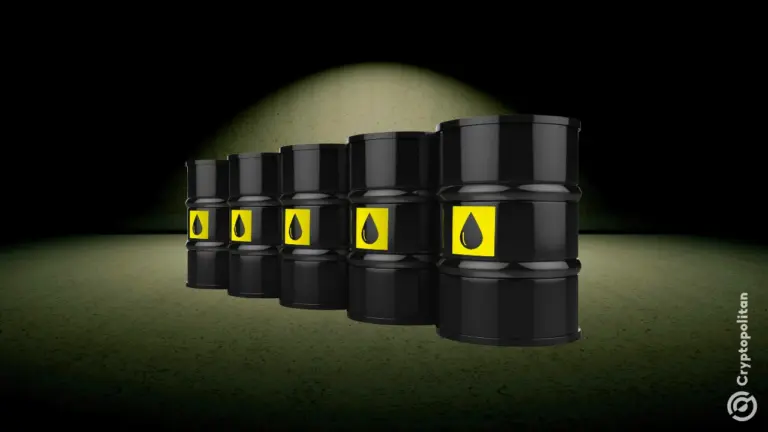
Brent crude futures for July gained 1.98% to $111.42 per barrel. U.S. West Texas Intermediate crude futures for June rose 2.43% to $107.98 per barrel, the strongest level for WTI this month.
Trump pushes Iran harder as the Hormuz crisis keeps oil traders nervous
Trump’s latest reckless warning came as talks between Washington and Tehran remained stuck over a peace deal and the reopening of the Strait of Hormuz.
A fragile ceasefire was agreed in April, but so far, Iran has kept the Hormuz waterway mostly closed, while the Trump administration has continued to allegedly block Iranian ports.
The pressure is showing in inventories too. Brent crude is now up 74% year-to-date, although it is still below the late-April high of $118 per barrel, and the International Energy Agency (IEA) said last week that global oil inventories are falling at the fastest pace on record as the market tries to cover the Middle East supply loss.
The IEA said stockpiles could get close to critical levels if Hormuz stays blocked. It also warned that fuel and oil prices may rise further before peak summer demand. In its monthly report, the agency said, “Rapidly shrinking buffers amid continued disruptions, may herald future price spikes ahead.”
That is not a small warning. Summer demand is coming, supply cushions are thinning, and the Middle East is still one bad weekend away from a larger conflict. For crypto traders, that matters because higher energy costs can feed inflation fears, pressure risk assets, and complicate the rate-cut story that markets love so much.
Asian markets were mixed, but most major indexes traded lower. Australia’s S&P/ASX 200 (.AXJO) fell 1.32%, while the live index line showed 8,515.40, down 115.40 points, or 1.34%. Japan’s Nikkei 225 (.N225) lost 0.92% to 60,843.09, down 566.20 points. The Topix dropped 0.77%.
Asian stocks fall as bonds sell off and G7 ministers meet in Paris
South Korea’s Kospi (.KS11) recovered from early weakness and rose 1.15%. Its quoted level stood at 7,609.73, up 116.55 points, or 1.56%. The smaller Kosdaq went the other way and fell 1.65%.
Hong Kong’s Hang Seng Index (.HSI) fell 1.49%, while the quoted index level showed 25,541.84, down 420.89 points, or 1.62%. Mainland China’s CSI 300 was flat. The Shanghai Composite (.SSEC) slipped 0.09% to 4,131.511, down 3.878 points. Taiwan’s Taiex lost 1.02%. India’s Nifty 50 (.NSEI) was unchanged at 23,643.50.
U.S. stock futures were quiet after a record-setting week. Dow Jones Industrial Average futures slipped 100 points, or 0.2%. S&P 500 futures and Nasdaq-100 futures were close to flat. Traders were waiting for quarterly earnings from Nvidia (NVDA) and large U.S. retailers.
The crisis also landed on the agenda before Monday’s Group of Seven finance ministers’ meeting in Paris. Eurogroup President Kyriakos Pierrakakis, who is also Greece’s finance minister, said the Middle East conflict showed how exposed the global economy is when one region starts choking energy supply.
“Opening the Strait of Hormuz and bringing the conflict to a lasting end are of the utmost importance in mitigating the impact on the economy,” Kyriakos said.
The Eurogroup represents finance ministers from euro-area countries. Kyriakos is representing the group at the G7 meeting. The G7’s main members are the U.S., U.K., Canada, France, Germany, Italy, and Japan.
“The European economy has proven resilient in the face of this energy crisis. Yet, the global economy will feel the pressure – even if the conflict is resolved swiftly,” Kyriakos said.
Don’t just read crypto news. Understand it. Subscribe to our newsletter. It's free.
Disclaimer. The information provided is not trading advice. Cryptopolitan.com holds no liability for any investments made based on the information provided on this page. We strongly recommend independent research and/or consultation with a qualified professional before making any investment decisions.

Jai Hamid
Jai Hamid has been covering crypto, stock markets, technology, the global economy, and the geopolitical events that affect markets for the past 6 years. She has worked with blockchain-focused publications including AMB Crypto, Coin Edition, and CryptoTale on market analyses, major companies, regulation, and macroeconomic trends. She has attended London School of Journalism and thrice shared crypto market insights on one of Africa’s top TV networks.









