






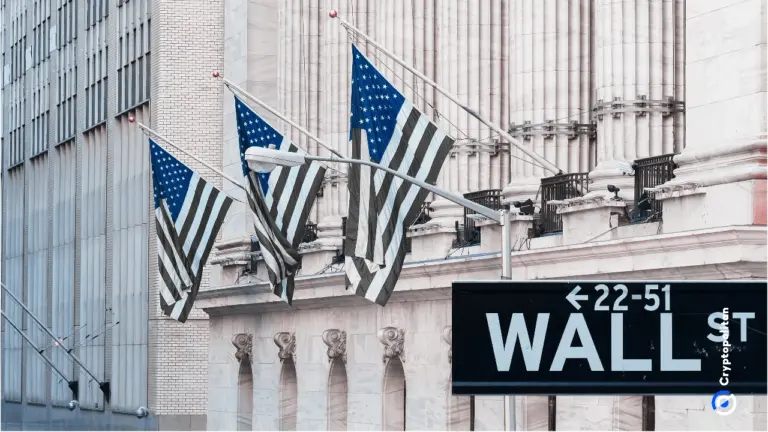
Wall Street biggest banks see their biggest annual profits in history at $157B thanks to Trump

-
Wall Street’s six largest bank firms are expected to post a combined $157 billion profit, their second‑highest annual total ever.
-
Trading stayed strong as clients adjusted portfolios after Trump’s policy shifts, while dealmaking surged late in the year.
-
Investment‑banking fees jumped, with analysts projecting $9.9 billion in the fourth quarter, up 12.8% from last year.
Wall Street’s biggest bank players are heading toward a $157 billion annual profit, the second‑largest total the industry has ever seen. The numbers land as Donald Trump, now the 47th president of the United States, continues his second term with sharp policy shifts that kept markets active all year.
Analysts expect the six largest firms to report profits up 9% from last year when earnings roll out next week, based on estimates gathered in New York.
Those six firms are JPMorgan Chase, Bank of America, Citigroup, Wells Fargo, Goldman Sachs, and Morgan Stanley. The result would be the strongest showing since 2021, when stimulus cash and deal volume flooded the system.
Stocks of every major bank climbed through most of last year and carried that strength into January, though cracks showed late in December when JPMorgan flagged higher costs for 2026 and its shares fell 4.7% in one day.
Trading desks stay busy as clients react to Washington
Trump’s policy style kept clients active. Each major announcement pushed investors to adjust positions, which fed straight into trading revenue. That activity helped the bank sector post steady fees even while lending slowed during the first half of the year. Many borrowers waited to see where policy landed before committing to new loans.
The uncertainty worked both ways. Trading desks enjoyed strong quarters, but loan growth stayed soft early on. Gerard Cassidy of RBC Capital Markets said businesses learned how to operate under the noise coming out of Washington. After introducing him once, Cassidy said companies now manage the uncertainty better than before.
Dealmaking finally broke loose in the second half. Advisory teams landed roles on some of the largest transactions of the year. JPMorgan and Goldman advised on the roughly $55 billion buyout of Electronic Arts. Financing followed quickly. Lenders stepped in with large commitments, and JPMorgan wrote some of the biggest checks.
Citigroup also signaled strength. Mark Mason, the firm’s chief financial officer, said in December that his bank expected investment‑banking fees to rise in the mid‑20% range during the final quarter of 2025. Analysts now expect five of the six firms to generate about $9.9 billion in investment‑banking fees for the quarter, up 12.8% from a year earlier.
Jefferies Financial Group offered an early data point. The firm reported a 20% jump in investment‑banking revenue to $1.19 billion for its fiscal fourth quarter, though that period ended in November and does not line up perfectly with calendar results.
Matt Zimmer of William Blair said activity picked up late in the year. After introducing him once, Matt said supply and demand finally came together as markets reopened.
Rates and balance sheets reshape next year outlook
Market swings also helped trading desks. The S&P 500 rose about 16% last year, adding fuel to equity businesses across the banking industry. Analysts expect trading revenue to rise nearly 13% at JPMorgan and 9.3% at Bank of America. Goldman is forecast to post a 6.3% increase. Citigroup may see a 2.7% decline due to weaker fixed‑income results.
Morgan Stanley faces a tougher comparison. Its stock trading revenue jumped 51% in the fourth quarter of 2024. Even so, estimates point to fourth‑quarter revenue of $5.46 billion, up from $5.26 billion a year earlier.
Looking ahead, analysts say guidance matters as much as current earnings. Morgan Stanley analysts led by Betsy Graseck said confirmation of a capital‑markets rebound will be closely watched. Forecasts for 2026 could benefit if interest rates fall.
Federal Reserve Chair Jerome Powell is set to leave in May, and Trump has campaigned for lower rates. TD Cowen analyst Steven Alexopoulos wrote that Trump may choose a more dovish successor.
Rate cuts usually let each bank pay less on deposits, lowering funding costs. Balance sheets may also improve as five‑year securities bought in 2021 reach maturity. Those low‑yield assets hurt profits and added paper losses across the bank system. As they roll off at par, firms can reinvest at higher yields.
Cassidy said the setup looks favorable. After introducing him earlier, Gerard said bonds bought in 2020 and 2021 are coming due this year, and the bank sector can now place that money into higher‑yield assets.
If you're reading this, you’re already ahead. Stay there with our newsletter.

Jai Hamid
Jai Hamid has been covering crypto, stock markets, technology, the global economy, and the geopolitical events that affect markets for the past 6 years. She has worked with blockchain-focused publications including AMB Crypto, Coin Edition, and CryptoTale on market analyses, major companies, regulation, and macroeconomic trends. She has attended London School of Journalism and thrice shared crypto market insights on one of Africa’s top TV networks.









