






Unitree Robotics dismisses US FCC restrictions effect on current product line

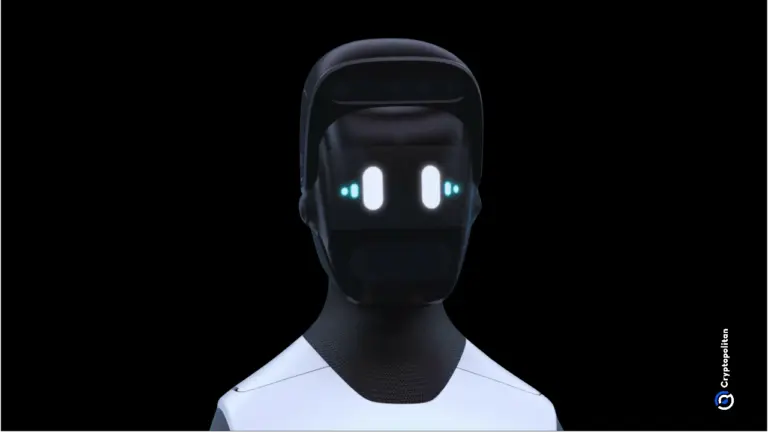
- Unitree told investors that its current humanoid and quadruped robots already hold FCC authorization.
- Future Unitree models could be blocked unless they win a US exemption.
- The stakes are immediate for the company, which is pricing its Shanghai STAR Market IPO this month.
Chinese robotics maker Unitree has told its investors that the new U.S. restrictions on foreign-built robots do not affect its six best-selling models.
Washington has imposed fresh restrictions against Chinese technology, but Unitree was reportedly a step ahead and secured the necessary permissions.
Do the new U.S. restrictions on Chinese technology affect Unitree’s products?
Board secretary Fu Fenghua said during an online investor session tied to Unitree’s Shanghai listing that the company’s G1, H2 and R1 humanoid robots and its Go2, B2 and A2 quadrupeds all received the U.S. Federal Communications Commission (FCC) equipment authorization before the new policy took effect.
The FCC placed foreign-produced advanced robotic devices, along with power inverters common in solar equipment, on its Covered List, a national-security roster that it first published in 2021.
The change in the rules reportedly targets mobile, communicating robots heavier than two kilograms that carry onboard sensing and some autonomy, and restricts new products in those categories from being imported.
All six of the humanoid robots fall inside the category named by the FCC, but each was already certified, so their sales in the U.S. market can continue for now.
Importantly, Unitree is days away from pricing its STAR Market IPO, and it stressed the fact that its major products remain unaffected by the restrictions in its updated IPO prospectus.
The company also clarified that new models developed after the cutoff could be blocked from the U.S. unless they win a specific exemption or conditional approval.
The recently declared unauthorized models can now only enter the U.S. if the Department of Defense grants conditional approval.
How will the U.S. ban affect Unitree’s IPO?
Unitree’s overseas markets supplied more than 40% of revenue across each of the company’s three reporting periods, but the U.S. portion fell to 13.30% in the most recent period, down from 18.39% and 19.54% earlier. The company reports that its humanoid shipments ranked first worldwide in 2025.
The company filed for a roughly $610 million offering in March, set preliminary price consultations for August 5 and opened subscriptions on August 10 initially planning to raise about 4.2 billion yuan ($618 million) for robot research, hardware development and a new manufacturing base, but strong investor demand has resulted in the company actually pricing the offering to raise 6.1 billion yuan (about $898.4 million)
Cryptopolitan reported that the FCC is drafting a separate proposal to keep new Chinese-made optical transceivers out of U.S. data centers, a curb that would affect firms such as Zhongji Innolight.
Separately, U.S. officials are reviewing whether China has managed to gain access to restricted NVIDIA AI chips through offshore channels.
China’s Ministry of Commerce has called the FCC’s action discriminatory despite its neutral wording and urged the U.S. to withdraw it, warning that it would take countermeasures if Washington presses on.
Don’t just read crypto news. Understand it. Subscribe to our newsletter. It's free.
FAQs
Which Unitree robots are exempt from the FCC ban?
Unitree's G1, H2 and R1 humanoids and its Go2, B2 and A2 quadrupeds all received FCC authorization before the rule took effect, so they can still be sold in the US.
When did the FCC add foreign robots to its Covered List?
The FCC added foreign-produced advanced robotic devices and power inverters to its Covered List on July 28, 2026, blocking new or previously unauthorized models from the import authorization they need.
How can a new foreign robot still enter the US market?
A new model can qualify only if it receives a specific exemption or conditional approval from the US Department of War, according to Unitree's own IPO prospectus.

Hannah Collymore
Hannah is a writer and editor with nearly a decade of blog writing and event reporting experience in the crypto space. At Cryptopolitan, Hannah contributes to the news page, reporting and analyzing the latest developments in DeFi, RWA, crypto regulation, AI and frontier tech industries. She graduated from Arcadia university with a degree in Business Administration.









