







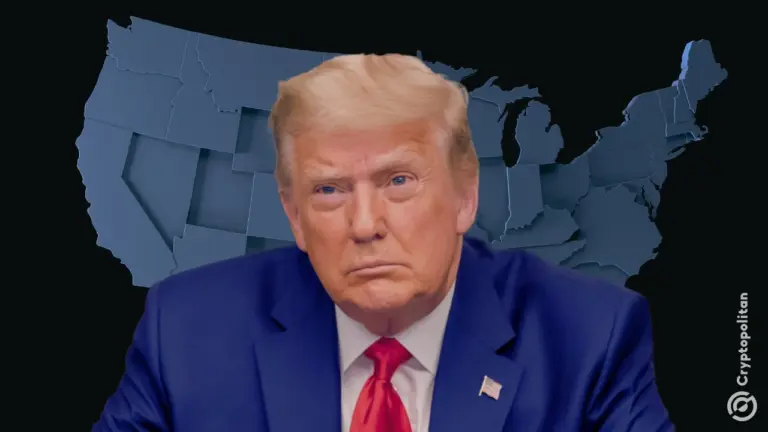
- Trump now holds a golden share in U.S. Steel, giving him direct veto power over company decisions.
- The Pentagon bought a $400 million stake in MP Materials, marking its first equity move in mining.
- Trump proposed taking a 50% stake in TikTok and may expand investments in strategic industries.
Donald Trump is pushing the U.S. government deeper into corporate boardrooms, taking direct ownership stakes and executive power in private companies on a scale not seen outside of wartime or national economic emergencies.
What used to be dismissed as government overreach is now official White House policy. According to reporting from CNBC, this hands-on approach is dragging the Republican Party into territory it once claimed to reject: state intervention.
At the center of it is Trump’s “golden share” in U.S. Steel, a deal brokered when Japan’s Nippon Steel agreed to give the president final say over all major decisions at the company in exchange for merger approval.
That makes Trump the only individual in the U.S. with personal veto power at the country’s third-largest steel producer. “You know who has the golden share? I do,” Trump said during a July 15 appearance in Pittsburgh at a summit focused on artificial intelligence and energy.
Pentagon takes equity in rare-earth miner MP Materials
While Trump’s golden share isn’t a financial investment, his administration has shown it’s ready to put money on the table too. Earlier this month, the Department of Defense bought a $400 million equity stake in MP Materials, a rare-earth mining firm. That single move made the Pentagon the largest shareholder in the company.
Gracelin Baskaran, who analyzes critical minerals at the Center for Strategic and International Studies, called the Pentagon’s purchase “the biggest public-private cooperation that the mining industry has ever had here in the United States.” She emphasized that the Department of Defense “has never done equity in a mining company or a mining project.”
Sarah Bauerle Danzman, a national security and foreign investment analyst with the Atlantic Council, said Trump’s golden share in U.S. Steel resembled nationalization without offering any government funding. “It’s similar to nationalizing a company but without any of the benefits that a company normally receives, such as direct investment by the government,” she said.
TikTok, China, and the next wave of U.S. investment
More deals could follow. Trump’s administration is already developing a policy aimed at supporting U.S. companies in strategic sectors, particularly those going head-to-head with state-funded Chinese competitors. In April, Interior Secretary Doug Burgum suggested the government may need to invest directly in each firm challenging China on critical minerals.
James Litinsky, CEO of MP Materials, said the Pentagon’s investment was a template for what’s coming next. Speaking to CNBC, he said, “It’s a new way forward to accelerate free markets, to get the supply chain on shore that we want.” He also pointed to the role the U.S. government is playing in helping the mining sector compete with Chinese mercantilism.
The idea of mixing public money with private companies is gaining political traction. Senator Dave McCormick, a Republican from Pennsylvania, said in May that Trump’s U.S. Steel deal could be a model for handling foreign investments tied to national security, especially if they also benefit economic growth.
Investors are now speculating on where Trump will go next. The president already proposed a new target. In January, he suggested the government take a 50% stake in TikTok as part of a joint venture that would force China’s ByteDance to divest the app or face a ban in the U.S. Trump extended ByteDance’s deadline until September 17.
In more recent history, the federal government bought a majority stake in General Motors after the 2008 collapse to avoid total bankruptcy. The U.S. sold off that position at a loss. Bailouts were also handed to Lockheed and Chrysler in the 1970s.
This time, there’s no recession or war. But Trump’s team is responding to a different kind of pressure; competition with China and disrupted supply chains post-Covid.
China’s dominance in rare earth exports became a flashpoint in April when Beijing restricted shipments to the U.S. Baskaran said automakers warned that they’d have to halt production within weeks, forcing the Trump administration at the time to return to negotiations with China.
The smartest crypto minds already read our newsletter. Want in? Join them.
Disclaimer. The information provided is not trading advice. Cryptopolitan.com holds no liability for any investments made based on the information provided on this page. We strongly recommend independent research and/or consultation with a qualified professional before making any investment decisions.

Jai Hamid
Jai Hamid has been covering crypto, stock markets, technology, the global economy, and the geopolitical events that affect markets for the past 6 years. She has worked with blockchain-focused publications including AMB Crypto, Coin Edition, and CryptoTale on market analyses, major companies, regulation, and macroeconomic trends. She has attended London School of Journalism and thrice shared crypto market insights on one of Africa’s top TV networks.









