





- Trump said countries globally want to make trade deals with the U.S.
- The President’s remarks come as his 90-day pause on levies nears.
- The U.S. also agreed to delay tariffs on the EU till July 9.
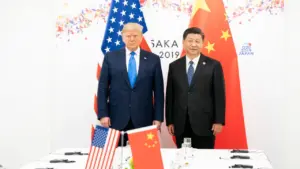
U.S. President Donald Trump has revealed that countries worldwide want to make trade deals with the U.S. Trump had promised to cut more than 50 trade deals in just 90 days following the pause on high tariff rates in early April.
In the wake of trade talks, Trump and other top officials have begun acknowledging they will have to set new tariff rates on many countries when they hit the July 9 deadline for their so-called reciprocal tariffs to kick back in. Trump said during a trip to the United Arab Emirates last week that the U.S. has 150 countries that want to make a deal.
Trump makes trade deals with some countries
TRUMP: "Countries from all over the world want to make trade deals with us." pic.twitter.com/Dzz00q6Kfz
— The Kobeissi Letter (@KobeissiLetter) May 26, 2025
The U.S has been vague about what may happen if deals are not reached, with Trump promising that he would send out new tariff numbers. Treasury Secretary Scott Bessent suggested over the weekend that the White House could establish regional tariff rates or revert to the higher April 2 rates for countries that are not negotiating in good faith.
President Trump reversed course Sunday evening on his threats to impose high tariffs on the EU following talks with the bloc’s head, Ursula von der Leyen. He agreed to delay new tariff implementations from the June 1 deadline for a 50% tariff on the European Union to at least July 9.
“The wind has come out of the sails a bit on a lot of the trade deal push. I don’t think anyone expected 90 deals in 90 days. But I do think we did expect a little more in terms of quick deals to keep things moving.”
-Scott Lincicome, Vice President of Economics at the Free-Market Cato Institute.
The White House and the Indian government agreed to finalize Phase 1 of a broader bilateral trade deal by fall. The two trading partners aim to increase bilateral trade to $500 billion by 2030. Rajesh Agrawal, India’s chief negotiator and special secretary in the Department of Commerce, returned from a four-day visit to Washington last week, where he held direct talks with the U.S. on the contours of the interim deal.
Vietnam faces a 46% levy if it does not reach an agreement with the U.S. by early July, which could decline exports to the U.S. that contribute 30% of annual gross domestic product. A person familiar with the talks said the terms of the agreement proposed by the U.S. were terrible, signaling a long-term agreement may prove elusive.
The U.S. also expects a delegation of Japan’s officials in Washington on Friday for a third round of talks. Japan still demands that the White House remove all tariffs imposed on the country as part of any deal, including the baseline 10% tariffs the U.S. set for imports worldwide. The U.S. and the UK agreed to maintain the 10% tariff, while top economic officials like Bessent and Commerce Secretary Howard Lutnick have maintained the duty is non-negotiable.
U.S. faces tensions with some countries amid trade negotiations
Other nations are waiting for the White House to engage in trade talks, with Thailand submitting a term sheet to the U.S. earlier this month. The country offered to cut tariffs on agricultural goods, but geopolitical tensions between the two countries have made the U.S. reluctant to engage.
China and the U.S. agreed to de-escalate tariffs last week. Still, tensions between the two countries spiked after the Department of Commerce issued guidance suggesting some silicon chips made by Huawei may violate export controls. China’s Foreign Ministry spokesperson, Lin Jian, said that on Friday, Beijing will take firm measures to defend its right to development and Chinese businesses’ legitimate rights and interests. Both nations agreed to set up a mechanism to continue trade talks, but the U.S. still maintains a 30% tariff on goods from China.
Politics are hampering talks with South Korea as the country is currently under a placeholder government after its former President, Yoon Suk Yeol, was removed from office earlier this year. The country is awaiting presidential elections on June 3, pushing any deal-making until later that month.
If you're reading this, you’re already ahead. Stay there with our newsletter.
Disclaimer. The information provided is not trading advice. Cryptopolitan.com holds no liability for any investments made based on the information provided on this page. We strongly recommend independent research and/or consultation with a qualified professional before making any investment decisions.

Collins J. Okoth
Collins Okoth is a journalist and markets analyst with 8 years of experience covering crypto and technology. He is a is a Certified Financial Analyst and holds a degree in Actuarial Mathematics. Collins has previously worked with Geek Computer and CoinRabbit as a writer and editor.









