



Congress: No AI data centers on military bases, pushes back on Pentagon plan

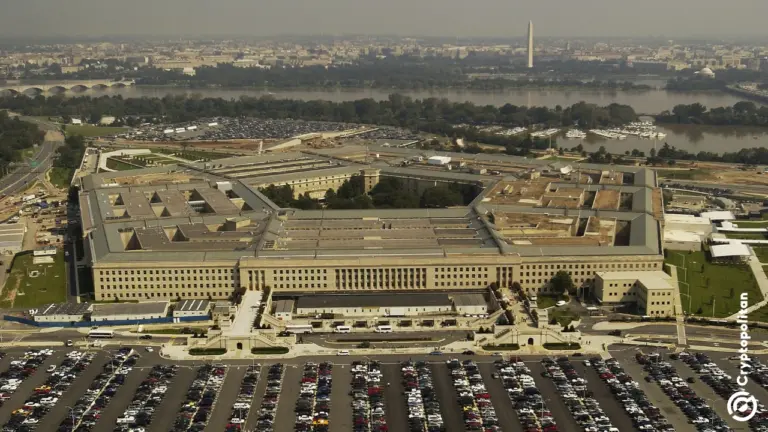
- Congress is moving to rein in the Pentagon’s plan to lease military land for private AI data centers, .
- Measures range from mandatory community-impact briefings to a proposed ban on the projects entirely.
- The fight is live now because the fiscal 2027 defense bills are being written and the first two deals are close to final.
Democratic and Republican lawmakers have banded together in a rare bipartisan push to oppose the Pentagon’s plan to open up military land for private companies to build AI data centers.
The effort to plant roadblocks all over the Trump admin proposition cites concerns touching on how much power and water data center facilities pull from grids and reservoirs, which inadvertently become a strain on the communities that depend on that infrastructure.
Despite the scrutiny, the Army is already moving ahead with the first two deals from the plan. The Air Force is also already reportedly shopping unengaged land at many of its installations.
What does Congress want from the Trump admin?
Congress is pushing multiple angles in its opposition of the Pentagon’s plan to install data centers on federal land, ranging from amendments, studies, briefings and, in at least one bill, an outright ban.
Speaking to reporters about whether data center plants belong on military installations, Rep. John Garamendi, a California Democrat and ranking member of the House Armed Services Readiness subcommittee, was noncommittal, saying, “may be yes, may be no.” His amendment was voted down in committee, according to reports.
The concerns cross party lines, as Republican representatives Ken Calvert and Cory Mills both voiced objections to stall progress before any ground is broken.
Defense Appropriations subcommittee chair Calvert won a provision that compels the Defense Department to first explain to Congress how each project will impact nearby communities.
Florida Republican Cory Mills sent a separate amendment to block the use of any components that the Pentagon has flagged as a national security risk. That proposition already cleared the House this week.
Michigan Democrat Rep. Rashida Tlaib went for the jugular in her July 23 No AI Data Centers on Federal Lands Act submission. Tlaib wants to permanently ban building and retroactive removal of any large AI data centers on any government land, including military bases.
The Michigan lawmaker cited “noise, light, air, and water pollution” along with energy cost surges as the reasons her district doesn’t want to house those facilities.
Who wants to build data centers on federal land?
Two of the proposed sites have already been conditionally awarded, with each one with nearly $2 billion, per Financial Times. Carlyle received the green light to build on roughly 1,384 acres at Fort Bliss in El Paso, Texas. CyrusOne, a data center operator held by funds from KKR and BlackRock, also got the go-ahead for 1,201 acres at Utah’s Dugway Proving Ground.
Notably, the exception is not limited to military data centers. Communities have delayed or canceled nearly $156 billion in data center plans throughout the country, per a tally from Data Center Watch.
Politico backed up Cryptopolitan’s earlier reporting on how consumer power bills have ballooned after AI data center buildouts in its assessment of the Fort Bliss site.
The Army calls it a ‘federal land penalty’
The service is fighting back. The Army told Federal News Network that Mills’ components rule would impose an “unworkable standard” and a “federal land penalty,” since it would apply demands to on-base builders that off-base developers never face, potentially driving away “world-class commercial partners” and more than $1.3 billion in private capital.
Senior Republicans agree. House Armed Services chairman Mike Rogers argued that restrictions would “impede the Army’s ongoing negotiations,” and Wisconsin’s Derrick Van Orden said blocking base projects would only push data centers onto tillable farmland. Army officials have promised net-zero water plans and power that stays off the local grid, but several Democrats say they have yet to receive a real briefing on how any of it will be enforced.
Don’t just read crypto news. Understand it. Subscribe to our newsletter. It's free.
FAQs
Which companies won the first military data center deals?
The Army conditionally selected Carlyle for about 1,384 acres at Fort Bliss in Texas and CyrusOne, jointly held by KKR and BlackRock funds, for 1,201 acres at Dugway Proving Ground in Utah, each project estimated near $2 billion.
What is Rep. Tlaib's bill trying to do?
Introduced on July 23, 2026, the No AI Data Centers on Federal Lands Act would permanently ban large AI data centers on federally owned or managed land, including military bases.
Why are lawmakers worried about these projects?
They cite heavy energy and water use, including a report that the Fort Bliss site alone could need more power than all 460,000 of El Paso's electricity customers combined and Defense Department documents rating the area's water risk as "Extremely High."
Disclaimer. The information provided is not trading advice. Cryptopolitan.com holds no liability for any investments made based on the information provided on this page. We strongly recommend independent research and/or consultation with a qualified professional before making any investment decisions.

Hannah Collymore
Hannah is a writer and editor with nearly a decade of blog writing and event reporting experience in the crypto space. At Cryptopolitan, Hannah contributes to the news page, reporting and analyzing the latest developments in DeFi, RWA, crypto regulation, AI and frontier tech industries. She graduated from Arcadia university with a degree in Business Administration.