

Taiwan firms plan extra $20B U.S. investment as AI demand drives chip growth

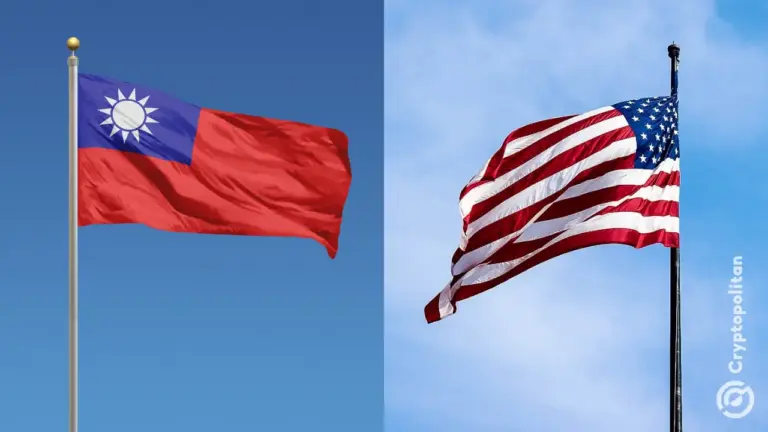
- Taiwanese firms plan to commit an additional $20 billion to the U.S.
- Minister Kung says more companies are interested in investing in the US.
- President Lai says Taiwan’s semiconductor strength is rooted in democracy.
With the growing use of AI across sectors, Taiwanese enterprises plan to spend another $20 billion in the U.S. The nation’s economy minister, Kung Ming-hsin, announced their intention on Wednesday, though he did not share specifics.
For some time now, the U.S. has been encouraging Taiwanese tech companies to build more factories on American soil to boost domestic chip production. While the two nations lack official diplomatic ties, the U.S. stands as Taiwan’s most critical international supporter and arms supplier.
Speaking on their partnership, Minister Kung Ming-hsin noted at the opening of the U.S. pavilion during Taipei’s SEMICON trade show that Taiwanese corporations are “very actively” putting their capital to work in the United States.
The US reacted positively to the potential $20 billion investment
At the trade show, Economy Minister Kung Ming-hsin also mentioned that not only TSMC but also several other companies are willing to invest in the U.S. economy. This could add up to another $20 billion in investments.
These remarks followed the SelectUSA Investment Summit held in May. Although Kung did not name the companies, he noted that the very high demand for AI and semiconductor products is prompting them to increase production in the United States.
At this point, the potential $20 billion investment has gained wide recognition in Washington. According to Bill Frauenhofer of the U.S. Commerce Department, the money will help strengthen the nation’s technological competencies and facilitate future innovation.
“It demonstrates our continued shared commitment to a secure, resilient, and innovative semiconductor and electronics supply chain. These projects will strengthen critical technology capabilities in the U.S. and advance innovations that will shape our collective future for decades to come,” he said.
Earlier in July, TSMC had also tacked on another $100 billion to its Arizona project. That massive boost brought the company’s total planned spending there to $265 billion.
At the time, U.S. Commerce Secretary Howard Lutnick welcomed the move. He noted that the capital will create more jobs and boost domestic manufacturing. He also credited the investment to President Donald Trump’s leadership.
Taiwan has been pushing to be a reliable semiconductor partner, says President Lai
President Lai Ching-te noted on Tuesday that Taiwan’s semiconductor strength is rooted in democracy and the rule of law, establishing the island as a dependable global partner that honors its supply commitments.
He stated, “Over the decades, Taiwan has built a complete semiconductor cluster, possessing fast, flexible, and highly efficient manufacturing capabilities, and on the foundation of democracy and the rule of law, has stably supplied the global market and kept its promises.”
Amid the trade and technology conflict among China, the U.S., and Europe, the island country has consistently positioned itself as a reliable hub for semiconductor manufacturing.
However, President Trump is on record claiming Taiwan ‘stole’ America’s chip industry. Although the Taiwanese government actively disputes this negative perception, it remains strategically committed to facilitating increased foreign direct investment into the United States.
During the pre-recorded speech at SEMICON, Jacob Helberg, the U.S. Under Secretary of State for Economic Affairs, stressed that semiconductors will shape the future of artificial intelligence, defense innovations, and next-generation global economic conditions.
He welcomed Taiwanese investments in the American manufacturing sector, since the international community has learned from its experience that overreliance on supply chains lacking inherent resilience is a critical weakness.
AI demand is reshaping the global semiconductor supply chain
The planned investment is coming as the ever-increasing demand for advanced chips, data centers, and other semiconductor infrastructure accelerates AI models and applications. Taiwan remains a key player in the ecosystem, developing high-performance processors to power AI models and applications.
For the United States, attracting more Taiwanese investment is part of a broader push to reduce reliance on East Asia for semiconductor manufacturing. Increasing production capacity on American soil could help strengthen supply chain resilience while giving U.S. technology companies more access to advanced chips closer to home.
The investment could also benefit the American economy beyond semiconductor fabrication. New manufacturing facilities typically require extensive networks of suppliers, engineers, construction companies, logistics providers, and other businesses.
Don’t just read crypto news. Understand it. Subscribe to our newsletter. It's free.
FAQs
How much are Taiwanese companies planning to invest in the U.S.?
Taiwanese companies are planning to invest an additional $20 billion in the United States, according to Taiwan’s Economy Minister Kung Ming-hsin. The companies involved have not yet been publicly identified.
Why are Taiwanese companies increasing their U.S. investments?
The investment is being driven largely by rising demand for AI and advanced semiconductors. Expanding U.S. production could also help Taiwanese companies serve American customers while strengthening semiconductor supply-chain resilience.
How will the investment benefit the U.S.?
The planned investment could boost domestic semiconductor manufacturing, create jobs, strengthen supply chains, and support AI infrastructure. It could also reduce U.S. reliance on semiconductor production concentrated in East Asia.

Nellius Irene
Nellius is a Business Management and IT graduate with five years of experience in the cryptocurrency industry. She is also a graduate of Bitcoin Dada. Nellius has contributed to leading media publications, including BanklessTimes, Cryptobasic, and Riseup Media.