






Starlink privacy change sparks concerns as SpaceX eyes trillion-dollar xAI merger

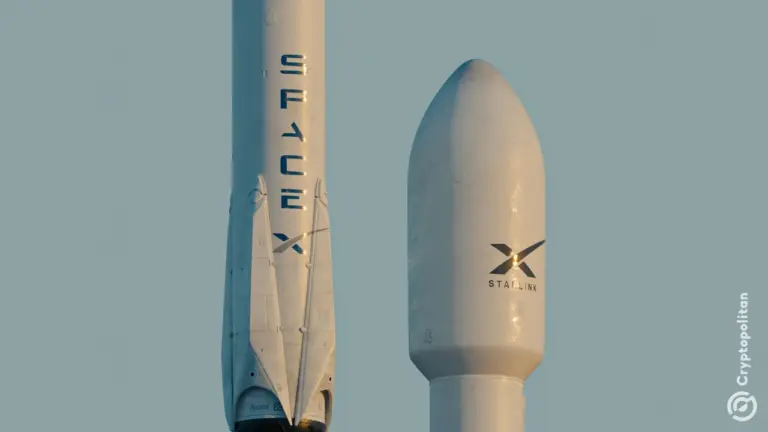
- Starlink’s January 15 policy update allows customer data use for AI training unless users opt out.
- SpaceX merging with xAI ahead of potential $1 trillion IPO in 2026.
- SpaceX filed to launch one million satellites as orbital AI data centers.
As the firm prepares for what may turn out to be one of the biggest IPOs in history, Elon Musk’s satellite internet service, Starlink, has secretly modified its privacy conditions to allow the collection of customer data for the development of artificial intelligence.
The change to Starlink’s privacy rules took effect January 15, according to the company’s website. The updated terms now state that customer information may be used for developing machine learning and AI systems, provided subscribers do not actively decline. The data could also end up with service contractors and unnamed outside partners.
Privacy experts express concerns over data use
SpaceX is considering a merger with Musk’s artificial intelligence company, xAI, according to a Reuters story on Thursday. This move comes at a crucial time for the rocket builder. With estimates indicating that SpaceX’s valuation may exceed $1 trillion after the stock market debut, the merged company would be ready for an IPO scheduled for later in 2026.
An archived copy of Starlink’s privacy document from November, which Reuters examined, contained no references to using customer information for AI purposes. SpaceX declined to provide a statement when contacted.
The satellite network collects a lot of data from its users. This contains information about people’s locations, credit card numbers, contact information, and IP addresses. According to the current privacy policy, the firm also records what it refers to as communication data, which includes audio and video recordings, the contents of shared files, and inferences made from the analysis of other personal information.
The specific kinds of data that would be fed into AI training systems are not specified in the guideline.
Consumer protection organizations and privacy experts have voiced alarm about the revision. They warn that channeling personal information into AI systems could expand monitoring capabilities and open doors to potential abuse.
“It certainly raises my eyebrow and would make me concerned if I was a Starlink user,” said Anupam Chander, a technology law professor at Georgetown University. “Often there’s perfectly legitimate uses of your data, but it doesn’t have a clear limit to what kind of uses it will be put to.“
Musk’s xAI received a recent funding round that valued the company at $230 billion. The company is building its Grok large language model chatbot and controls the X social media network. Combining with SpaceX would accelerate the space company’s AI capabilities while providing xAI with enormous new pools of information to develop its systems, including the communication records Starlink collects.
The satellite constellation now numbers over 9,000 units orbiting Earth and delivers internet access to more than 9 million customers worldwide.
Company introduces opt-out process and orbital computing plans
How users can decline
Responding to increasing questions, Starlink has established a manual process for its global subscriber base to reject data sharing. Customers must log into the Starlink website, go to the Settings section, click Edit Profile, and remove the checkmark from a box reading “Share personal data with Starlink’s trusted collaborators to train AI models.” The process currently requires web access and multi-factor verification since the option hasn’t been added to the smartphone application.
The company posted an update to its help pages on January 31, 2026, specifying that individual web browsing records and destination internet addresses will not be included in AI training materials. Instead, the systems mainly work with technical performance data and account-level details to improve customer service functions.
The privacy modification aligns with ambitious new infrastructure proposals. SpaceX submitted paperwork to the Federal Communications Commission on Friday requesting permission to deploy as many as one million satellites designed to operate as data centers in orbit. Dubbed “Orbital Computing,” the concept would shift AI processing operations into space to take advantage of uninterrupted solar power and the cooling properties of the vacuum environment.
The smartest crypto minds already read our newsletter. Want in? Join them.

Hania Humayun
Hania joined Cryptopolitan with a long history of analyzing finance, economic trends, and prediction markets. She covered topics in emerging technology, AI, and fintech. Hania’s experiences as a licensed architect have added verve and precision to newswriting. She graduated from the National College of Arts in Lahore with an Architecture degree,









