




South Korea AI champions caught using Chinese code amid $6.9B ‘sovereign AI’ outlay

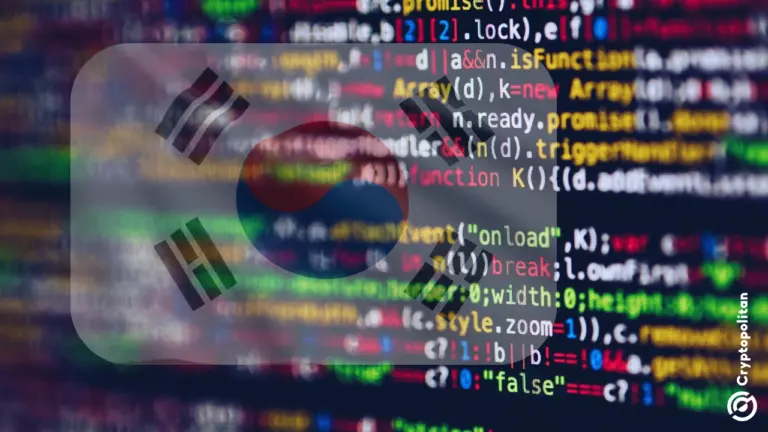
- South Korea launched a $6.9B government competition to create independent AI models that match OpenAI/Google.
- 3 of 5 finalists were caught using foreign code, including Chinese models, sparking a national debate.
- Upstage faced plagiarism accusations when rival CEO claimed its Solar Open 100B model was 96.8% similar to Chinese AI.
A South Korean government effort to develop a nationally independent artificial intelligence system has run into trouble after more than half the finalists were discovered using foreign technology in their submissions.
South Korea is placing an enormous wager on artificial intelligence. Parliament approved a massive 727.9 trillion won ($495.8 billion) budget for 2026, with President Lee Jae Myung more than tripling AI-related investment to 10.1 trillion won ($6.9 billion). The administration sees AI as nothing less than the foundation for the country’s future economic competitiveness.
But a controversy now unfolding in the government’s flagship AI competition reveals how difficult it may be to achieve the technological independence Seoul is seeking. The irony is striking. At the very moment South Korea commits record funding to build homegrown AI capabilities, the companies selected to lead that charge are being accused of relying on foreign technology.
The competition, which started last June, aims to build an AI model using only Korean-developed technology. The goal is to reduce the country’s dependence on American and Chinese artificial intelligence systems that currently control the global market.
Achieving that independence has proven harder than expected
Out of five companies that made it to the finals of the three-year contest, three have been caught using at least some computer code from AI systems built in other countries, including China.
The companies involved say it doesn’t make practical sense to ignore existing AI technology and start over from nothing. Other observers counter that bringing in foreign tools poses security dangers and defeats the whole point of creating a truly Korean AI system.
Gu-Yeon Wei, who teaches electrical engineering at Harvard University and knows about the Korean contest, said requiring every line of code to be written completely in-house isn’t realistic.
“To forgo open-source software, you’re leaving on the table this huge amount of benefit,” Wei said.
Nations around the globe are trying to become less dependent on foreign technology as they work to build their own AI capabilities. The technology could have major impacts on both economic strength and national defense.
South Korea has jumped into this race with particular energy. The country has major computer chip manufacturers, software companies, and strong government support for what officials call sovereign AI.
The competition is designed to pick two domestic winners by 2027
Those winners need to perform at least as well as 95% of the top AI models from companies like OpenAI or Google. Winners will receive government money for data collection and hiring workers, plus access to computer chips purchased by the government that are necessary for AI work.
The controversy exploded recently around Upstage, one of the five finalists. Ko Suk-hyun, who runs Sionic AI, a competing Korean company, said parts of Upstage’s AI model looked similar to an open-source system from Zhipu AI, a Chinese company. He also claimed copyright notices from Zhipu AI were still visible in some of Upstage’s computer code.
“It’s deeply regrettable that a model suspected to be a fine-tuned copy of a Chinese model was submitted to a project funded by taxpayers’ money,” Ko wrote on LinkedIn. Sionic had entered the South Korean contest but didn’t make the final round.
Upstage responded by broadcasting a live verification session where it showed its development records to demonstrate the model was built and trained from the beginning using its own techniques. However, the company acknowledged that the inference code that makes the model work did include open-source elements that came from Zhipu AI, which many developers worldwide use. Ko later apologized.
The attention then shifted to other finalists. Naver’s AI system was accused of resembling products from China’s Alibaba and OpenAI in its visual and audio encoders, which convert images and sounds into machine-readable formats.
SK Telecom faced similar questions about its inference codes looking like those from DeepSeek, another Chinese company.
Naver acknowledged using outside encoders but called it a smart choice to use standard technology. The company emphasized that its core engine, which controls how the system learns and gets trained, was built entirely by its own team. SK Telecom made the same argument, highlighting that its model’s foundation was independently developed.
The competition rules never clearly stated whether contestants could use open-source code from foreign companies. South Korea’s science ministry, which runs the contest, hasn’t issued any new guidance since the controversy started. Science Minister Bae Kyung-hoon welcomed the heated discussion.
“As I watched the technological debates currently stirring our AI industry, I actually saw a bright future for South Korean AI,” Bae wrote on social media earlier this month.
The smartest crypto minds already read our newsletter. Want in? Join them.

Noor Bazmi
Noor Bazmi contributes to Cryptopolitan news team equipped with a Media Studies degree. Noor covers news on blockchain, cryptocurrency, artificial intelligence, Big Tech, EV markets, global economics, and government policy shifts. She is taking studies in marketing to connect with global audiences.









