







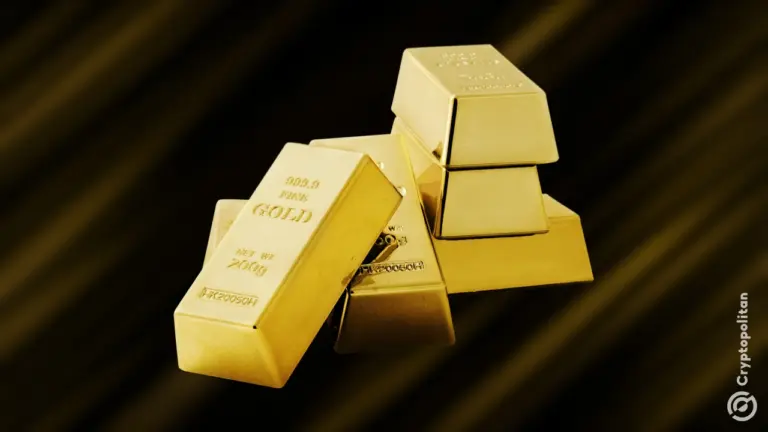
- Singapore opened The Reserve near Changi Airport with space for 10,000 tonnes of silver and 500 tonnes of gold, but it holds only a fraction of that.
- Hong Kong plans to expand gold storage from 200 tonnes to 2,000 tonnes within three years and launched renminbi contracts.
- U.S. tariff confusion and rising gold prices increased interest in regional gold hubs.
A maximum-security storage facility near Changi Airport now holds one of the world’s largest precious metals vaults, but most of its space is still empty.
The Reserve, run by Silver Bullion, started operations last year in Singapore and was built to store 10,000 tonnes of silver and 500 tonnes of gold for private banks and family offices serving ultra-wealthy clients.
Despite soaring gold prices and global tension, the vault currently holds only a small part of its full capacity. “London took 200 years to build the infrastructure to become the centre of the world gold market,” said Albert Cheng, chief executive of the Singapore Bullion Market Association. “We have lots of work to do, but it won’t take us that long.”
Gold demand is shifting east. As Singapore and Hong Kong push to challenge London, New York and Switzerland, both have launched gold futures contracts this summer and expanded warehousing and refining capacity. These moves are aimed at capturing business from investors unsettled by supply chain risks and trade disruptions.
“The centre of gold trading is increasingly moving east,” said David Greely, chief economist at Abaxx Exchange, a Singapore-based bourse that launched a gold contract earlier this year. “There is a big untapped demand for an Asian trading hub.”
Hong Kong increases storage and launches new contracts
Recent confusion over U.S. tariffs on gold spurred more interest in Asian storage hubs. In August, U.S. customs said tariffs would apply to gold bars, rattling the bullion market, but President Donald Trump reversed the policy days later.
“There is a window for these hubs to explore ramping up their product availability,” said Nicky Shiels, head of research at MKS Pamp, a Swiss refinery that has just opened its regional headquarters in Hong Kong.
While Singapore has been working for over a decade to build its status as a global gold hub, Hong Kong has accelerated its plans in recent months. In his annual policy address on September 17, city leader John Lee said Hong Kong would expand its gold storage capacity to more than 2,000 tonnes in three years, up from its current 200 tonnes, calling it a “regional gold reserve hub.”
Hong Kong’s proximity to mainland China, the largest consumer and producer of gold, makes it attractive for traders. The Shanghai Gold Exchange is using Hong Kong to promote its renminbi-denominated gold contracts to international investors. In June, SGE opened its first offshore vault in Hong Kong and launched two renminbi-denominated contracts there.
Several international refineries have already set up in Hong Kong, including Heraeus and Metalor, while MKS Pamp joined the launch of the new SGE contracts. But some traders warn about political risk.
“There is always this fear — is it a true international market, or is it something where, if the Chinese government didn’t like the result, they could change the rules?” said Robert Gottlieb, a former gold trader at JPMorgan and HSBC.
Singapore expands vaulting and keeps neutral ground
Singapore’s political neutrality drew BullionVault to pick the city-state over Hong Kong, said Adrian Ash, head of research at the trading platform.
Both markets still need to improve liquidity, storage, custody and settlement services to compete with older centers, said Gregor Gregersen, founder of Silver Bullion. “What really matters in this industry is building up liquidity,” he said.
Hong Kong still trails Singapore in warehouse capacity. The 30,000 sq m Le Freeport, opened in 2010 and often called “Singapore’s Fort Knox,” was originally built to hold fine art but now stores luxury cars, wine, jewelry and precious metals.
Specialist storage firms like Brink’s and Loomis use the facility. “On the vaulting side, we are ahead in Singapore; on trading, I would say Hong Kong is ahead,” said Gregersen. “Both hubs have realised that the world is changing and they need to revisit their role when it comes to gold.”
If you're reading this, you’re already ahead. Stay there with our newsletter.
Disclaimer. The information provided is not trading advice. Cryptopolitan.com holds no liability for any investments made based on the information provided on this page. We strongly recommend independent research and/or consultation with a qualified professional before making any investment decisions.

Jai Hamid
Jai Hamid has been covering crypto, stock markets, technology, the global economy, and the geopolitical events that affect markets for the past 6 years. She has worked with blockchain-focused publications including AMB Crypto, Coin Edition, and CryptoTale on market analyses, major companies, regulation, and macroeconomic trends. She has attended London School of Journalism and thrice shared crypto market insights on one of Africa’s top TV networks.









