





- Wall Street believes Russia will find ways to bypass Trump’s oil sanctions.
- India and China are cutting Russian oil purchases and turning to the Middle East.
- Moscow is expected to copy Iran’s tactics using shadow fleets and fake tracking.
Wall Street isn’t fooled. Investors believe Russia will beat Trump’s new oil sanctions the same way Iran did; slowly, but quite effectively.
The penalties slapped on Rosneft and Lukoil are serious. But nothing in oil trading ever stays blocked for long. Moscow has workarounds and plenty of patience.
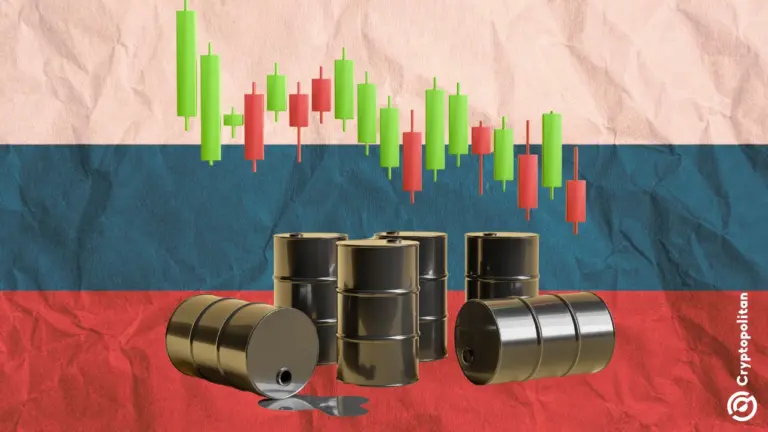
This week, Brent crude climbed nearly $5 to reach $66 a barrel after Washington announced sanctions on two of Russia’s biggest producers, a jolt to global flows.
These two companies funnel barrels straight to India and China, Moscow’s top buyers. In theory, this should shake oil prices long-term. In reality, it probably won’t. Traders are already adapting.
India slashes Russian barrels while China shifts quietly
The pricing gap between Brent futures and Dubai swaps, called the Brent/Dubai EFS, has shrunk fast. Tom Reed from Argus Media said this shows that Middle Eastern sour crude is no longer cheap compared to Atlantic oil.
That usually signals a demand switch. China and India are quietly switching away from sanctioned Russia and picking up barrels from Gulf countries.
But the shift is uneven. India’s refineries are already reacting. In July, they were buying 1.7 million barrels per day of Russia’s crude.
By October, that’s dropped to 1.57 million barrels a day, according to Kpler data. That dip might grow. Trump had already smacked India with a 25% tariff on its U.S. imports back in August because of its Russian oil ties. Still, New Delhi kept buying. But now, these are sanctions, not just tariffs. The game’s changed.
Reliance Industries, one of the biggest buyers of Rosneft crude, said it is “recalibrating” its purchases. The company isn’t alone. Any firm doing business with Rosneft or Lukoil risks getting added to the Treasury’s Specially Designated Nationals and Blocked Persons List. That blacklist locks companies out of the global financial system. No dollars, no deals. That’s a problem.
China’s response is more complicated. Its state-owned refiners are stepping back. But private ones, the so-called “teapot” refineries in Shandong, might still take the risk. These are the same guys who buy Iranian barrels even under sanctions.
The problem? Their government gives them annual import quotas, and most of those are already maxed out this year. So don’t expect them to absorb Russia’s extra oil anytime soon.
Shadow fleets grow as Moscow copies Iran’s playbook
Despite all the sanctions talk, the global oil flow hasn’t dropped. Claire Jungman from Vortexa said Russia’s oil exports hit a record high last month. Iran’s exports also reached their highest level since 2018, even after being hit with over a dozen separate U.S. sanctions this year.
The reason? Evasion tactics. Iran’s built a system that works: ship-to-ship transfers, fake transponders, mystery ports. And it’s growing. The shadow fleet moving sanctioned oil has quadrupled in the last three years. Russia is expected to do the same.
Sure, Iran has to sell at a discount. But it’s still exporting. And Russia likely will too. It’ll just take months to build the new networks. New logistics. New middlemen. New flags on ships. Moscow will mask the barrels’ origins and keep the flow going; just slower, harder, and more expensive.
Meanwhile, there’s a strategic twist. Beijing has been buying more oil than it needs all year. Rystad Energy estimates show its storage is only 60% full. That means it still has room to stockpile. With these new U.S. sanctions not covering pipeline oil, China’s 800,000 barrels per day from Russia via pipeline won’t stop. But the political risk will push Beijing to hoard more.
These sanctions won’t reduce global oil supply. They’ll just stretch it. Putin gets less cash. China gets more cautious. And Washington gets a small win; squeeze Russia without spiking gas prices at home.
Don’t just read crypto news. Understand it. Subscribe to our newsletter. It's free.
Disclaimer. The information provided is not trading advice. Cryptopolitan.com holds no liability for any investments made based on the information provided on this page. We strongly recommend independent research and/or consultation with a qualified professional before making any investment decisions.

Jai Hamid
Jai Hamid has been covering crypto, stock markets, technology, the global economy, and the geopolitical events that affect markets for the past 6 years. She has worked with blockchain-focused publications including AMB Crypto, Coin Edition, and CryptoTale on market analyses, major companies, regulation, and macroeconomic trends. She has attended London School of Journalism and thrice shared crypto market insights on one of Africa’s top TV networks.









