






Nvidia spy-plot report revives scrutiny of offshore data centers serving China

- U.S. intelligence assessed Megaspeed executive Alice Huang, who had a close relationship with Nvidia CEO Jensen Huang, as a Chinese intelligence asset.
- Nvidia told CNBC the meetings were routine and that earlier chip-diversion claims were “investigated and debunked.”
- The episode matters because it could revive pressure to restrict offshore data centers that funnel Nvidia computing power to Chinese firms, though no new rules or market damage have been established as a result.
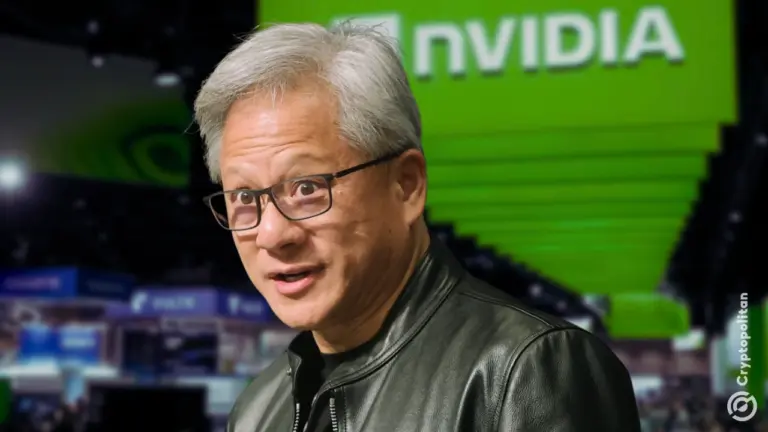
An October 29, 2026, New York Times investigation has put Nvidia CEO Jensen Huang under an uncomfortable spotlight.
Citing U.S. intelligence findings, it says Alice Huang, a former executive at Singapore-based cloud provider Megaspeed, was identified as a Chinese intelligence asset and had become close to him. It also revives scrutiny of offshore clouds serving China. No public evidence implicates Jensen Huang in espionage.
From chip-diversion suspicions to an alleged asset
As reported by the Times, Alice Huang, better known as Huang Le, was first brought to the attention of the US authorities due to suspicion that she was facilitating the transfer of prohibited AI chips to China.
Further gathering of evidence turned out to be very suspicious and revealed that she was sharing intelligence with China, too. Although Alice Huang has a close relationship with Jensen Huang, they are not related. The accusations were made by persons who were familiar with classified security information and not based on arrest warrants or court decisions.
Reports suggest that President Donald Trump was informed about the results almost a year prior to the October 2026 report, but he did not take any steps.
He had apparently expressed concern that taking steps would affect Nvidia’s chip trade and trade negotiations with China. Jensen Huang, on the other hand, did not get any defensive briefing regarding the suspected intelligence threat. Alice Huang did not respond to the requests for comment, and the Chinese embassy in Washington referred to the claims as groundless.
Nvidia countered claims that Jensen Huang’s connection with Alice Huang is uncommon. Nvidia spokesperson John Rizzo told CNBC that the CEO meets numerous customer executives each year. He added that Megaspeed receives only routine business information, instead of trade secrets.
The company also insisted that claims about diverted chips had been “thoroughly investigated and debunked” in 2025. However, this is the position of Nvidia. It is not yet supported by government findings officially stating that Megaspeed was cleared.
Similarly, Megaspeed announced that it had enlisted the services of third-party attorneys to conduct its own investigation and confirmed that it would be collaborating with the US authorities. Still, the controversy that surrounds Megaspeed’s operations seems to persist despite the statements issued by either of the two companies.
Congress presses, and the export-control exposure is on record
According to The Times, the Commerce Department started investigating Megaspeed in late 2024 and forwarded the case to the Justice Department in 2026. ImportGenius data shows that Megaspeed’s Malaysian affiliate bought at least $4.8 billion worth of AI equipment containing Nvidia tech from June 2024 to February 2026, reflecting the equipment value, not Nvidia’s revenue.
Senator Elizabeth Warren wants more than reassurance. In an October 29 statement, the Senate Banking Committee’s top Democrat recalled urging Nvidia’s board in June to investigate the company’s compliance with U.S. export controls. She argued the latest allegations demand answers.
“NVIDIA’s Jensen Huang and NVIDIA’s board owe Congress answers.”
Warren also called for bipartisan legislation to prevent advanced American technology from reaching China.
The dispute comes as export restrictions are already taking a financial toll on Nvidia. Its SEC filing records a $4.5 billion H20 inventory and purchase-obligation charge in the first quarter of fiscal 2026, followed by a separate $400 million H200 charge in the first half of fiscal 2027. Nvidia also reported that Chinese restrictions limited sales even after Washington granted export licenses.

Would tighter rules slow China, or speed its substitution?
Stricter enforcement could make advanced chips harder for Chinese firms to access. But it might also give local suppliers a bigger opening. As Cryptopolitan reported, Bernstein projected Nvidia’s share of China’s AI-chip market falling from nearly 40% in 2025 to about 8% in 2026, with Huawei exceeding 50%. A TrendForce-cited survey expected domestic chips to account for 46% of accelerator spending over the following year, up from roughly 30%.
The Bloomsbury Intelligence and Security Institute cited Huawei and Cambricon’s nearly 80% share of China’s domestic AI-server market—a different measure. Goldman Sachs describes intensifying competition among Chinese AI models, while BCG sees an AI industry increasingly divided between the U.S. and China.
Would a crackdown slow China’s AI progress—or accelerate its shift to domestic chips?
The smartest crypto minds already read our newsletter. Want in? Join them.
FAQs
Who is Alice Huang and how is she connected to Nvidia?
Per the New York Times, Alice Huang, also known as Huang Le, is a Chinese citizen and former senior official at Singapore-based Megaspeed, a cloud firm that buys Nvidia chips and rents computing power to Chinese companies such as Alibaba. The report says she developed a close relationship with Nvidia CEO Jensen Huang, who is not related to her.
What has Nvidia said about the report?
Nvidia spokesman John Rizzo told CNBC that Megaspeed is an ordinary regional cloud customer, that Jensen Huang's meetings with its officials are routine, and that customers receive no trade secrets or national-security information. Nvidia said earlier diversion allegations were "thoroughly investigated and debunked last year," its own characterization rather than a documented government clearance.
Did the alleged spy plot trigger new export restrictions on China?
No. The reporting describes intelligence allegations and an ongoing Justice Department matter, not new rules; Senator Elizabeth Warren has pressed for tougher legislation, but no additional restrictions or market consequences have been established as outcomes of the report.
Disclaimer. The information provided is not trading advice. Cryptopolitan.com holds no liability for any investments made based on the information provided on this page. We strongly recommend independent research and/or consultation with a qualified professional before making any investment decisions.

Ibiam Wayas
Ibiam Wayas has covered the crypto news beat since 2019. He studied Computer Science at National Open University of Nigeria. His work has appeared on various crypto news platforms, including Coinfomania, Crypto News Australia, and AltcoinBuzz. Drawing on his background in Computer Science, he now focuses on crypto, robotics, and longevity news.









