





Meta opens Muse Spark 1.1 to US developers at launch as a coding API

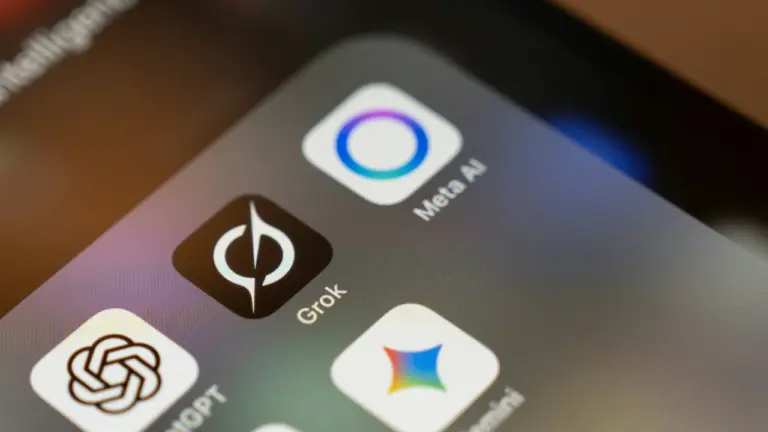
Photo by Salvador Rios via Unsplash.
- Meta launched Muse Spark 1.1, pitting the model in direct competition with OpenAI, Google, and Anthropic on coding and agentic tasks.
- The model comes as Meta spends up to $145 billion this year to close the gap with rivals.
- A larger model, codenamed Watermelon, is still in training and has reportedly matched OpenAI’s GPT-5.5 on key benchmarks.
Meta released Muse Spark 1.1 on Thursday and made it open to US developers through a new Meta Model API, creating direct competition with OpenAI, Google, and Anthropic.
The model is available immediately in Thinking mode inside the Meta AI app and on the Meta AI website.
Developers who want to plug it into their own coding software can now do so through the Meta Model API, which launched the same day in public preview for US accounts. Meta is handing out $20 in free credits to every new account on the API.
What has changed since April?
Muse Spark was released in April as Meta’s return to the AI model race, with the company describing version 1.1 as a “step-change” over that release.
The new update handles more advanced coding work, can spot and repair complex bugs, and runs agentic workflows across multiple apps, including multi-agent setups. Muse can also read images, videos, and documents, a trait the company calls native multimodal perception.
Wang says a bigger model is on the way
The coding push follows public comments from Meta’s AI chief, Alexandr Wang. In a post on X, Wang said a Muse Spark update was near and would bring gains in coding and agentic ability aimed at narrowing the distance to rival models.
Asked when Meta would field a coding model matching Anthropic’s Claude Opus, he answered: “pretty soon.”
Behind Muse Spark, internally codenamed Avocado, sits a larger model in training that Meta calls Watermelon.
At an internal town hall, Wang told staff that Watermelon had caught up with OpenAI’s GPT-5.5 on closely watched benchmarks, citing two people familiar with the meeting. He did not give details as to which benchmarks, and Meta declined to comment.
The money behind the effort
Meta has spent heavily to reach this point. The company told investors it expects to increase spending to $125 billion and $145 billion this year on chips, data centers, and other infrastructure. This includes Iris, Meta’s first in-house AI chip, which is set to enter production in September with Broadcom on design duties and TSMC handling fabrication.
Investors are still in limbo, with Meta stock closing at a record $796.25 on July 1, then falling to $603.12 by July 8 and dropping again to $580.50 in Thursday pre-market trading.
Muse Spark started as a Meta AI feature before it began running the chatbots inside Instagram, WhatsApp, and the company’s latest smart glasses.
With the Meta Model API now open, the next step is to watch whether outside developers pick it over the likes of OpenAI, Google, and Anthropic, and when Watermelon moves from training to release.
The smartest crypto minds already read our newsletter. Want in? Join them.
FAQs
What is Muse Spark 1.1, and who can use it?
Muse Spark 1.1 is Meta's updated AI model for coding and agentic tasks, available to US developers through the new Meta Model API in public preview.
How much does the Meta Model API cost to start?
Meta is including $20 worth of free credits with every new Meta Model API account.
What is Watermelon, and how does it relate to Muse Spark?
Watermelon is Meta's next model, still in training, that uses an order of magnitude more compute than Muse Spark (codenamed Avocado); Meta AI chief Alexandr Wang told employees it has caught up with OpenAI's GPT-5.5 on benchmarks.

Hannah Collymore
Hannah is a writer and editor with nearly a decade of blog writing and event reporting experience in the crypto space. At Cryptopolitan, Hannah contributes to the news page, reporting and analyzing the latest developments in DeFi, RWA, crypto regulation, AI and frontier tech industries. She graduated from Arcadia university with a degree in Business Administration.









