




- A Korean lawmaker has called on the country to institutionalize stablecoins to protect its payment sovereignty.
- He urged the government to expand and legalize the use of stablecoins in the country.
- South Korean businesses now pay foreign workers in dollar-backed stablecoins.
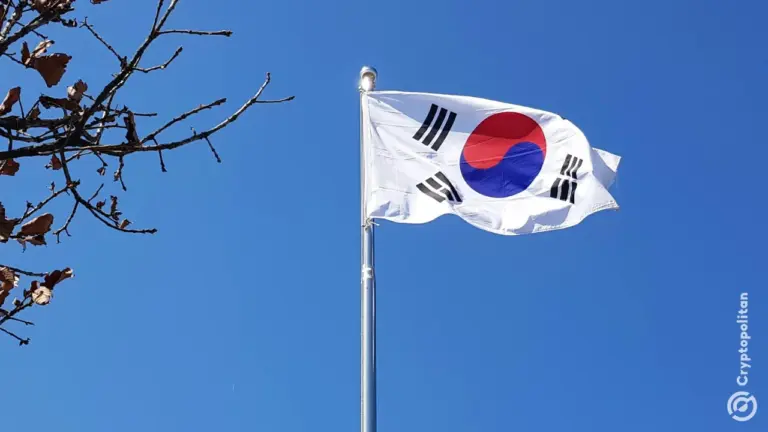
A South Korean lawmaker has urged the country to swiftly move forward with the institutionalization of stablecoins to protect its payment sovereignty. According to Rep. Min Byoung-dug of the Democratic Party of Korea, the move will also help the country stay competitive in a rapidly changing financial system.
The Korean lawmaker made this known while speaking at the final session of the eighth Global Business Forum, hosted by Herald Business in Seoul. He urged the Korean government to work with traditional financial institutions to accelerate efforts to legalize and expand the use of stablecoins in the country. The Korean lawmaker also warned that if the country delays, it could leave the vulnerable behind as global payment standards evolve.
Korean lawmaker urges government to institutionalize stablecoins
Min, a member of the National Assembly’s Political Affairs Committee and a key figure in Korea’s crypto policy debate, mentioned that stablecoins are now here to stay. “Stablecoins are no longer a question of whether we should do them or not,” he said. “The only question left is how fast and how well we do them.” Min described stablecoins as an inevitable tool for cross-border payments, trade settlement, and remittances.
The Korean lawmaker also highlighted that stablecoin tied to the value of the United States dollar have now become tools being used in global commerce. He warned that if the Korean government fails to approve the development of a stablecoin backed by the won in time, it could lead to the erosion of monetary sovereignty. Min noted that the dollar-pegged stablecoins have now become a new form of money that governments adopt.
The lawmaker highlighted the characteristics of these forms of money, noting that they are faster and cheaper when used to make cross-border transactions. Min also added that Korean companies may soon be faced with the dilemma of having to accept dollar-backed stablecoins during their trades overseas, irrespective of national policy preferences, noting that there are already signs that things are shifting in that regard domestically.
Businesses are now adopting dollar-pegged stablecoins
Small businesses in Korea are now paying foreign workers in dollar-based stablecoins at their request. Meanwhile, other firms are looking into using the stablecoins for international settlements. Min highlighted that these practices would soon become routine as foreign stablecoin risks become entrenched in everyday transactions before domestic rules are put in place to control their usage in specific aspects of the country.
“That’s when monetary sovereignty disappears,” Min warned, adding that payment standards, once widely adopted, are difficult to reverse. Despite the growing calls for regulation in that aspect of the market, the Korean government has yet to complete its regulatory framework for digital assets. So far, authorities have focused on consumer protection and putting several anti-money laundering guardrails in place in line with the Virtual Assets User Protection Act.
Policy discussions have now shifted towards more structural legislation. Regulators and lawmakers are now preparing a framework titled the Digital Asset Basic Act, which is presently in its second phase. This would formally recognize digital assets, define their legal status, and establish principles governing issuance and use beyond speculative trading. Min highlighted that in this case, a won-backed stablecoin will act as a defensive tool and a growth strategy.
Min also highlighted that instead of developing a won-backed stablecoin that would compete with dollar-backed stablecoin, the Korean government should look into developing a stablecoin with different use cases that can leverage the country’s strengths. “If we make a stablecoin that’s especially useful for cultural payments or for small businesses, and turn global users into repeat customers, Korea can secure a meaningful share of the market,” he said.
Also in attendance at the forum was Deputy Head of Mission Sarah McDowell of the New Zealand Embassy in Seoul. She highlighted the need to grow bilateral trade ties in her welcome address, noting that New Zealand is open and willing to do business. “Two-way trade has more than doubled since our free trade agreement entered into force ten years ago, and Korea is now New Zealand’s fifth-largest trading partner,” McDowell added.
If you're reading this, you’re already ahead. Stay there with our newsletter.
Disclaimer. The information provided is not trading advice. Cryptopolitan.com holds no liability for any investments made based on the information provided on this page. We strongly recommend independent research and/or consultation with a qualified professional before making any investment decisions.

Owotunse Adebayo
Adebayo is a writer with four years of experience in the crypto space. He graduated from the University of Lagos where he studied Urban and Regional planning. Adebayo has worked at Tokenhell and CryptoTicker, writing cryptocurrency and Fintech news. He is currently a news contributor with Cryptopolitan.









