





Jeff Bezos shuts down AI-induced job loss talk, predicts labor shortage instead

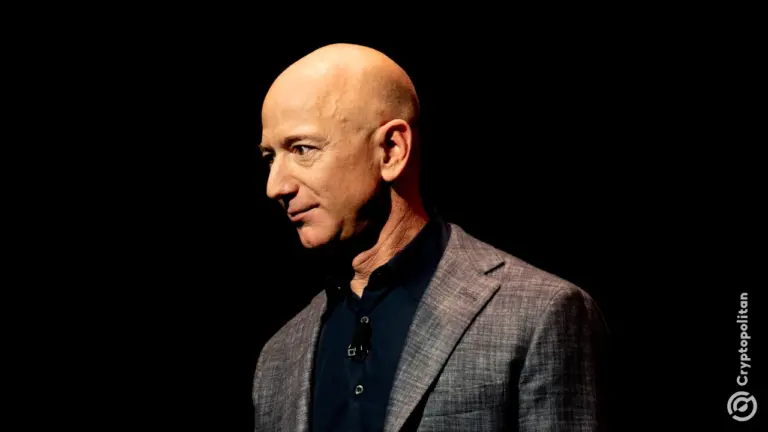
Photo by Daniel Oberhaus, 2019 via Flickr.
- Jeff Bezos predicted AI will cause labor shortages rather than mass unemployment, joining Sam Altman in downplaying job-loss fears.
- Federal and corporate data show that nearly 50,000 AI-linked cuts have been announced in the U.S. this year.
- The ILO estimates 75 million jobs face automation risk globally.
Jeff Bezos recently stated that artificial intelligence will result in labor scarcity and raise the global standard of living. He joins a growing number of tech leaders who are pushing back on fears that AI will lead to mass unemployment.
However, federal data and the number of laid-off corporate employees paint a more complicated picture for millions of workers than these tech leaders would have them believe.
Is AI actually causing people to lose their jobs?
While AI did not lead to a full-blown “job apocalypse” as expected by some tech leaders like OpenAI’s Sam Altman, the hiring market has truly cooled significantly since ChatGPT launched in late 2022.
New York Fed researchers examined whether hiring had slowed specifically in AI-exposed occupations and found what they described as “little indication” of a decline in labor demand driven by AI adoption.
Hiring for junior developer jobs in the U.S. has fallen 55% since 2019. The Federal Reserve’s 2025 household survey found that roughly one in four American workers now use generative AI on the job, while 81% say it saves them time.
Census Bureau data shows that about 18% of firms had adopted AI by the end of 2025, and the Fed estimates that 78% of the labor force works at companies that have deployed the technology.
S&P 500 companies shed more than 400,000 roles over the past year, marking the first annual employment decline since 2016. Outplacement firm Challenger, Gray & Christmas counted close to 50,000 AI-linked job cuts announced by American companies so far in 2026. That is roughly 17% of all layoffs disclosed this year.
Goldman Sachs research estimates that AI shaved about 16,000 jobs per month from U.S. payroll growth over the past year.
So yes, AI is causing damage to the workforce, but rather than through massive firings, the main cause is reduced hiring, especially of junior workers, as Columbia Business School professor Daniel Keum puts it.
What does the workforce, in its current state, have to offer new graduates?
The International Labor Organization (ILO) estimates that 75 million jobs worldwide face automation risk from generative AI. In high-income countries, that number rises by 5.1% (about 30 million positions). Women face 2.5 times the automation risk of men, according to ILO research.
Sam Altman recently stated at a Commonwealth Bank of Australia event that he had been “pretty wrong” about the social and economic consequences of AI, but during that same week, Meta began cutting approximately 8,000 staff, describing the restructuring as tied to AI investment.
Altman’s opinion was changed after he ran an experiment in which he let an AI handle his Slack and email messages. The exercise reportedly convinced him that people still place a high value on authentic human interaction.
Jeff Bezos also recently kicked back on the opinion that AI will lead to massive unemployment, arguing that productivity gains would ultimately leave employers scrambling for talent rather than shedding it.
A New York Fed study tracking more than 1.6 million job-training cases found that retraining does help. Workers in fields exposed to AI who retrained earned about $1,470 more per quarter than those who only got job-search help.
However, workers who were specifically trained for AI-intensive roles faced a 29% earnings penalty compared to those who pursued broader training.
The smartest crypto minds already read our newsletter. Want in? Join them.
FAQs
What did Jeff Bezos say about AI and jobs?
Bezos said AI would lead to labor scarcity rather than mass unemployment and would raise the standard of living, framing the technology's economic impact as a path toward prosperity rather than widespread job loss.
How many U.S. workers currently use AI on the job?
The Federal Reserve's 2025 household survey found that roughly one in four American workers use generative AI at work, with 81% of those users saying the technology saves them time.
Does retraining help workers displaced by AI?
A New York Fed study of over 1.6 million training spells found retrained workers in AI-exposed occupations earned about $1,470 more per quarter, but those who specifically targeted AI-intensive roles faced a 29% earnings penalty compared with workers who pursued more general training.

Hannah Collymore
Hannah is a writer and editor with nearly a decade of blog writing and event reporting experience in the crypto space. At Cryptopolitan, Hannah contributes to the news page, reporting and analyzing the latest developments in DeFi, RWA, crypto regulation, AI and frontier tech industries. She graduated from Arcadia university with a degree in Business Administration.









