






Japan’s 20% crypto tax bill advances through House, opens doors for ETFs

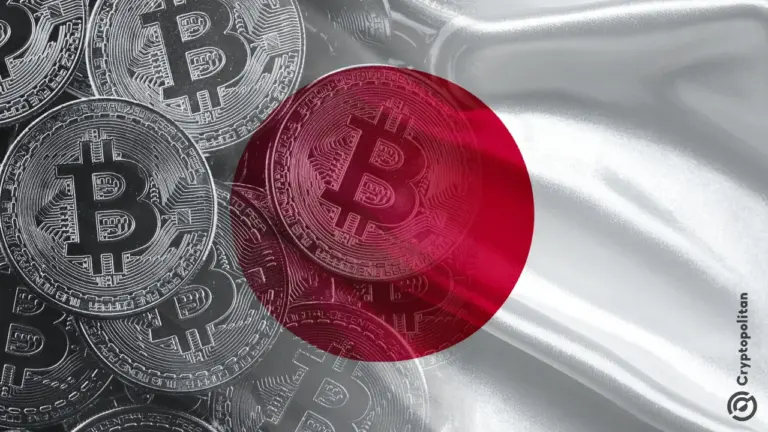
- Japan’s House of Councillors passed a law on July 15 that reclassifies crypto as a financial product.
- The law also cuts the tax on trading gains from as high as 55% to a flat 20%, and creates the legal basis for domestic crypto ETFs.
- The reclassification takes effect in fiscal 2027 and the 20% rate applies from January 1, 2028.
Japan’s House of Councillors have passed a law that reclassifies crypto as a financial product and replaces the high tax rate with a flat 20%.
This law creates the legal groundwork for domestic crypto exchange-traded funds (ETFs). Some Japanese retail traders, exchanges, and asset managers are already lining up to launch ETF products.
What has Japan changed for crypto taxes and investors?
Japan’s House of Councillors have passed a landmark law that reclassifies cryptocurrency, which was previously treated as a payment method, as a financial product. The same law replaces the tax rate on trading gains from as high as 55% to flat 20% and creates the legal groundwork for domestic crypto ETFs.
The bill changes two existing laws; the Payment Services Act and the Financial Instruments and Exchange Act (FIEA).
Exchange operators, previously called crypto asset exchange businesses, will get a new name under the new system. Firms selling unregistered crypto assets now face up to 10 years in prison, up from three years, with maximum fines rising from 3 million yen ($18,500) to 10 million yen ($61,600).
Crypto profits will now be taxed the same way stock profits are taxed. Investors will also now be able to carry losses forward for three years.
The new rate covers every token that licensed domestic exchanges list, which is roughly 105 tokens, including Bitcoin (BTC) and Ether (ETH).
The tax change is dependent on the reclassification taking effect, which is set for fiscal 2027, the new 20% rate will apply from January 1, 2028.
The law introduces insider-trading rules to crypto for the first time. Investors cannot trade based on secret information, like a company’s new business plans or when a token will be listed or removed.
The Securities and Exchange Surveillance Commission gets new investigative powers. There is also a new system for administrative fines. Issuers of certain crypto assets must publish information once a year.
What changes about ETFs and smaller exchanges?
The law creates the framework that lets crypto ETFs be set up and listed. Japan Exchange Group is reported to be looking at a listing around 2027. Trust banks and securities firms are expected to bring in money from big investors.
Cryptopolitan previously reported that Nomura Holdings (TYO: 8604) and SBI Holdings (TYO: 8473) are among the firms preparing crypto products. SBI Securities and Rakuten Securities are ready to sell ETFs once the rules allow it.
However, Cryptopolitan reported that Shohei Matsumoto, an executive at Tokyo consultancy Pacific Meta, estimates that about half of Japan’s 27 registered exchanges could be forced to close due to the cost of following the new compliance rules. At the same time, it opens the market to banks, insurers, and large asset managers.
The tax relief also does not cover everything. Staking rewards, lending and DeFi yields, NFTs, and trades on foreign or unregistered exchanges still get taxed as miscellaneous income at rates up to 55%. That creates a two-tier system where stablecoins also stay under the payment-services rules, not the securities rules.
Finance Minister Satsuki Katayama has named 2026 a year for financial reform. The detailed rules still need to be written, but reserve requirements, leverage limits on derivatives, custody rules, and anti-money-laundering standards will be set through cabinet orders and supervisory guidelines over the next year before the law takes effect.
The smartest crypto minds already read our newsletter. Want in? Join them.
FAQs
When does Japan's new 20% crypto tax take effect?
The flat 20% rate is scheduled to apply from January 1, 2028, because it depends on the reclassification taking effect in fiscal 2027.
What does the new law change about how crypto is regulated in Japan?
It moves crypto from the Payment Services Act to the Financial Instruments and Exchange Act, defining crypto as a financial product for the first time, adding insider-trading rules, and raising the maximum prison term for unregistered sales from three years to 10.
Will the lower tax rate apply to all crypto activity?
No. Staking rewards, DeFi yields, NFTs, and trades on foreign or unregistered exchanges remain taxed as miscellaneous income at rates up to 55%, and stablecoins stay under the payment-services framework.
Disclaimer. The information provided is not trading advice. Cryptopolitan.com holds no liability for any investments made based on the information provided on this page. We strongly recommend independent research and/or consultation with a qualified professional before making any investment decisions.

Hannah Collymore
Hannah is a writer and editor with nearly a decade of blog writing and event reporting experience in the crypto space. At Cryptopolitan, Hannah contributes to the news page, reporting and analyzing the latest developments in DeFi, RWA, crypto regulation, AI and frontier tech industries. She graduated from Arcadia university with a degree in Business Administration.









