







- Hayes argues that the US-Iran conflict will force the Fed to ease, boosting Bitcoin as fiat weakens.
- Economists counter that oil shocks would fuel inflation, keeping rates high or rising.
- His advice: wait for a clear Fed signal before buying Bitcoin, don’t chase the hype.
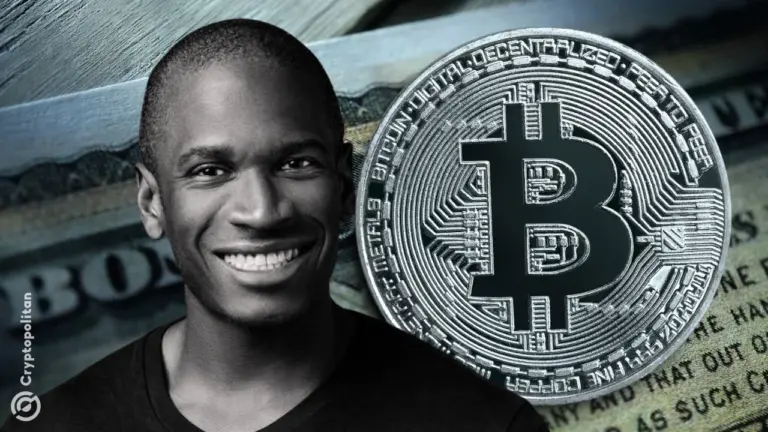
Arthur Hayes, a co-founder of BitMEX, is using geopolitical flashpoints as a crypto macroplay once more. In his most recent Substack essay, “iOS Warfare,” he makes the argument that a prolonged military invasion of Iran by the United States will almost certainly compel the Federal Reserve to implement aggressive monetary accommodation, with Bitcoin positioned to profit as fiat debasement picks up speed.
The piece argues that going back 40 years, every major US military operation in the Middle East has ended with the Fed loosening monetary policy. He sees no reason why a conflict with Iran would be any different.
A pattern going back decades
Hayes provided evidence of three earlier conflicts. Despite rising oil prices driving inflation during the 1990 Gulf War, the Fed promptly lowered interest rates in November and December after originally holding them unchanged.
In an effort to boost confidence in the face of declining asset values following 9/11, Alan Greenspan issued an emergency 50 basis point decrease in 2001.
With interest rates already at zero, the Fed initiated quantitative easing during Obama’s 2009 Afghanistan surge to generate almost limitless money for defense contractors and the war effort.
The hidden cost of war
Hayes argues that the public always pays the price for conflict, which is a “net energy loss”. Money moving from everyday consumers to military operations, in this case, what he called “offensive agentic AI weapons”, causes inflation, which is a hidden tax on all.
Iran is in a particularly precarious position when it comes to foreign trade, he noted. The country has the ability to block the Strait of Hormuz, a narrow waterway that transports about 20% of the world’s oil supply. Any disruption there would shock the energy markets.
According to Hayes, this economic pressure provides the Fed with “political cover” to drastically loosen monetary policy, justifying any rate reduction as being required to fund what he called the transformation of Iran into an American “vassal state.”
However, it is not how everyone views it. Many mainstream economists caution that a significant escalation with Iran would not pave the way for Fed rate cuts in 2026, but would destroy any chance of them.
According to Boston College economist Brian Bethune, the argument for lower rates is “evaporating right before our very eyes” because the conflict’s increased oil prices, along with the harsh tariffs currently in place, will keep inflation persistently high.
According to him, these are typical supply-side shocks that raise prices everywhere, and the Fed’s standard instruments aren’t designed to address that kind of issue; they’re meant to address demand, not supply disruptions. “In this situation, the Fed can’t lower rates,” he stated.
Even little rises in crude prices, such as the $10 per barrel hikes this year, can raise consumer-price inflation by 0.2% to 0.4% in the next year, according to Scott Anderson of BMO Capital Markets. A protracted conflict could exacerbate inflation, which might force the Fed to hold rates steady or even rise rather than ease, given that core PCE is already approaching 3.1% in early 2026.
While a full oil crisis isn’t assured, Christopher Granville of TS Lombard pointed out that a “oil squall” akin to the one that followed the invasion of Ukraine, in which prices spiked above $100 per barrel for months, might establish a long-lasting risk premium and make inflation stickier and more difficult for the Fed to control.
Hayes warned investors against jumping in too soon, despite his optimistic long-term outlook on Bitcoin. Bitcoin was around $66,200 at the time he wrote the piece. He recommended holding off on making more purchases until the Fed gave a clear signal, such as announcing a rate cut or printing more money.
Hayes’s takeaway: When things get nasty, have patience. Hold onto your cash and wait for unambiguous indications that the Fed is relaxing, rather than chasing the hype. At that point, you turn global drama into a traditional inflation play by loading up on Bitcoin and your finest investments.
If you're reading this, you’re already ahead. Stay there with our newsletter.
Disclaimer. The information provided is not trading advice. Cryptopolitan.com holds no liability for any investments made based on the information provided on this page. We strongly recommend independent research and/or consultation with a qualified professional before making any investment decisions.

Hania Humayun
Hania joined Cryptopolitan with a long history of analyzing finance, economic trends, and prediction markets. She covered topics in emerging technology, AI, and fintech. Hania’s experiences as a licensed architect have added verve and precision to newswriting. She graduated from the National College of Arts in Lahore with an Architecture degree,









