


LATEST NEWS
SELECTED FOR YOU

Best crypto insights delivered straight to your inbox.
Crypto and US stocks drag global markets down as traders remain unsure of what to do


Live Reporting
But as tech valuations face renewed scrutiny, Nvidia’s performance may serve as the next inflection point. After soaring to a record $5 trillion valuation last month, shares of Nvidia are now down nearly 8% in November, despite being up 39% year-to-date. The company now represents about 8% of the S&P 500, giving it massive market-moving potential.
Hardika Singh, economic strategist at Fundstrat Global Advisors, summed up the sentiment: “If Nvidia is able to make the rest of the tech trade look better, help it recover from the doldrums it’s been in over the past few weeks, that could be a turning point.”
Expectations are sky-high. Nvidia has inked a flurry of massive deals recently:
-
A $100B OpenAI data center build-out
-
A $5B collaboration stake in Intel for AI processors
-
A $1B position in Nokia to co-develop 6G infrastructure
Still, some market veterans are warning not to get swept up. Michael Burry has accused large tech firms of aggressive accounting to sustain the AI hype, and strategists like Peter Corey at Pave Finance say these isolated risks may be small on their own but could add up to broader pressure.
This LIVE event has officially ended.
The Nasdaq Composite finally caught a break Friday, rebounding 0.6% as investors bought the dip in beaten-down tech stocks, halting a three-day losing streak that had erased billions from the sector’s market cap.
The recovery came after Thursday’s drubbing, the worst session in over a month, where the Nasdaq dropped more than 2%. Earlier in Friday’s session, it looked like more pain was coming: the Nasdaq had been down 1.9% intraday, and the S&P 500 was off about 1.4% before bulls stepped in.
By the closing stretch:
-
S&P 500: up 0.3%
-
Dow Jones: down 181 points (–0.4%)
-
Nasdaq Composite: up 0.6%
The tech rebound was led by AI-focused names like Nvidia, Oracle, Palantir, and Tesla, which all reversed losses from Thursday’s steep declines. Both Palantir and Tesla had dropped more than 6% the previous day, but bargain hunters brought some relief.
The Technology Select Sector SPDR Fund (XLK) rose about 1%, clawing back a chunk of its 2% loss from the prior session, as sentiment across the tech sector tentatively stabilized.
This post is updated LIVE.
Bitcoin’s slide deepened Friday, with the world’s largest cryptocurrency now down over 24% from its all-time high above $126,000 in October, trading precariously close to a critical $93,000 support level.
According to 10X Research, the market is currently lacking a meaningful marginal buyer, a dynamic that’s showing up across multiple on-chain metrics.
In a Friday morning client note, the firm said these indicators “confirm that Bitcoin is in a bear market regime.”
The firm warned that if Bitcoin breaks below $93K, there could be more downside ahead in the short term. “We believe there is now a high likelihood the Fed will remain on hold, and if that happens, it effectively removes the probability of a classic Bitcoin Christmas rally,” they wrote.
Even Fundstrat’s Sean Farrell, typically more constructive on crypto, is turning cautious. In a video update to clients Thursday, he said Bitcoin’s lack of momentum is becoming a real problem.
“We’re in a scenario where there’s just an absence of catalysts,” he said, pointing to how the longer-than-expected U.S. government shutdown delayed any liquidity bounce that might’ve helped crypto in the near term.
Still, Farrell isn’t entirely bearish. He believes a retest of the low $90Ks might serve as a reset and attract new buyers back into the market. “A broader risk-off event might be what’s needed to shake out weak hands and reset valuations,” he added.
This post is updated LIVE.
While major U.S. indexes struggled this week, meme stocks got crushed. The Dow Jones Industrial Average may close the week with a small gain and the Nasdaq Composite is set to end in the red, but over in speculative territory, losses were far more dramatic.
The Roundhill Meme Stock ETF (MEME), which only relaunched last month, was down 12% for the week as of 9:45 a.m. ET Friday, showing just how fast sentiment has soured.
The fund holds some of the most volatile names tied to quantum computing and AI hype, and those bets are unraveling in real time.
Among the worst weekly performers:
-
Rigetti Computing: down 43%
-
D-Wave Quantum: down 37%
-
IonQ: down 27%
-
NuScale Power, a favorite play on AI-driven power infrastructure, plummeted 48%
According to Peter Boockvar, CIO at One Point BFG Wealth Partners, this is part of a broader pullback in generative AI and speculative tech names. He noted that even giants like Oracle are down 34% from their September highs, and Meta is trading at its lowest levels since May.
“Investors are finally questioning this capex driving into what is still a very uncertain business model of how to monetize all this investment in genAI,” Boockvar told CNBC. He called out the “nuclear + quantum” narrative as an extension of the same hype cycle, saying valuations got out of control.
He also pointed to end-of-year profit-taking as another possible factor behind the selloff, adding that this same behavior is showing up in gold, silver, and other high-flyer assets.
Stick with us! There is so much going on.
European stocks ended sharply lower Friday, with markets across the region sinking on the back of AI valuation fears and mounting anxiety over the global economy.
By the closing bell, the pan-European Stoxx 600 had fallen 1.26% to 573.36, with every major index across the continent posting losses:
-
CAC 40: down 1.05% to 8,145.74
-
FTSE MIB: down 1.79% to 43,953.61
-
FTSE 100: down 1.34% to 9,676.38
-
DAX: down 0.98% to 23,805.97
-
IBEX 35: down 1.61% to 16,310.70
Tech was the epicenter of the selloff. The Stoxx Europe Technology index plunged 3.2%, mirroring Thursday’s 2.3% drop in the Nasdaq Composite on Wall Street. That pullback spilled into Friday’s U.S. premarket, where tech giants like Nvidia kept sliding—dragging global sentiment with them.
In Europe, the worst tech performers included:
-
Infineon: down 5.7%
-
SAP: down 4.4%
-
BE Semiconductor: down 3.9%
This post is updated LIVE.
Michael Saylor is brushing off the chaos. As Bitcoin slid to around $96,200 and MicroStrategy’s stock (MSTR) dropped another 4% Friday, the company’s executive chairman hit CNBC with a clear message: they’re not selling, they’re buying more, as usual.
“We are buying Bitcoin,” Saylor said during his Friday morning TV appearance, adding that new purchases will be disclosed Monday morning. He also suggested that watchers keeping an eye on the firm’s wallets may notice signs of “accelerated accumulation.”
That statement came in direct response to online speculation earlier in the day, after on-chain data showed BTC moving out of Strategy-controlled wallets, sparking rumors that the company was dumping. Within hours, Saylor took to X (formerly Twitter) to put those rumors to rest, posting: “There is no truth to this rumor.”
Still, the price action hasn’t been kind.
-
MSTR fell below $200, now down nearly 35% year-to-date
-
Bitcoin is still off 5.8% over the last 24 hours, even after bouncing slightly off the lows
Saylor didn’t seem rattled. He pointed out that Bitcoin was stuck between $55K–$65K just over a year ago, and from that perspective, today’s levels still represent major gains. “We’ve put in a pretty strong base of support around here,” he said, suggesting he sees room for a bounce from current levels.
This post is updated LIVE.
Wall Street funds are quietly positioning for a potentially massive legal windfall, but they’re doing it with caution.
With the U.S. Supreme Court now reviewing Donald Trump’s expansive tariffs, some investors are placing bets that billions in duties could eventually be refunded. Still, most aren’t holding their breath.
Despite increasing speculation that the court may strike down the tariffs, especially after a November 5 hearing, claims tied to possible refunds are still trading at just 10 to 25 cents on the dollar, according to data from Bloomberg.
That’s only a small bump from where they were pre-hearing, and a huge sign of just how uncertain the payoff remains.
Major funds like King Street Capital, Anchorage Capital Advisors, and Fulcrum Capital Holdings have reportedly entered the trade, buying rights to refund claims from importers.
Seaport Global, Jefferies, and Oppenheimer are said to be brokering the deals, matching investors with companies potentially owed refunds if the levies are ruled illegal.
At the heart of the case is whether Trump exceeded his powers under the International Emergency Economic Powers Act (IEEPA) by slapping tariffs on goods from nearly every nation.
If the justices rule he did, it could open the door for massive reimbursements, but not without a fight. Each importer might have to file refund claims shipment by shipment, making the process both costly and slow.
That complexity explains why the trade is still so cheap. Investors know the upside is real, over $100 billion in tariffs have been collected, but the execution risks are huge.
These aren’t bulk trades either; each contract is idiosyncratic, requiring careful legal structuring. Importers remain the legal owners of the claim and agree to pursue repayment on behalf of the buyer in exchange for upfront cash.
This isn’t the first time hedge funds have taken calculated punts on Washington-driven outcomes.
Glenview Capital’s Larry Robbins famously went all-in on hospital stocks after the Supreme Court upheld the ACA in 2012. Bill Ackman’s Pershing Square has bet for years on the return of Fannie Mae and Freddie Mac to private hands.
This post is updated LIVE.
U.S. Treasury yields barely budged on Friday, as traders tried to make sense of a market that’s still missing crucial economic signals following the end of the government shutdown.
As of 5:33 a.m. ET, the 10-year Treasury yield ticked up just 1 basis point to 4.13%, while the 2-year note yield was nearly flat at 3.587%. The 30-year bond yield nudged 2 basis points higher to 4.729%. But look across the curve, and the picture’s mixed:
-
10Y: 4.081% (down 0.03)
-
1Y: 3.662% (down 0.022)
-
2Y: 3.558% (down 0.031)
-
30Y: 4.687% (down 0.015)
-
1M: 3.956% (up 0.054)
Yields move inversely to prices, and right now, the market’s moving mostly sideways.
The calm follows President Trump’s signing of a funding bill Wednesday night, officially ending the longest U.S. government shutdown on record. The House approved it by a 222–209 vote, unlocking federal operation, but not clarity.
Why? Because key economic reports weren’t published during the shutdown, including the CPI, PPI, and nonfarm payrolls. That left economists, investors, and Fed officials flying blind, just as markets were trying to gauge the direction of inflation and growth.
Karoline Leavitt, the White House press secretary, said Friday that some of the data might never be released. In her words: “The Democrat shutdown made it extraordinarily difficult for economists, investors, and policymakers at the Federal Reserve to receive critical government data.”
This post is updated LIVE.
Bitcoin just had its worst drop in months. The world’s largest cryptocurrency tumbled over 6% on Friday, sinking to $95,910 as of 08:18 GMT, its lowest level since March, as traders bailed out on hopes of a Fed rate cut in December.
The entire crypto market took the hit. Global crypto cap dropped 7.4% in the past 24 hours to $3.26 trillion, according to CoinMarketCap.
Bitcoin’s market cap alone fell 5.8%, now sitting at $1.94 trillion, while daily trading volume spiked 50% to $111.1 billion, a classic sign of panic-driven selling.
Still, zoom out and Bitcoin’s up 4.1% year-to-date, but Friday’s move has definitely shaken sentiment.
Ethereum, the number two crypto by market value, dropped 9% to $3,220. And under the surface, on-chain signals are flashing red.
According to Glassnode, seasoned Ethereum holders (those holding for 3 to 10 years) have ramped up their selling, now averaging over 45,000 ETH per day (based on 90-day moving averages). That’s the highest level since February 2021, and usually not a bullish sign.

Traders watching options flows are also spotting trouble. The 25-delta skew, a key gauge of downside hedging demand, has spiked again, just like it did during previous bottoms.
These spikes signal fear, short pressure, and defensive positioning, which short-term traders often use as contrarian indicators.
European markets looked uneasy heading into Friday’s open, with a mix of AI bubble worries, macro jitters, and divergent futures across the region.
Futures tied to the UK’s FTSE 100 were down 0.5%, pointing to a weaker open in London. French CAC 40 futures slipped 0.4%, and Switzerland’s SMI showed even deeper concern, with futures falling 0.8%.
Germany’s DAX, however, bucked the trend slightly, up 0.2%, suggesting selective optimism in Europe’s largest economy.
Behind the scenes, UBS is telling clients to look past the short-term noise. In a note Tuesday, the bank’s strategists called 2026 the start of “Europe’s next era”, forecasting a long-awaited return to earnings growth across major listed firms.
They see the Stoxx 600, up about 14% YTD, hitting 650 euros by end-2026, a 12% upside from this week’s close.
UBS is betting on what it dubs “GOTCHA” stocks, short for Global Opportunities for Thematic CHAmpions, companies riding the wave of fiscal stimulus, domestic investment, and AI-driven productivity.
The top picks? Heavy hitters like ASML, Santander, and Solaria.
-
ASML has jumped 30% year-to-date, driven by demand for chipmaking gear used in AI hardware. UBS expects 15% sales growth this year, with 52% gross margin, even as China demand is forecast to slow in 2026.
-
Santander, riding the banking rally, has more than doubled in 2025. UBS expects EPS growth of 8% in FY26 and 11% in FY27, with some banks delivering 20%+ annual growth.
-
Solaria has surged 80% YTD, fueled by Europe’s €2 trillion clean-energy drive. Its net profit jumped 97%, and UBS thinks its battery-first strategy could be a key growth lever—if it hits execution milestones.
This post is updated LIVE.
After the early damage in Tokyo and Seoul, more regional chipmakers joined the collapse. Tokyo Electron cratered over 4%, and Advantest kept plunging, now down more than 3%.
Taiwan’s TSMC, the planet’s biggest contract chip foundry, dropped 2.04%. SK Hynix extended its crash to more than 5%, while Samsung Electronics shed another 3.8%, making it one of the worst weeks for Korean tech in months.
China tech wasn’t spared either. Tencent shares tanked 5.61%, and JD.com dropped 4.31%, dragging down the broader Hang Seng.
The carnage mirrored what happened overnight on Wall Street, where Nvidia lost 3.6%, Broadcom sank 4.3%, and Alphabet fell 2.8%, deepening the Nasdaq’s pain.
That dip was enough to threaten the Nasdaq Composite’s seven-week winning streak, a streak that’s been held up by chip hype and AI dreams.
Meanwhile, stock futures were barely twitching Thursday night. Dow futures rose just 65 points, S&P futures were up a meh 0.1%, and Nasdaq 100 futures squeaked out +0.08%, a whisper of a bounce after Thursday’s trainwreck.
The Dow itself dropped nearly 800 points during the cash session, or 1.7%, its worst single-day fall since Oct. 10, effectively wiping out all the hope baked into Wednesday’s fake-out rally when it dared to peek above 48,000.
This post is updated LIVE.
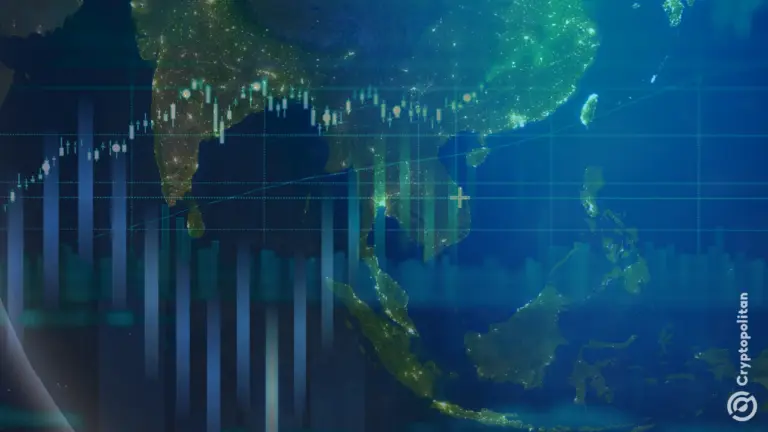
Markets across Asia-Pacific got hammered on Friday, as Japan’s Nikkei 225 index cratered by 1.85%, while the Topix dropped by 1.03%, with the selloff led by big-name losers like Rakuten Group, down 6.57%, Advantest off 5.27%, and Lasertec sliding 3.97%.
But the one that really turned heads is SoftBank. The tech giant got smoked, plunging as much as 8% early in the session, its third straight day of losses, after sharing it had completely dumped its Nvidia stake back on Tuesday. Investors clearly are not very thrilled.
And things aren’t any better in South Korea either. The Kospi sank 2.29%, while the Kosdaq slipped 1.42%. Samsung Electronics dropped over 3%, and SK Hynix, which supplies memory chips to Nvidia, got wrecked, down 5%.
The South Korean won, meanwhile, surged a bit by 0.72% to 1,460.0 per dollar, after Finance Minister Koo Yun-cheol said FX authorities like the national pension fund and top exporters, to tackle a U.S. dollar mismatch that’s been rattling the won.
Even Australia wasn’t spared. The S&P/ASX 200 shed 1.58%.
And China? It’s still cooling off. The Hang Seng Index slipped 0.88%, and the CSI 300 dropped 0.64% after Friday’s data showed October was even worse, a fresh leg down in consumer demand and a property market that’s still circling the drain.
This post is updated LIVE.
What to know
This LIVE event has officially ended.
TABLE OF CONTENT
Share this article

MORE … NEWS










DEEP CRYPTO
CRASH COURSE
- Which cryptocurrencies can make you money
- How to boost your security with a wallet (and which ones are actually worth using)
- Little-known investment strategies that the pros use
- How to get started investing in crypto (which exchanges to use, the best crypto to buy etc)