





- A Barcelona court is investigating fraud claims against six former Sevilla FC players, including Ivan Rakitić and Papu Gómez, in connection with the Shirtum crypto project.
- Thirteen Spanish investors say they lost everything, and the expanded complaint says total damages could exceed €24 million or $28 million.
- No crypto exchange will offer the token for trading anymore.
According to a new criminal complaint filed in Barcelona, a Spanish court is investigating six former Sevilla FC football players for their alleged role in a crypto scheme. The scheme allegedly sold fake NFTs and a manipulated token to investors, costing them over €24 million or $28 million.
Papu Gómez, Lucas Ocampos, Ivan Rakitić, Nico Pareja, Alberto Moreno, and Javier Saviola are the players named in the complaint. According to El Correo de Andalucía, two more football players, Diego Perotti and Marcelo Guedes, were also involved in promoting the project.
Thirteen investors from Spain filed a complaint with Barcelona’s Court of Instruction No. 5, saying they lost all of their money.
Shirtum never delivered filmic NFTs
Shirtum Europa, S.L.U., and other companies in Andorra ran the project, which advertised itself as a place to buy and sell digital football collectibles. It sold “filmic NFTs” with pictures and voice recordings of the accused players for about €450 each.
The people who filed the complaint say that these NFTs were never actually created on any blockchain. The complaint said that the assets could not be sold or transferred, so they were an absolute simulation of the product sold.
“These supposed NFTs technically never existed, were not transferable or resellable, and amounted to a complete simulation of the object sold to the detriment of the buyers,” based on one of the complaints.
Investigators could not find any proof that the tokens were on-chain.
Before the NFT sales, Shirtum’s promoters received ~€3 million in BNB tokens from investors to make a mobile app on iOS and Android. The complaint says that the app was never made, and the money was never returned or accounted for.
The company’s annual accounts also didn’t show the money it made from NFT sales, which was about €1 million.
The $SHI token and the pump-and-dump allegation
There is another layer to the alleged fraud that involves Shirtum’s own crypto, $SHI.
The expanded complaint says that out of the one billion tokens created, the four business promoters and the accused footballers got 78% or 780 million tokens for free. They then sold those tokens to retail investors on PancakeSwap for prices that were too high.
The people who are complaining say that the accused used false advertising and worked with the football players to create FOMO (fear of missing out) to get people to buy.
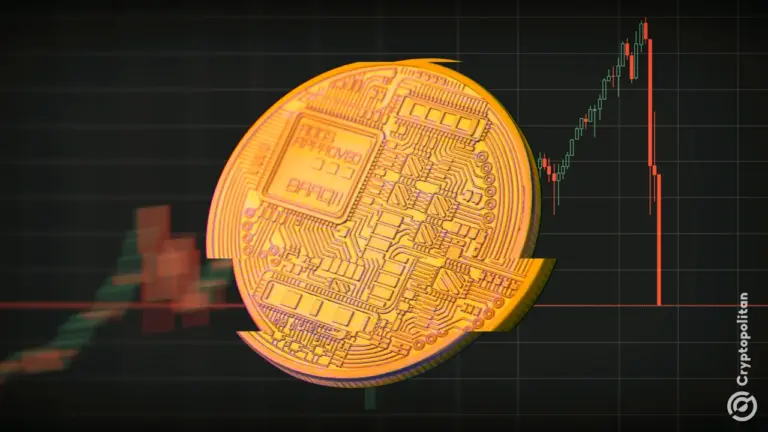
The complaint says that in July 2025, while a criminal investigation was already going on, the accused permanently removed $SHI’s liquidity from PancakeSwap.
The price of the token fell. It doesn’t trade on any exchange anymore. According to CoinGecko, $SHI is trading at $0.00003329 and is basically worthless.

Investors say that the $SHI token followed a pump and dump pattern. They think that the losses from the token manipulation alone will be at least €20 million, and the final number could be much higher.
Barcelona’s Court of Instruction No. 5 is still looking into the case. The Spanish police had already started their own investigation into Shirtum.
The new complaint adds the claims of token manipulation to the original NFT fraud claims. This means that more charges could be brought.
Don’t just read crypto news. Understand it. Subscribe to our newsletter. It's free.
FAQs
Who are the footballers accused in the Shirtum case?
The complaint names six players: Papu Gómez, Lucas Ocampos, Ivan Rakitić, Nico Pareja, Alberto Moreno, and Javier Saviola. They all used to play for Sevilla FC. Diego Perotti and Marcelo Guedes also had ties to the project that helped it get off the ground.
What were the fake NFTs sold by Shirtum?
Shirtum sold "filmic NFTs" with pictures and recordings of football players for about €450 each, but investors say these were never minted on a blockchain, couldn't be transferred or resold, and weren't worth anything.
What happened to the $SHI cryptocurrency?
The accused are said to have received 78% of all $SHI tokens for free and then sold them to investors on PancakeSwap for more than they were worth. They took the token's liquidity off the exchange in July 2025, which caused its price to drop.
Disclaimer. The information provided is not trading advice. Cryptopolitan.com holds no liability for any investments made based on the information provided on this page. We strongly recommend independent research and/or consultation with a qualified professional before making any investment decisions.

Randa Moses
Randa Moses is an editor and reporter at Cryptopolitan covering tech, AI, robotics, crypto, scams, and hacks. She has worked in the crypto space since 2017. She held roles at Forward Protocol, AmaZix, and Cryptosomniac. Randa holds a degree in Electrical and Electronics Engineering from the University of Bradford.









