






Fed chair nominee Kevin Warsh attempts to defend friend Trump’s actions in Senate hearing

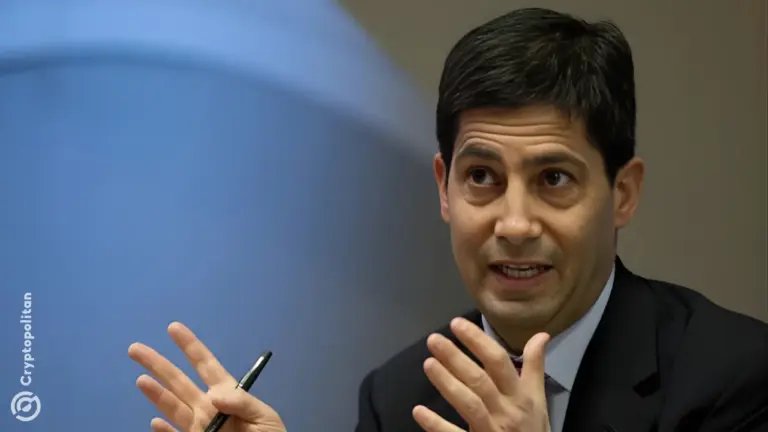
- Kevin Warsh told senators the Fed should stay mostly free from politics and keep its focus on inflation.
- Kevin also said public comments on interest rates from Trump and other elected officials do not seriously threaten monetary policy independence.
- Kevin criticized the Fed for going beyond its role into issues like climate change, social inequality, and the handling of public money.
Kevin Warsh stood in front of the Senate on Monday to say the Federal Reserve should stay free from politics, but also that Donald Trump and other elected officials can just go ahead and keep talking about interest rates.
Kevin said the central bank must be mostly independent, but he did not treat public pressure from politicians as a serious threat to monetary policy.
Kevin also made clear what he wants the Fed to care about. He put inflation front and center and barely touched jobs, with only one mention of the labor market in the remarks. He said, “Simply stated, Fed independence is largely up to the Fed.”
He also repeated a complaint he has made for years, saying the central bank has wandered into issues where it does not belong, including climate change and social inequality.
Kevin said, “The Fed must stay in its lane. Fed independence is placed at greatest risk when it strays into fiscal and social policies where it has neither authority nor expertise.”
Mind you, if the Senate confirms him, Kevin would be the richest Fed chair ever, the most plugged into tech, and the closest person from that crowd to hold the job. How interesting is that?
Kevin separates rate decisions from the Fed’s handling of public money
Donald Trump announced in late January that Kevin was his choice to replace current Chair Jerome Powell.
Since then, Cryptopolitan has wondered: if confirmed, would Kevin stand up to repeated calls from Donald and White House officials to cut interest rates?
His Senate hearing tried to answer that, but not really in a clean or simple way. You see, while Kevin spoke about independence, he also added limits to that idea.
“I do not believe the operational independence of monetary policy is particularly threatened when elected officials, presidents, senators, or members of the House, state their views on interest rates,” he said.
Kevin also said the Fed does not have the same freedom in all parts of its work. He drew a line between setting monetary policy and handling other responsibilities. He pointed in particular to “their stewardship of public monies,” a comment that lands in the middle of an investigation into the Fed’s multibillion-dollar headquarters renovation.
So Kevin defended policy independence, but he also said other parts of the institution deserve a closer look.
The White House backed him quickly. Spokesman Kush Desai said the administration was focused on working with the Senate to confirm Kevin fast. Kush said Kevin’s schooling, private sector record, and earlier service on the Fed Board of Governors made him fit to restore confidence and competence in Fed decisions.
Kevin brings Silicon Valley friends, money, and a tech-heavy view into the Fed race
Away from Washington, Kevin wears suits, ties, and sweater vests, not the messy uniform many Silicon Valley founders prefer. Still, that world sees him as one of its own.
On a podcast a few years back, Palantir chief Alex Karp told him, “You wouldn’t be hanging out with us if you were as normal as you claim to be.”
Kevin’s links to Alex, Peter Thiel, Jerry Yang, and Marc Andreessen go back decades to Stanford, and stretch into deals and investments he made after leaving the Fed in 2011.
Those friendships and investments have clearly influenced how Kevin sees the economy. He believes new technology can change growth and inflation faster than central bankers usually admit. That view could change how the Fed handles policy and rates. Past handovers, from Alan Greenspan to Ben Bernanke to Janet Yellen to Jerome Powell, mostly kept the same basic line.
Kevin may not. He has long attacked the Fed’s balance sheet, its public messaging, and the data it uses. In a 2025 interview, he said, “Everything technology touches gets cheaper.”
If you're reading this, you’re already ahead. Stay there with our newsletter.
Disclaimer. The information provided is not trading advice. Cryptopolitan.com holds no liability for any investments made based on the information provided on this page. We strongly recommend independent research and/or consultation with a qualified professional before making any investment decisions.

Jai Hamid
Jai Hamid has been covering crypto, stock markets, technology, the global economy, and the geopolitical events that affect markets for the past 6 years. She has worked with blockchain-focused publications including AMB Crypto, Coin Edition, and CryptoTale on market analyses, major companies, regulation, and macroeconomic trends. She has attended London School of Journalism and thrice shared crypto market insights on one of Africa’s top TV networks.









