



EU bans Belarusians from crypto exchange ownership in latest Russia sanctions

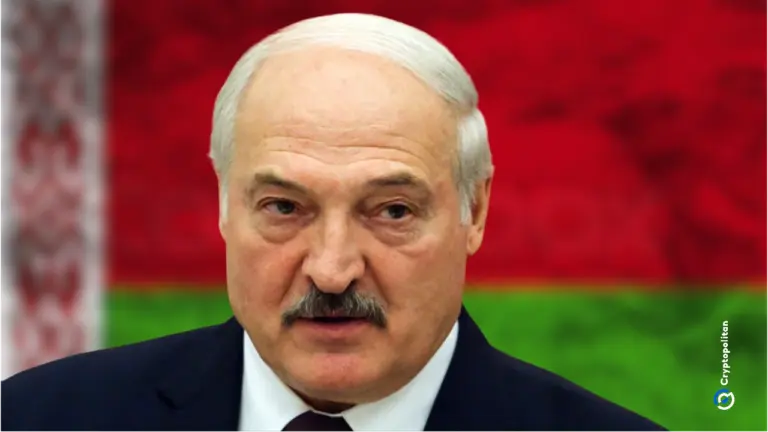
- The EU recently adopted its 21st Russia sanctions package, adding 14 crypto service platforms across six countries, including in Belarus.
- The EU also created the first-ever power to bar crypto services in an entire third country.
- It comes as the EU tries to close crypto channels that help Russia fund its war in Ukraine.
The European Union has adopted its 21st sanctions package against Russia, extending transaction bans to 14 crypto service platforms.
Several of these banned platforms are based in Belarus, and the EU has given itself the power to ban crypto services in an entire country if that country helps Russia dodge sanctions.
What does the EU’s transaction ban entail for Belarus?
Belarus is a key part of the EU’s newly imposed sanctions against Russia because it hosts crypto platforms the EU says help Russia bypass restrictions. The EU also wants to stop Russia from using Belarus as a workaround for moving money.
The EU’s transaction ban now covers 14 crypto-related service platforms spread across six countries; Georgia, Panama, the United Arab Emirates, the Marshall Islands, Kyrgyzstan, and Belarus.
The EU also imposed asset freezes and a prohibition on making funds available to 94 Russian banks and major financial institutions, and extended transaction bans to 33 more Russian credit and financial institutions.
Kaja Kallas, the EU’s foreign policy chief, confirmed on X that the package targets more than 100 banks and crypto operators, over 40 shadow-fleet vessels and several oil refineries in both Russia and Belarus.
Belarus runs two refineries, Naftan and the Mozyr Oil Refinery, and Naftan has already been under EU sanctions since the summer of 2022.
The EU also placed import bans on goods that bring in significant revenue for Belarus and export restrictions on items related to the military industry.
What is the new power to ban crypto across entire countries?
The EU can now block any transaction between a European company or citizen and any crypto provider in a country that helps Russia avoid sanctions.
The creation of this new country-wide power is because of a pattern the EU has observed over the past year. Blockchain analytics firm TRM Labs found that after authorities seized the Russia-linked exchange Garantex in March 2025, the same operators launched a nearly identical replacement called Grinex within just a few months.
The EU explained its reasoning for adopting the law, saying that listing individual crypto platforms one by one does not work, because “any further listing of individual crypto asset service providers is therefore likely to result in the set-up of new ones to circumvent those listings.”
Old Vector, a company registered in Kyrgyzstan, launched a stablecoin called A7A5 that runs on the Tron and Ethereum blockchains. The token allowed users to move their balances from Garantex over to Grinex.
Cryptopolitan reported that the EU had already banned that token in an earlier round of sanctions. It also reported that the package freezes the price cap on Russian oil at $44 a barrel for one year, blocking its automatic rise to $58.
Don’t just read crypto news. Understand it. Subscribe to our newsletter. It's free.
FAQs
What did the EU's 21st sanctions package do on crypto?
It extended a transaction ban to 14 crypto service platforms based in Georgia, Panama, the UAE, the Marshall Islands, Kyrgyzstan, and Belarus, and introduced the possibility of a full third-country ban on crypto-asset services, according to the Council.
When was the 21st package adopted, and how big was it?
The Council adopted it on July 23, 2026, with 218 listings in total, split into 48 individuals and 170 entities, which the Council described as its largest batch of individual designations in four years.
How does this connect to Belarus?
The package designates a major Belarusian oil refinery and includes Belarus-based crypto platforms, building on the EU's 20th package from April, which TRM Labs said imposed a blanket ban on transacting with any crypto provider established in Russia or Belarus.
Disclaimer. The information provided is not trading advice. Cryptopolitan.com holds no liability for any investments made based on the information provided on this page. We strongly recommend independent research and/or consultation with a qualified professional before making any investment decisions.

Hannah Collymore
Hannah is a writer and editor with nearly a decade of blog writing and event reporting experience in the crypto space. At Cryptopolitan, Hannah contributes to the news page, reporting and analyzing the latest developments in DeFi, RWA, crypto regulation, AI and frontier tech industries. She graduated from Arcadia university with a degree in Business Administration.









