




- Big factory nations slowed again as US tariffs dragged on new orders.
- China and South Korea showed weaker export momentum even after trade talks progress.
- India posted stronger factory output as domestic demand helped offset trade worries.
The world’s major factory economies struggled to gain any real pace in October, with new global orders hit by weaker US demand and yet another wave of tariff noise from Washington.
That picture came out clearly from fresh business surveys published on Monday. They suggested that big manufacturing nations in Europe and Asia were operating with much less confidence than they would have hoped for towards the end of the year.
Across the euro zone, factory output barely moved as new orders were flat and many plants cut staff as work thinned out.
Germany, usually the region’s engine of goods production, struggled once again. Trade groups said engineering orders plunged in September, leaving firms in a sour mood heading into October. Executives were still waiting for any sign that foreign buyers might return in force, but those signs did not show up in this latest round of surveys.
Overseas buyers not placing enough orders as US tariffs bite
France’s producers also had a weak month, and Italy posted a small slip. The only bright spot among the euro area’s bigger players was Spain, where factories managed to expand faster than in September.
One economist warned that the headline figures hid a deeper problem: overseas buyers were simply not placing enough orders to keep plants busy at normal levels.
In Britain, factories enjoyed their best monthly reading in a year. However, people in the sector said this rebound could be short-lived because most of the jump came from a single event, the return of production at Jaguar Land Rover after a cyberattack shut down some of its lines.
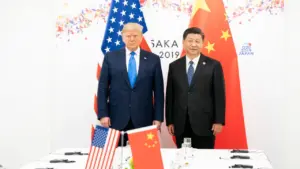
In Asia, there were glimmers of progress from a political point of view. US President Donald Trump travelled through the region last week and struck a more polite tone than usual in meetings with China and South Korea, where some minor agreements were signed, including a one-year delay to some reciprocal tariffs.
Even so, exporters in those countries remain cautious and do not yet trust that US demand will recover in the way they need.
China’s private-sector index showed slower manufacturing growth in October, with export orders falling again, and South Korea saw actual declines. China’s official factory survey, published on Friday, showed a seventh month of contraction.
Analysts say this was proof that the rush to ship goods early, before tariffs were raised previously, has faded completely. One economist said China’s slowdown might reverse a little in the short run as firms adjust, but any gains were likely to be modest because the trade deal achieved so far was narrow and did not resolve the deeper US-China rift.
Chinese leaders are watching the numbers closely because the country’s official target is still about 5% growth in 2025. To get there without pumping new stimulus into the system, Beijing needs steady foreign demand, and that is exactly what has been missing.
Yes, new export markets have opened, and September goods shipments rose faster than expected as producers found new buyers elsewhere, not because US demand improved. US-bound exports actually fell by more than a quarter compared with the same month last year.
South Korea also reached a tariff agreement with Washington, but local industry groups called it more of a hedge than a win. They said it merely prevented Korean goods from losing ground in the global race for buyers. As one trade official put it, the deal kept the status quo rather than lifting growth.
But India posted faster overall factory growth in October, supported by local buyers, helping offset lost export business. Malaysia and Taiwan stayed weak. Vietnam and Indonesia managed to pick up the pace.
Don’t just read crypto news. Understand it. Subscribe to our newsletter. It's free.
Disclaimer. The information provided is not trading advice. Cryptopolitan.com holds no liability for any investments made based on the information provided on this page. We strongly recommend independent research and/or consultation with a qualified professional before making any investment decisions.

Enacy Mapakame
Enacy Mapakame is a journalist with over 10 years of experience in business and financial news. She covers capital markets and emerging technologies – the metaverse, AI, and cryptocurrency. Enacy holds a BSc Media and Society Studies Honours Degree.









