







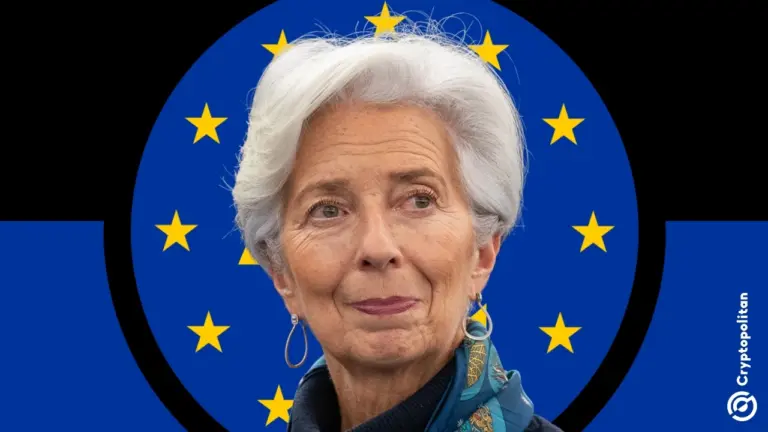
- ECB President Christine Lagarde reportedly pressured Greece into blocking Binance’s MiCA license application, which had been on track for approval.
- The exchange is now pursuing authorization through France as its only remaining option before a June 30 deadline.
- The ECB has been making moves to limit crypto market influence in Europe, particularly around stablecoins.
Binance’s crypto licensing application in Greece has stalled after what rumors claim is because the regulators received direct orders from the European Central Bank (ECB) President, Christine Lagarde.
Binance’s application, which was made under the Markets in Crypto-Assets (MiCA) regulation, had cleared most of Greece’s regulatory requirements and was on track for approval prior to the ECB president’s intervention.
Did ECB President Lagarde really block Binance’s license application?
Journalist Gareth Jenkinson wrote on X that he was “reliably informed” that the European Central Bank President Christine Lagarde directly ordered Greece to reject Binance’s Markets in Crypto-Assets (MiCA) license application.
His source added that Binance had pretty much received the green light before the ECB stepped in.
Lagarde is notably anti-stablecoins, whether pegged to the dollar or otherwise.
Cryptopolitan reported that during the Banco de España LatAm Economic Forum in May, Largade called the argument for euro-denominated stablecoins “far weaker than it appears,” warning they could weaken banks’ ability to lend and the central bank’s ability to control interest rates.
She cited Circle’s USDC losing its peg during the Silicon Valley Bank collapse in 2023 as evidence that the stablecoin design is structurally fragile.
ECB Executive Board member Isabel Schnabel reinforced that position at a Bank of Korea conference on June 1, arguing that dollar-pegged stablecoins, which account for more than 90% of the $300 billion stablecoin market, would establish American monetary influence through “network effects, scale and first-mover advantages” rather than economic fundamentals.
When the Brussels-based think tank Bruegel proposed easing the liquidity requirements for crypto issuers and potentially giving them access to ECB funding, central bankers, including Lagarde, pushed back firmly.
The ECB’s preferred alternative, a central bank digital currency called the digital euro, remains years from launch. A pilot program is not expected until the second half of 2027, and it is unlikely the currency will be launched before 2029.
What happens to Binance and its EU users now?
With Greece off the table, Binance has turned to France as its remaining path to MiCA authorization. The exchange is in discussions with the Autorité des Marchés Financiers (AMF), though no formal application has been filed.
MiCA allows firms to offer their services across all 27 member states, even if they are only licensed in one EU country. However, companies without a license at all must stop offering services to EU clients from July 1. France is now considered the only jurisdiction capable of processing a MiCA license within the timeline Binance needs.
Binance CEO Richard Teng addressed user concerns on X on June 16, writing that the exchange is committed to its European users and to operating under a clear, fair, and compliant system
In a follow-up post, Teng said customer assets “remain secure” and “will remain accessible at all times,” adding that the company would provide further updates before June 30.
Approximately 90 registered digital asset service providers in France have yet to obtain their MiCA license, and the AMF has warned against companies seeking authorization in member states perceived to have more lenient supervision.
French authorities also launched an investigation into Binance over suspected money laundering and tax violations related to its activities from 2019 to 2024.
The smartest crypto minds already read our newsletter. Want in? Join them.
FAQs
Why did Greece block Binance's MiCA license application?
According to reports, ECB President Christine Lagarde intervened at the political level, raising concerns about stablecoins and Binance's influence on the European crypto market, after the application had already cleared most regulatory hurdles in Greece.
What happens to Binance's European users if it doesn't get a MiCA license?
Binance CEO Richard Teng said on June 16 that customer assets "remain secure" and "will remain accessible at all times," and that the company would provide a further update before June 30, 2026.
Is France likely to approve Binance's MiCA application?
No formal application has been filed with France's AMF yet, though discussions are reportedly ongoing. France is viewed as the only realistic jurisdiction capable of granting Binance a MiCA authorization within the required timeframe.
Disclaimer. The information provided is not trading advice. Cryptopolitan.com holds no liability for any investments made based on the information provided on this page. We strongly recommend independent research and/or consultation with a qualified professional before making any investment decisions.

Hannah Collymore
Hannah is a writer and editor with nearly a decade of blog writing and event reporting experience in the crypto space. At Cryptopolitan, Hannah contributes to the news page, reporting and analyzing the latest developments in DeFi, RWA, crypto regulation, AI and frontier tech industries. She graduated from Arcadia university with a degree in Business Administration.









