




- The UK government announced a ban on social media for under-16s, set to take effect in spring 2027.
- Telegram founder Pavel Durov and X owner Elon Musk have pushed back against the ban.
- Privacy groups and academics questioned both the effectiveness and the surveillance implications of enforcing age verification at scale.
The British government has announced that it will block social media platforms from serving users under 16.
Telegram founder Pavel Durov and X owner Elon Musk immediately criticized the ban, framing the policy as a threat to online freedoms.
Will the UK’s ban on social media actually protect children?
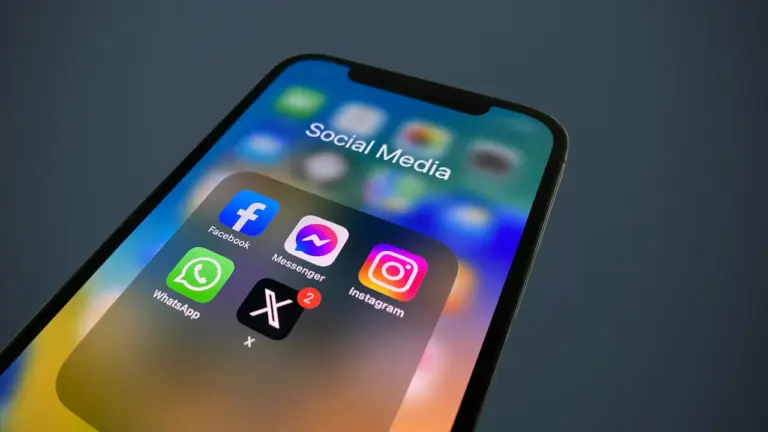
The British government has announced that it will stop children under 16 from using social media platforms like TikTok, Instagram, and Snapchat from spring 2027.
The new rules will also block livestreaming and stranger communication for younger teens. AI chatbots that act like romantic partners will be unavailable to users under 18.
The government says the plan is a response to a public consultation that received more than 116,000 responses, with nine in ten parents supporting a ban. Two-thirds of young people who participated also supported restrictions on at least some platforms for under-16s.
Prime Minister Keir Starmer confirmed that private messaging apps like WhatsApp and Signal will be exempt from the ban.
Telegram founder Pavel Durov immediately pushed back, arguing the ban will not protect teenagers.
Durov posted on his Telegram channel that teens will simply use VPNs to bypass restrictions and access dangerous, unregulated content.
Elon Musk, owner of X, supported Durov’s stance, posting “Exactly” alongside social media comments accusing the UK of becoming a “police state” determined to suppress free speech.
Durov has previously used mass messaging on Telegram to rally users against similar proposals. In February, he sent a blanket message to all Spanish Telegram users attacking the country’s planned age restrictions.
He accused the government of Pedro Sánchez of threatening “internet freedoms.” Spanish officials likewise accused Durov of “spreading lies” and trying to undermine democratic institutions.
Cryptopolitan previously reported that he urged Russian users to embrace “digital resistance” after Moscow tried to block Telegram in early 2026, claiming 65 million Russians still used the app daily through VPNs. He was arrested in France in August 2024 on charges related to alleged failures to moderate criminal content on Telegram, charges he has denied.
Can the UK enforce its social media ban?
Experts and early evidence from Australia suggest a ban is very hard to enforce. Australia passed a similar law banning under-16s from social media in December 2025, and six months later, the results of the policy are less than positive.
Nearly 70% of Australian teens who had accounts before the ban kept their access. Many platforms simply did not ask users to verify their age. In most cases, children did not need to use tricky methods like VPNs; the platforms just failed to remove their accounts.
However, Ofcom, the UK’s media regulator, has been tasked with designing an age-verification system that improves on Australia’s experience.
The Guardian reported that more than 90% of the UK’s 2.5 million 13- to 15-year-olds already hold social media profiles, while roughly 80% of 10- to 12-year-olds use social media. Enforcing the ban will require adults to verify their ages as well, but that has raised privacy concerns.
Why are people against a social media ban for under-16s?
Professor Amy Orben from Cambridge University warned that the UK ban is unlikely to have a positive effect on the well-being or mental health of teenagers in the short term. However, Orben acknowledged that the ban could shift public perceptions and reduce social media use among younger age groups over time.
Professor Elvira Perez Vallejos from the University of Nottingham argues that losing access to major sites like Instagram or TikTok could force kids into dark corners of the internet where grooming and radicalization are harder for police to track.
Perez Vallejos argues that the root of the problem in social media is data-extractive business models and addictive design features, not access itself.
The government also stated that it would consider overnight curfews and mandatory breaks in infinite scrolling for all under-18s. Further details expected in July.
The Open Rights Group said that the ban would make it “virtually impossible” to use the internet in the UK without submitting identity documents or biometric data.
Helen Hayes, chair of the House of Commons Education Committee, supported the ban, saying the committee’s own report had called for one. However, she noted that genuine lessons must be learned from Australia’s example when it comes to implementing the ban.
Don’t just read crypto news. Understand it. Subscribe to our newsletter. It's free.
FAQs
Which platforms are included in the UK social media ban for under-16s?
The ban covers user-to-user platforms with algorithmic feeds, including Snapchat, TikTok, YouTube, Instagram, Facebook and X. Messaging services like WhatsApp and Signal are excluded, according to the UK government's announcement.
When does the UK social media ban take effect?
The government expects to introduce legislation before Christmas 2026, with the ban coming into force in spring 2027, according to the Department for Science, Innovation and Technology.
How did Elon Musk and Pavel Durov respond to the UK ban?
Musk posted "Exactly" on X in support of Durov's opposition. Durov has a history of opposing similar bans, including sending a mass message to all Spanish Telegram users in February 2026 criticizing that country's proposed age restrictions, which Spanish officials called an attempt to "spread lies" and undermine democratic institutions.
Disclaimer. The information provided is not trading advice. Cryptopolitan.com holds no liability for any investments made based on the information provided on this page. We strongly recommend independent research and/or consultation with a qualified professional before making any investment decisions.

Hannah Collymore
Hannah is a writer and editor with nearly a decade of blog writing and event reporting experience in the crypto space. At Cryptopolitan, Hannah contributes to the news page, reporting and analyzing the latest developments in DeFi, RWA, crypto regulation, AI and frontier tech industries. She graduated from Arcadia university with a degree in Business Administration.









