






Coinbase picks major banks JPMorgan, Citi, BoFA to test crypto offerings this year

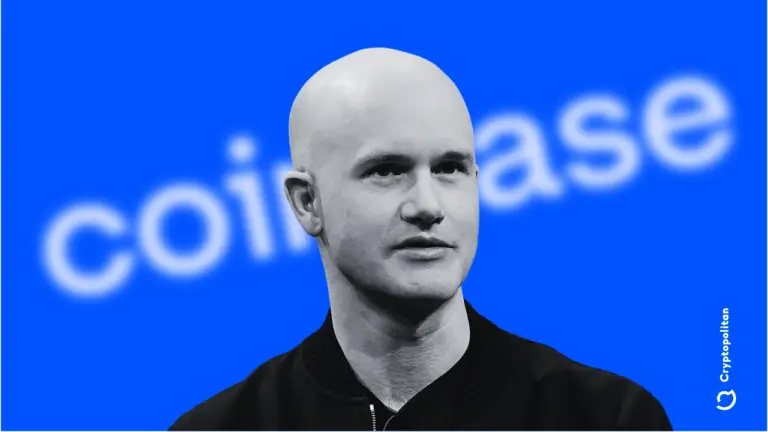
- Coinbase is running crypto pilots with JPMorgan, Citigroup, and Bank of America on stablecoins, custody, and trading.
- Brian Armstrong and Larry Fink confirmed banks and asset managers are shifting toward tokenized finance.
- The new U.S. stablecoin law could push the market from $300 billion to $3 trillion by 2030.
Coinbase started live pilots with some of the largest U.S. banks this week to test stablecoins, custody, and crypto trading, according to comments made Wednesday by CEO Brian Armstrong.
The trials began as prices continued a stop‑and‑start slide that has dragged on since October.
Brian said the banks taking part see crypto as a working business line, not a side project, and the work is already underway inside regulated U.S. institutions, while Washington keeps the rules friendly under President Donald Trump’s second term now.
Brian spoke at the New York Times DealBook Summit beside Larry Fink, the chief executive of BlackRock Inc., where the talk focused on crypto and on turning stocks and other real‑world holdings into tokens.
Larry reminded the room that in 2017, he once tied Bitcoin to crime, while today BlackRock runs the world’s largest Bitcoin exchange‑traded fund. “I see a big, large use case for Bitcoin,” he said. Leaders like Jamie Dimon, Brian Moynihan, and Jane Fraser have since shown fresh interest, and Morgan Stanley now offers crypto trades on E*Trade.
Banks test crypto as policy opens the door
Wall Street’s renewed contact with crypto has accelerated since President Donald Trump returned to the White House for a second term and Congress moved ahead with the first federal framework for stablecoins, the dollar‑pegged tokens used for fast payments.
The policy wins did not stop the recent selloff.
The drop followed a tariff announcement earlier in the fall and then spread as leveraged trades were closed and confidence thinned. Tokens tied to Trump and companies linked to his circle took some of the hardest hits.
Brian said the current move in prices does not change his long-term plan for the market. He told the DealBook audience that the value of shares, bonds, and property will one day exist as tokens used on open networks.
Larry supported that view with numbers from today’s wallets. He said about $4.1 trillion now sits in digital wallets around the world, mostly in stablecoins, and those funds could move more freely if other assets were turned into tokens.
He also defined Bitcoin as “an asset of fear,” and said people hold it because they worry about both physical and financial security, and because deficits weaken paper money. The message landed hard inside the room there.
Lawmakers tie stablecoins to debt and global flows
The new stablecoin law reignited debate on Wall Street over whether these dollar‑based tokens can lift demand for short‑dated Treasury bills and support the U.S. currency. Scott Bessent, the U.S. Treasury secretary, said last month the market for dollar‑backed stablecoins could rise to $3 trillion by 2030 from about $300 billion today.
The statute forces issuers to fully back their tokens with Treasury bills and cash‑like reserves. Scott said heavier demand would allow the Treasury to sell more bills, rely less on long bonds, and ease pressure on mortgage rates and other key borrowing costs.
Strategists at JPMorgan, Deutsche Bank, and Goldman Sachs say it is too soon to treat stablecoins as a cure for U.S. funding needs, no matter how confident the Trump team sounds. Stephen Miran, a Fed governor and White House chief economist, said demand in the United States may stay limited. He said the wider opening sits overseas, where buyers may accept zero yield to hold dollar access. In a recent speech, he linked stablecoins to Fed bond buying and the global savings glut that once pushed rates down.
Standard Chartered warned that up to $1 trillion could leave banks in developing nations by 2028 if funds move into stablecoins. That risk has driven the European Central Bank and the People’s Bank of China to work on digital currencies.
Don’t just read crypto news. Understand it. Subscribe to our newsletter. It's free.

Jai Hamid
Jai Hamid has been covering crypto, stock markets, technology, the global economy, and the geopolitical events that affect markets for the past 6 years. She has worked with blockchain-focused publications including AMB Crypto, Coin Edition, and CryptoTale on market analyses, major companies, regulation, and macroeconomic trends. She has attended London School of Journalism and thrice shared crypto market insights on one of Africa’s top TV networks.









