







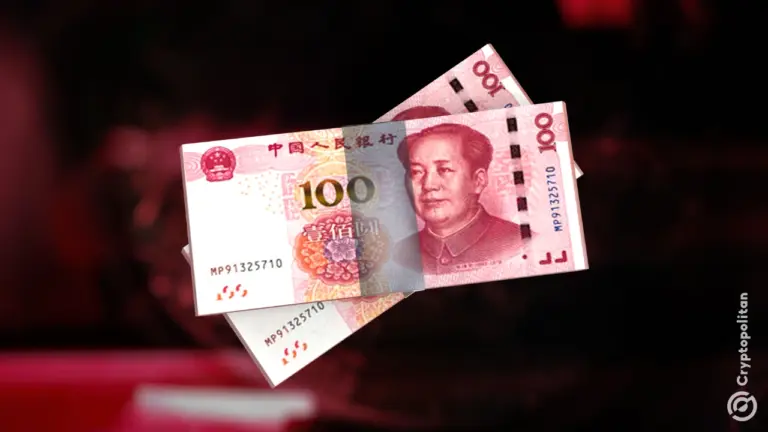
- China completed its first digital yuan consumer payment in Laos in late December 2025.
- The expansion is part of China’s strategy to make the digital yuan international through the mBridge platform and partnerships with countries in Asia and the Middle East.
- Starting January 1, 2026, China’s digital yuan will pay interest on wallet balances.
China’s digital currency program has completed its first cross-border consumer payment using the digital yuan in Laos.
China is attempting to spread the use of its digital yuan through fast and easy consumer transactions.
Has the digital yuan debuted internationally?
In late December 2025, through the joint efforts of the People’s Bank of China and the Bank of Laos, the Bank of China’s Vientiane branch connected to the PBOC’s cross-border digital payment platform and processed merchant QR payments in Laos.
The system works through QR code scanning technology. Chinese tourists can make payments in Laos without exchanging foreign currency by opening the digital RMB app and scanning the merchant’s QR code to pay directly in local currency at the real-time exchange rate. The merchants do not need to change their existing payment equipment for this to work.
The digital yuan has been tested domestically since 2019, but this Laos pilot is its first international retail deployment.
Starting January 1, 2026, banks will be permitted to pay interest on customers’ digital yuan deposits under the new regulatory framework. Lu Lei, a deputy governor of the People’s Bank of China, said that the system will transform the digital yuan’s role from digital cash to digital deposit money.
The digital yuan will also now receive the same protections as conventional bank deposits through the national deposit insurance system.
By November 2025, the digital yuan had processed 3.48 billion transactions with a total value of 16.7 trillion yuan (approximately $2.38 trillion). The system currently supports 230 million personal wallets and 18.84 million corporate wallets.
However, adoption has been slow compared to established payment platforms in China like WeChat Pay and Alipay.
What is China’s strategy for its digital currency?
China operates a multilateral central bank digital currency bridge, known as mBridge. The platform processed 4,047 cross-border transactions worth 387.2 billion yuan ($54.2 billion), and digital yuan transactions accounted for approximately 95.3% of total mBridge activity.
The mBridge system includes China, Hong Kong, Thailand, the United Arab Emirates, and Saudi Arabia. The project uses distributed ledger technology to enable real-time payments between countries without traditional banking intermediaries.
In October 2024, the Bank for International Settlements withdrew from the mBridge project due to concerns that the platform might help people avoid sanctions and harm the dollar’s global role. The participating countries continued developing the system without BIS involvement.
The People’s Bank of China released a comprehensive action plan in late December 2025 that covers the 2026-2030 period. The plan includes the PBOC establishing a Digital RMB Management Committee and operating dual centers for domestic and cross-border systems. It will also work to emphasize security, continuity, and coordinated oversight as priorities.
The smartest crypto minds already read our newsletter. Want in? Join them.
Disclaimer. The information provided is not trading advice. Cryptopolitan.com holds no liability for any investments made based on the information provided on this page. We strongly recommend independent research and/or consultation with a qualified professional before making any investment decisions.

Hannah Collymore
Hannah is a writer and editor with nearly a decade of blog writing and event reporting experience in the crypto space. At Cryptopolitan, Hannah contributes to the news page, reporting and analyzing the latest developments in DeFi, RWA, crypto regulation, AI and frontier tech industries. She graduated from Arcadia university with a degree in Business Administration.









