





- China launched a trade investigation against Mexico after new tariffs were placed on Chinese goods.
- The probe includes an anti-dumping case targeting Mexican pecan exports to China.
- Mexico is raising tariffs on over 1,400 products amid pressure from U.S. President Donald Trump.
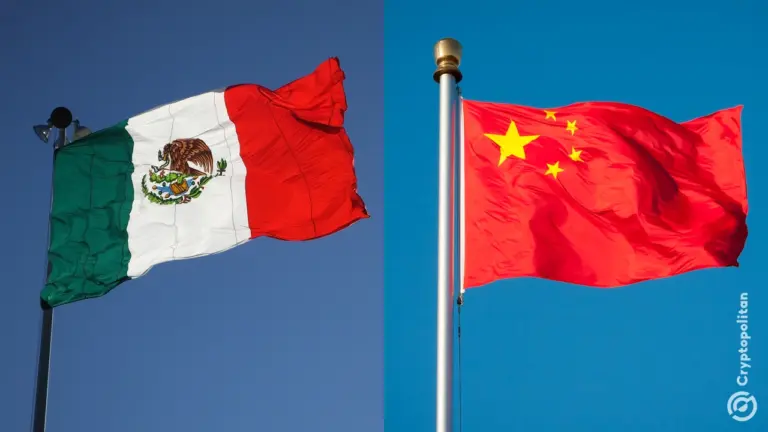
China has launched a direct trade investigation targeting Mexico, after the Latin American country announced aggressive new tariffs on Chinese exports.
The decision came Thursday, as China’s Ministry of Commerce confirmed it would probe not only Mexico’s 50% tariff on Chinese cars, but also a list of other new trade measures.
The same day, China opened an anti-dumping case into Mexican pecan nuts, accusing exporters of selling them at unfairly low prices. This is one of Beijing’s strongest actions yet aimed at countries helping the U.S. clamp down on Chinese trade.
The announcement followed a proposed bill in Mexico that would raise import tariffs on more than 1,400 products, including steel, textiles, and vehicles. All countries that lack a trade deal with Mexico would be affected, but China was the clear target.
According to the Financial Times, China’s Ministry of Commerce said the proposed tariffs “will seriously damage the trade and investment interests of Chinese companies.” The investigation is being handled under Chinese law intended to maintain what the ministry called “foreign trade order.”
Mexico sets higher tariffs while trying to downplay conflict
Earlier this month, Mexico’s President Claudia Sheinbaum publicly downplayed the friction. “We have a very good relationship with China, and we want to keep having a good relationship with them,” Claudia said, insisting that the tariffs were about protecting local industries, not provoking a global fight.
But those words did little to slow Beijing. The timing of the tariffs, just months before the scheduled 2026 review of the US-Mexico-Canada trade agreement, only added fuel to the backlash.
China is the top vehicle exporter to Mexico, which makes the 50% car tariff especially sensitive. The decision follows mounting pressure from U.S. President Donald Trump, whose administration is pushing allies to isolate China economically.
Mexico relies heavily on trade with the U.S., sending more than 80% of its exports across the northern border. That dependence makes Mexico vulnerable to U.S. demands—including on immigration, investment policy, and cross-border trade.
U.S. officials have repeatedly accused China of using Mexico as a route to dodge American tariffs. Beijing, in response, is now looking closely at what it describes as “other trade and investment restrictive measures” by Mexico in recent years.
A particular point of concern is Mexico’s plan to roll out a new national security screening mechanism, similar to the U.S. Committee on Foreign Investment, that would increase scrutiny of Chinese capital and business operations inside Mexico.
China hits back with anti-dumping pecan probe and trade warning
The trade ministry in Beijing also opened a year-long anti-dumping probe into Mexican pecan exports. Officials said there was “evidence” that Mexico had been selling pecans into China at prices below fair market value, which triggered a flood of imports and lower prices. The case could be extended by another six months if needed.
Even though pecans are a tiny part of the overall trade relationship, Beijing chose them carefully. Mexico exported about $5.7 billion worth of goods to China last year. By contrast, China shipped roughly $115 billion to Mexico. While China has limited direct leverage, it’s shown in past disputes, such as those involving Europe’s pork industry, that it doesn’t need massive trade volume to apply painful pressure.
Over 40% of Mexican exports to China are made up of copper, minerals, and concentrates, which are not covered by the new trade actions. But even a small sector like pecans gives Beijing an opening to retaliate, make a public point, and draw global attention to what it sees as unfair treatment.
In a separate statement, China’s Ministry of Commerce warned that, “If Mexico’s unilateral tariff increase is implemented, it will harm the interests of relevant trading partners, including China.” They also stated, “All countries should jointly oppose all forms of unilateralism and protectionism, and should never sacrifice third-party interests due to coercion from others.”
Don’t just read crypto news. Understand it. Subscribe to our newsletter. It's free.
Disclaimer. The information provided is not trading advice. Cryptopolitan.com holds no liability for any investments made based on the information provided on this page. We strongly recommend independent research and/or consultation with a qualified professional before making any investment decisions.

Jai Hamid
Jai Hamid has been covering crypto, stock markets, technology, the global economy, and the geopolitical events that affect markets for the past 6 years. She has worked with blockchain-focused publications including AMB Crypto, Coin Edition, and CryptoTale on market analyses, major companies, regulation, and macroeconomic trends. She has attended London School of Journalism and thrice shared crypto market insights on one of Africa’s top TV networks.









