






- China says Nvidia’s H20 chips may have serious security problems and has asked the company to explain.
- The US recently allowed Nvidia to sell the chips to China again, which upset some American lawmakers.
- Some US leaders worry the chips could help China build stronger AI and want answers about why the ban was lifted.
Chinese authorities have summoned representatives from Nvidia Corp. to address potential security risks linked to its H20 AI chips.
The urgency of this discussion was raised after representatives from the Cyberspace Administration of China (CAC), the primary regulatory body that handles important internet laws, released a statement dated July 31. The internet watchdog stated that they noticed significant security issues with Nvidia’s chips.
The statement cited concerns that the US-based company’s chips may have location-tracking capabilities that can be remotely toggled.
Following these accusations, Nvidia did not publicly recognize that its H20 chips had these features, nor did it respond to requests for comments.
US ban lift on Nvidia H20 chips triggers backlash
Tech company representatives noted they consulted with Washington officials, who indicated that shipments would be approved once they were ready for export.
Apart from this, trade officials from the US and China met recently in Stockholm to discuss potential trade deals. This was a positive outlook after years of conflicts between the two countries.
However, China’s recent concerns about Nvidia’s H20 chips have raised tension in the market after what appeared to be an improvement of US-China trade ties.
Following China’s concerns, US lawmakers remarked that they had earlier warned Trump’s administration about this move. They pointed out that allowing the sale of Nvidia’s H20 chip would enhance Beijing’s military capabilities, and the country’s AI technology would outperform that of the US.
Still, Trump’s administration removed the ban, acknowledging that the H20 chip is not the first advanced product in the country. Based on their argument, China has several advanced products from its local tech firms, such as Huawei Technologies Company.
Debate intensifies over US policy shift on Nvidia chip exports to China
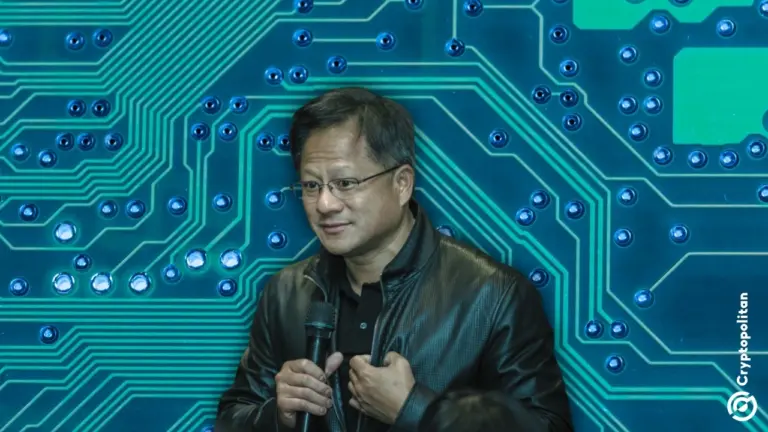
Concerning Washington’s decision, Jensen Huang, the CEO of Nvidia, highlighted that the US officials had not yet approved any shipment of their AI chips to China. Moreover, the US did not state the exact figures of AI chips that would be allowed for shipment to China.
Some officials in Trump’s administration who wished to remain anonymous had also raised concerns about permitting these exports. Despite this, Huang was still optimistic about acquiring those licenses very soon.
Meanwhile, Moolenaar did not approve of Washington’s change in policy. He requested clarity on the reasons behind this change in policy with a due date of August 8. Moreover, he requested a briefing on the procedure the US officials would follow, the regulations in place when issuing licenses for the AI chips, and the exact figures to be allowed for shipment to China.
Don’t just read crypto news. Understand it. Subscribe to our newsletter. It's free.

Nellius Irene
Nellius is a Business Management and IT graduate with five years of experience in the cryptocurrency industry. She is also a graduate of Bitcoin Dada. Nellius has contributed to leading media publications, including BanklessTimes, Cryptobasic, and Riseup Media.









