





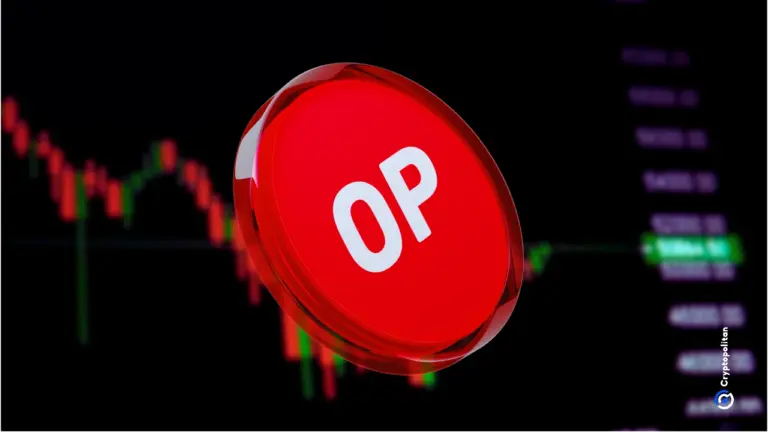
- Optimism governance approved redesignating 546.9 million OP, ~$49 million, from the user airdrop allocation into a Foundation-run Strategic Ecosystem Fund.
- The reserve is now a discretionary pot for partnership deals, incentives on OP Mainnet, and OP Stack arrangements.
- In January OP-0017 passed with 84.4% approval and handed the Foundation half of Superchain sequencer revenue for monthly OP buybacks.
Optimism token holders have voted to permit the transfer of 546.9 million OP from the collective’s user airdrop reserve.
The tokens are valued at ~$49 million. They land in a new pool the Optimism Foundation will manage. The voting closed on August 19, 2026.
Optimism voters clear the 51% threshold with a 62% total
The measure passed with 17,973,915 votes in favor against 10,930,696 opposed, the proposal page on Agora shows. That put support at about 62% of votes cast, above the 51% approval threshold.
The ballot also cleared its 16,540,389 quorum requirement. The proposal is now marked queued, with voting closed at 8:07 pm on August 19.
The vote came down to a late deciding vote from a team funded by Optimism itself. The onchain record only notes the running totals, without showing either the size of a single vote or the identity of the voter.
Filed by the Optimism Foundation, the proposal redesignates the OP left in the User Airdrop allocation as a Strategic Ecosystem Fund.
The document carries no substantive onchain transactions. It is a governance decision about how a large block of tokens gets labeled and who directs it.
The Foundation says that the renamed fund would bankroll adoption of OP Mainnet and OP Enterprise.
The proposal text covers “partnership deals that bring chains, protocols, institutions, and infrastructure to the OP Stack.”
It also contains incentives meant to strengthen activity and liquidity on OP Mainnet and plans to boost the OP Stack’s reach with institutions and large brands.
Tokens once earmarked for distribution to users become a discretionary pot for business development.
Optimism Foundation strengthens its grip on OP
As reported by Cryptopolitan at the time, the Collective passed OP-0017 in January, a proposal that would give half of the Superchain’s sequencer revenue to the Foundation to buy back OP each month.
The measure passed with 84.4%. The 12-month pilot kicked off in February, converting sequencer ETH into OP through an over-the-counter provider.
OP hit a low price of $0.2519 in December 2025. Since then, the Foundation has submitted several proposals that increase its power over the use of OP and treasury assets.
OP hit its all-time low of $0.08069 just three days ago, and even after this week’s bounce, the token sits only 25% above that floor.
It currently trades at $0.1008, up 10.7% on the day and 14% on the week, according to CoinGeko. The layer-2 platform token has a market cap of about $230.8 million and $57.8 million in 24-hour volume.
The smartest crypto minds already read our newsletter. Want in? Join them.
FAQs
What did the Optimism vote decide?
Token holders approved a Foundation proposal to redesignate 546.9 million OP left in the User Airdrop allocation as a new Strategic Ecosystem Fund.
How much was the reallocation worth?
The value was about $49 million, the dollar figure attached to the 546.9 million OP being moved out of the airdrop reserve.
What will the Strategic Ecosystem Fund be used for?
The Foundation would use it to support OP Mainnet and OP Enterprise through partnership deals that bring chains, protocols, and institutions to the OP Stack.
Disclaimer. The information provided is not trading advice. Cryptopolitan.com holds no liability for any investments made based on the information provided on this page. We strongly recommend independent research and/or consultation with a qualified professional before making any investment decisions.

Randa Moses
Randa Moses is an editor and reporter at Cryptopolitan covering tech, AI, robotics, crypto, scams, and hacks. She has worked in the crypto space since 2017. She held roles at Forward Protocol, AmaZix, and Cryptosomniac. Randa holds a degree in Electrical and Electronics Engineering from the University of Bradford.









