






China EV makers send more factory money overseas than home for the first time ever

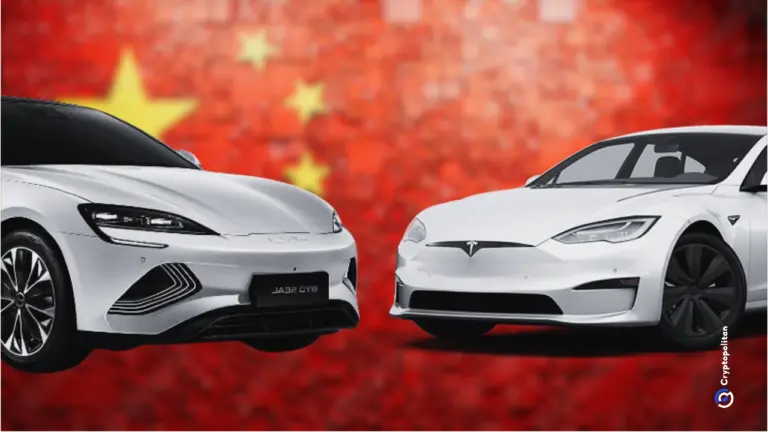
- Chinese EV firms spent more money on overseas factories than domestic ones in 2024 for the first time ever.
- 74% of the foreign investment went into battery plants, with assembly plant spending rising fast.
- Major projects launched include BYD and Great Wall factories in Brazil and Envision’s battery plant in France.
Chinese electric vehicle companies are now investing more cash in overseas factories than inside China, with 2024 marking the first year that foreign manufacturing spending from the sector outpaced domestic plans, according to Rhodium Group.
The Chinese EV industry, which includes carmakers and battery suppliers, is reacting to growing pressure at home and abroad. Inside China, the space is packed with competitors fighting for market share.
Outside, rising tariffs and tougher rules—especially in the European Union—have made exports harder to push. To survive, these companies are now building where they want to sell. Rhodium’s latest report, released Monday, said this strategy has already shifted the flow of capital outside Chinese borders.
Battery factories pull in most of the money abroad
Most of the money sent abroad in 2024, around 74%, has gone into battery plants. These are large-scale factories that produce lithium-ion components and materials for EVs.
Rhodium said assembly plants are also growing fast, though still behind batteries in total value. And that growth is happening while spending on factories inside China collapses.
In 2022, domestic investment in manufacturing reached over $90 billion. That dropped to $41 billion in 2023. This year, it’s down to $15 billion.
The new investments abroad are still smaller in raw figures, but for the first time, they beat domestic totals. Rhodium didn’t include the exact number for 2024 foreign spending, but confirmed it “narrowly surpassed” what China’s EV sector spent at home.
Separate research published by Rhodium in late July ranked automotive as China’s second most active outbound investment sector for the second quarter of 2024. The only industry with more activity was materials and metals.
Eight different deals from Chinese EV parts companies were worth more than $100 million each. The largest of them came from GEM, a battery material maker, which put $293 million into expanding its ternary precursors facility in Indonesia.
Factory projects outside China begin production
Some of the new foreign plants are already operating. Great Wall Motor opened its first plant in Brazil on Friday, local time, and may decide to open another factory in the same region as early as mid-2025. Great Wall didn’t respond when CNBC reached out for comment.
BYD, another major Chinese automaker, started production at its own Brazil factory in July. The company had been fined earlier in the year over labor practices, but continued forward with its overseas expansion.
By the end of July, BYD had already sold more than 545,000 cars overseas in 2024—surpassing its entire export total for last year, which stood at 417,000.
Back in Europe, Chinese battery supplier Envision also started operations at its first plant in France this June. That facility is now running production, though the wider picture of China’s EV expansion shows a more complicated trend.
Rhodium said only 25% of all overseas factory projects that have been announced by Chinese EV firms are actually completed. That’s way behind the 45% completion rate for domestic factory plans. Projects outside China are also twice as likely to be canceled entirely.
There’s also political heat coming from Beijing itself. The government is starting to worry about what this foreign push might cost the country.
Rhodium warned that Chinese firms now have to manage rising concern from the Chinese Communist Party over things like tech being leaked, local job losses, and the broader fear that industries will hollow out as investment leaves the country.
That could lead to new restrictions on what companies are allowed to build abroad, especially in sectors like EVs that are considered strategic by Beijing.
“Chinese firms will also have to manage Beijing’s increasing concern over technology leakage, job losses, and industrial hollowing-out, which may result in tighter controls on outbound investment in strategic sectors,” Rhodium said in its report.
The smartest crypto minds already read our newsletter. Want in? Join them.

Jai Hamid
Jai Hamid has been covering crypto, stock markets, technology, the global economy, and the geopolitical events that affect markets for the past 6 years. She has worked with blockchain-focused publications including AMB Crypto, Coin Edition, and CryptoTale on market analyses, major companies, regulation, and macroeconomic trends. She has attended London School of Journalism and thrice shared crypto market insights on one of Africa’s top TV networks.









