






Trump’s former AI czar David Sacks goes off as Chinese AI overtake US models

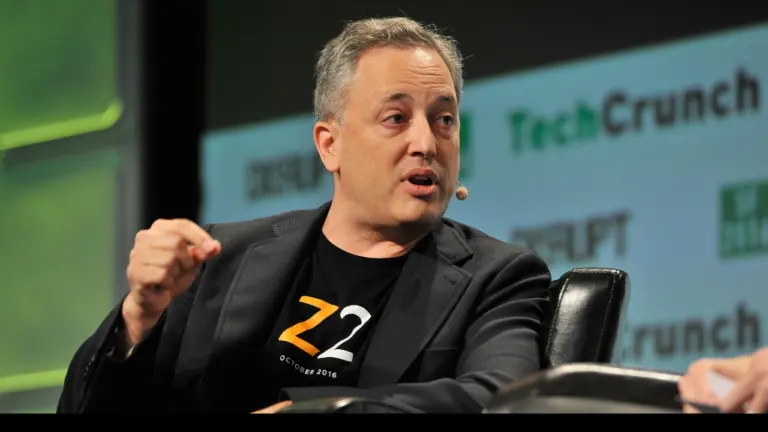
SAN FRANCISCO, CA - SEPTEMBER 13: CEO of Zenefits David Sacks speaks onstage during TechCrunch Disrupt SF 2016 at Pier 48 on September 13, 2016 in San Francisco, California. (Photo by Steve Jennings/Getty Images for TechCrunch)
- Moonshot AI’s Kimi K3 became the first Chinese model to top the Frontend Code Arena coding benchmark, passing Claude Fable 5.
- Former Trump AI czar David Sacks called the result concerning proof that US regulation is slowing American labs.
- The warning comes amid a fight over data center bans and state AI rules, with cheaper open-weight competitors gaining ground on both capability and cost.
Kimi-K3 has claimed top spot on a closely watched coding leaderboard. Kimi-K3 is a Chinese-built AI model, and this has prompted David Sacks, President Trump’s former AI czar, to believe that American AI labs are being hindered by US rules.
Moonshot AI built Kimi-K3, and the AI model became number one on July 16. It took top spot on the Frontend Code Arena with 1,679 points. Frontend Code Arena monitors how well AI models write front-end code, and Kimi-K3 climbed 17 places from its predecessor to finish at the top spot.
In an X post, David Sacks expressed concern over Kimi-K3’s rise, stating the result was “concerning.” He linked the result to politicians and officials, more or less inflicting damage on American AI models by restricting the construction of new data centers.
What does Kimi K3 bring?
Kimi K3 runs on 2.8 trillion parameters with a one-million-token context window, and Moonshot intends to make the model’s open weights public by July 27. Kimi-K3 is available on Kimi.com and Moonshot’s API.
Sack’s argument also includes the price of AI models. His friend and co-host of the All-in podcast, Chamath Palihapitiya, wrote on X that a buyer can now “spend $0.50 per 1MM leading edge tokens or spend $56 for those same 1MM tokens,” adding that such discrepancies mean “the math ain’t mathing.”
Sacks went further to explain that American models prioritizing wokeness could also become a problem. He stated this after a user had switched to Kimi from Claude because Kimi “just does the thing instead of lecturing you.” In another post, he argued against gatekeeping AI models.
A policy fight from outside the White House
Sacks served as the AI and crypto czar. He was a special government employee until March of this year. He’s to co-chair the President’s Council of Advisors on Science and Technology. The council makes recommendations to the president but does not set policy. So his arguments are definitely worth listening to.
This is not his first time criticizing the administration’s AI policy. He disagreed with the Trump administration after the US approved limited access to Anthropic’s Claude Mythos 5 to ~100 businesses and federal agencies.
According to Sacks, America would lose the AI race if it resorts to broad regulation, comparing it to the internet era, where America was the bastion of innovation.
Sacks’ approach to AI regulation, while in office, was not exactly welcomed by all. He had a huge hand in the executive order that blocked states from regulating AI.
Moonshot’s open-weights release is on the 27th of July, and it will allow developers to run Kimi-K3 away from the company’s servers.
If you're reading this, you’re already ahead. Stay there with our newsletter.
FAQs
What is Kimi K3 and who built it?
Kimi K3 is an AI model built by Moonshot AI, running on 2.8 trillion parameters with a one-million-token context window, and it ranked first on the Frontend Code Arena coding benchmark on July 16, 2026.
Why is David Sacks worried about Kimi K3?
Sacks, who left the White House AI czar role in March, wrote that a Chinese model reaching number one on the arena for the first time shows US rules such as data center restrictions and model-review plans are slowing American innovation while rivals advance.
When will Kimi K3's open weights be released?
Moonshot AI plans to release Kimi K3's open weights by July 27, 2026, with the model already available on Kimi.com and through the company's API.

Hannah Collymore
Hannah is a writer and editor with nearly a decade of blog writing and event reporting experience in the crypto space. At Cryptopolitan, Hannah contributes to the news page, reporting and analyzing the latest developments in DeFi, RWA, crypto regulation, AI and frontier tech industries. She graduated from Arcadia university with a degree in Business Administration.









