



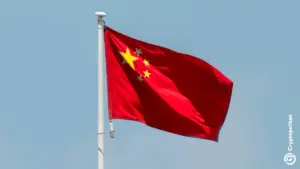


China defies expectations with strong September export and import growth
 Collins J. Okoth
3 mins read
Collins J. Okoth
3 mins read

- China’s exports rose by 8.3% in September, while its imports were up by 7.4%.
- U.S. President Donald Trump threatened to impose 100% tariffs on Chinese exports and tighter export controls on critical software.
- China also expanded restrictions on rare earth exports, set to begin in November.
Customs data showed on Monday that China’s exports for September surged by 8.3% year on year to $328.6 billion, which was higher than August’s 4.4%. The figure also surpassed the 5.65% forecast by Chinese financial data provider Wind.
China’s imports in September rose by 7.4% year on year to $238.1 billion, up from August’s 1.3%. The figure surpassed Wind’s 1.37% forecast for the month.
U.S. and China threaten to impose tariffs on each other
Customs data showed that Beijing’s exports rebounded in September after hitting a six-month low in August, while imports recorded their strongest gain in more than a year. The surge in outbound shipments was supported by recovering overseas demand and front-loading ahead of the ‘super golden week’ holiday.
Beijing also had a trade surplus of $90.45 billion for September, but the latest flare-up with the U.S. over the weekend has renewed uncertainty over the economic outlook. Both parties have traded levies and ramped up respective restrictions, threatening to overturn progress made after months of bilateral trade negotiations this year.
U.S. President Donald Trump threatened to impose 100% tariffs on Chinese exports and tighter export controls on critical software. China also expanded restrictions on rare earth exports. Some of the tariffs don’t take effect until November.
Beijing also broadened its ‘unreliable entities’ blacklist to include chip research firm TechInsights. The country’s Commerce Ministry cited national security concerns and prohibited Chinese individuals or organizations from sharing information with the Canadian-based company.
China and the U.S. impose charges on docking vessels at their own ports
The U.S. and China have also threatened to impose charges on each other’s ships for docking at their own ports. The charges are set to take effect on the same day, October 14.
Beijing will charge 400 yuan ($56) per net ton for U.S. ships docking at Chinese ports, matching the $50 per net ton charge the U.S. is imposing on Chinese ships. Both sides also plan to increase the fees over time through April 17, 2028, with the same effective dates.
The Chinese Ministry of Transport said the U.S. fees violate international trading principles and seriously damage China-U.S. maritime trade. Michael Hart, president of the American Chamber of Commerce in China, argued that in the short term, the initiative to impose fees on Chinese vessels will result in an increase in costs for U.S. consumers, a decrease in profits for shippers, and a small drop in demand for exports to the U.S. in certain categories. He also believes that in the long term, there could be more demand for non-Chinese ships.
The Center for Strategic and International Studies revealed that the U.S. accounts for only 0.1% of global shipbuilding, compared to 53.3% for China. The dominant Chinese market share prompted the U.S., starting with the Biden administration, to develop a policy that charges Chinese-made vessels when docking at U.S. ports.
“Ships and shipping are vital to American economic security and the free flow of commerce. The Trump administration’s actions will begin to reverse Chinese dominance, address threats to the U.S. supply chain, and send a demand signal for U.S.-built ships.”
-Jamieson Greer, U.S. Trade Representative.
China Customs spokesperson Lyu Daliang said at a news conference on Monday that the country hopes the U.S. will realize the mistake of raising port fees and urged Washington to return to dialogue and negotiation. He also stated that the new levies introduced by several countries this year have harmed businesses and disrupted the global economy. Daliang maintained that China remains committed to supporting multilateral trade.
China, the world’s largest importer of soybeans, has yet to resume purchases of America’s crops. Trump mentioned earlier this month that he hoped to urge President Xi Jinping at their planned meeting in late October to end the months-long moratorium on U.S. soybean purchases.
China’s Commerce Ministry said on Sunday that the U.S. should take back its tariff threat and urged further talks to resolve outstanding trade issues. The ministry stated that China will resolutely take corresponding measures to safeguard its legitimate rights and interests, if the U.S. persists in its own course.
The smartest crypto minds already read our newsletter. Want in? Join them.
Disclaimer. The information provided is not trading advice. Cryptopolitan.com holds no liability for any investments made based on the information provided on this page. We strongly recommend independent research and/or consultation with a qualified professional before making any investment decisions.
Collins J. Okoth
Collins Okoth is a journalist and markets analyst with 8 years of experience covering crypto and technology. He is a is a Certified Financial Analyst and holds a degree in Actuarial Mathematics. Collins has previously worked with Geek Computer and CoinRabbit as a writer and editor.









