






Federal clash escalates as CFTC targets fifth state in prediction market crackdown

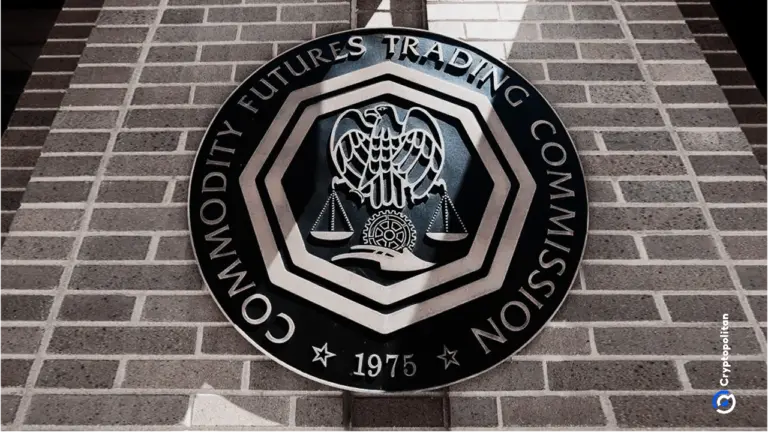
- The Commodity Futures Trading Commission (CFTC) sued Wisconsin for suing five prediction market companies.
- Wisconsin said Kalshi, Polymarket, Crypto.com, Robinhood, and Coinbase ran illegal sports bets within the state.
- Together, the CFTC has now sued Arizona, Connecticut, Illinois, New York, and Wisconsin in April 2026.
The Commodity Futures Trading Commission (CFTC) has intensified its legal battle over prediction markets, filing a new federal lawsuit against Wisconsin, making it the fifth U.S. state targeted in its escalating crackdown on state-level enforcement actions.
The lawsuit, filed Tuesday alongside the U.S. Department of Justice in the Eastern District of Wisconsin, argues that Wisconsin overstepped its authority by suing five prediction market platforms last week, including Kalshi, Polymarket, Crypto.com, Robinhood, and Coinbase. The federal regulator says those actions interfere with its exclusive jurisdiction over federally regulated derivatives markets under the Commodity Exchange Act.
What is a prediction market, and why is this a big deal?
In its complaint, the CFTC said Wisconsin’s attempt to “criminalize and shut down federally regulated markets” undermines the national framework Congress established for overseeing swaps and event contracts.
The agency maintains that prediction markets fall under federal derivatives law rather than state gambling statutes, creating a direct conflict between Washington and state regulators.
Prediction markets allow users to bet on the outcomes of real events, such as who will win a sports game or an election, or whether a company’s stock will rise. You buy and sell contracts with other users, and the price of each contract rises or falls depending on how likely people think an outcome is. Millions of people used companies like Kalshi and Polymarket in the U.S. during the 2024 and 2026 election cycles.
What did Wisconsin do, and why did it act?
Wisconsin Attorney General Josh Kaul filed three separate civil lawsuits against Kalshi, Polymarket, Crypto.com, Robinhood, Coinbase, and their affiliates. The state wants these gambling companies banned because it accuses them of running illegal sports betting.
According to Kaul, only tribal casinos can offer sports betting to Wisconsin residents, so any other platform would be breaking state law. Native American tribes have formal agreements with state governments across the U.S. that allow only them to offer certain types of gambling within the state.
Wisconsin’s Oneida Nation Chairman Tehassi Hill said, “There’s a very large disparity between what tribes face and have to do to have regulated gambling in the state of Wisconsin, as opposed to what these prediction markets are putting forth.”
Governor Tony Evers signed a bill that allows platforms to offer online sports betting only if their servers sit on tribal land in Wisconsin. However, prediction market companies don’t meet that condition.
What does the CFTC say, and why is it suing states instead of defending companies in court?
According to the CFTC, Congress gave the agency (not the states) exclusive authority to regulate such contracts, so they say event contracts fall within that category.
The CFTC argues that event contracts and bets differ because bets involve two parties agreeing to a wager, whereas event contracts are traded on a regulated marketplace.
Similarly, state laws cannot override authority given by Congress, so there’s little Wisconsin can do about it, even if the state law covered event contracts.
CFTC Chairman Michael Selig even said, “States cannot circumvent the clear directive of Congress.” he added, “Our message to Wisconsin is the same as to New York, Arizona, and others: if you interfere with the operation of federal law in regulating financial markets, we will sue you.”
Coinbase’s head of legal, Ryan VanGrack, chipped in, saying, “By moving to block state encroachment, the Commission has sent an unmistakable signal: the era of jurisdictional ambiguity is over.” He added, “Federal law is not a suggestion — it is the exclusive authority governing these markets.”
How did Wisconsin respond?
Wisconsin Attorney General Kaul responded to the CFTC’s lawsuit, saying, “Unlawful conduct doesn’t suddenly become permissible just because you call it something different.”
Kaul said he has the support of attorneys general from multiple states and from both political parties, ready to fight the CFTC’s position.
The CFTC sued New York Attorney General Letitia James just days earlier over the same lawsuit.
She responded, saying, “Once again, this administration is prioritizing big corporations over consumers and New Yorkers’ best interests. New York’s gambling laws are designed to protect consumers, whether they are placing bets in a prediction market or a casino.”
What is the CFTC’s position and legal argument?
On related development, the US Senate has unanimously barred lawmakers and their staff from participating in prediction markets, tightening ethics rules amid intensifying scrutiny of the platforms. The move follows growing concern in Congress over potential insider trading.
Prediction market firm Kalshi disclosed in an April 22, 2026, filing that it fined and issued five-year bans to three political candidates. As earlier reported by Cryptopolitan, the firm found out that the individuals had been betting on their own election races.
The next day, April 23, the Department of Justice announced the arrest of Army Special Forces Master Sergeant Gannon Ken Van Dyke. His arrest followed his indictment for using classified information for insider betting on Polymarket. The information was tied to the military operation to seize Nicolás Maduro, the President of Venezuela.
She responded, saying, “Once again, this administration is prioritizing big corporations over consumers and New Yorkers’ best interests. New York’s gambling laws are designed to protect consumers, whether they are placing bets in a prediction market or a casino.”
| State | What the state did | Where things stand |
| Arizona | Criminal charges against Kalshi over election and sports contracts | Federal court blocked prosecution — CFTC win |
| Connecticut | State action against prediction markets | CFTC lawsuit filed — pending |
| Illinois | State action against prediction markets | CFTC lawsuit filed — pending |
| New York | AG sued Coinbase and Gemini for running unlicensed gambling | CFTC sued NY on April 25, 2026 — pending |
| Wisconsin | AG sued Kalshi, Polymarket, Crypto.com, Robinhood, Coinbase for illegal sports betting | CFTC sued Wisconsin on April 28, 2026 — pending |
| Massachusetts | State-level action | CFTC filed a brief in the Supreme Judicial Court |
Bernie Moreno proposes a prediction market ban on government officials
Bernie Moreno, a senior United States Senator from Ohio, suggested a ban last week. The restriction aimed at prohibiting government officials’ exposure to prediction markets. After a vote on Thursday, the proposal took effect immediately. The rule applies to the Senators and their staff but does not affect the House or other government bodies.
“Taking part in prediction markets or trying to place bets based on inside information harms the trust our constituents have in us,” Moreno said on the Senate floor on Thursday.
Other lawmakers are advocating for a complete federal ban on these platforms. Greg Casar, a Democratic US Representative for Texas, and Chris Murphy, a junior United States Senator for Connecticut, have submitted a proposal to halt betting on acts of war.
Blake D. Moore, a US Representative for Utah, and Salud Carbajal, a Democratic US Representative for California, suggested a ban on betting linked to election outcomes and government counter-terrorism actions.
Charles E. Schumer, the Senator from New York, said in a statement that senators who trade on prediction markets risk turning Congress into a casino where members speculate on real-world events. This outlook, he says, destroys the core of democracy.
Schumer then recommended that the Speaker of the US House of Representatives, Mike Johnson, and the Trump administration enforce similar regulations. Todd Young, a senior United States Senator from Indiana, concurred with him.
On March 26, 2026, US Senator John Curtis shared an official US Senate webpage noting that he, Young, Elissa Slotkin, a US Senator for Michigan, and Senator Adam Schiff introduced the Public Integrity in Financial Prediction Markets Act of 2026. This legislation aimed at blocking federal workers from exploiting insider information for financial gain on prediction platforms.
Democrats have since accused members of the Trump administration of engaging in insider trading, pointing to a series of unusually well-timed, high-payout bets tied to military operations. However, the White House denied the claims, arguing that they have not violated any established ethics rules, including gambling prohibitions on White House property.
If you're reading this, you’re already ahead. Stay there with our newsletter.
Disclaimer. The information provided is not trading advice. Cryptopolitan.com holds no liability for any investments made based on the information provided on this page. We strongly recommend independent research and/or consultation with a qualified professional before making any investment decisions.

Nellius Irene
Nellius is a Business Management and IT graduate with five years of experience in the cryptocurrency industry. She is also a graduate of Bitcoin Dada. Nellius has contributed to leading media publications, including BanklessTimes, Cryptobasic, and Riseup Media.









