






- Some BOJ board members said Japan’s real interest rate is very low and hinted at more rate hikes, raising the policy rate to 0.75%.
- The BOJ remains uncertain about the neutral interest rate, estimated to be between 1% and 2.5%, and may adopt a flexible approach.
- Prime Minister Takaichi is not criticizing the rate hikes, while economists warn that further tightening may be necessary due to inflation and currency fluctuations.
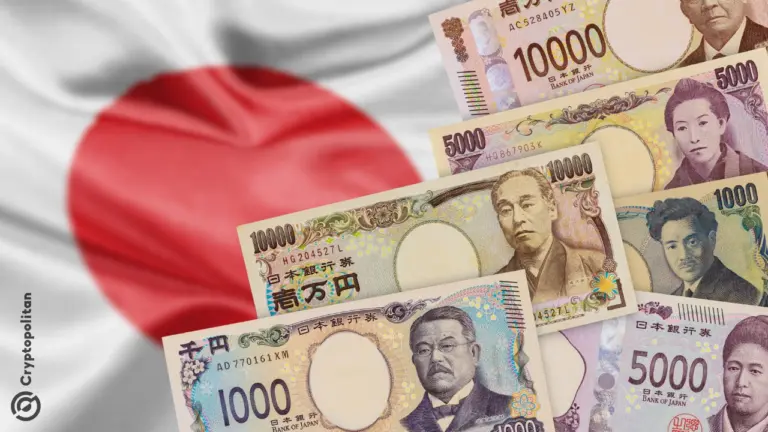
Some members of the Bank of Japan’s board have flagged the possibility of additional rate hikes after noting that the nation’s real interest rate remains very low despite a recent increase in the benchmark rate.
Emphasizing the seriousness of the situation, one of the nine board members pointed out that Japan’s real policy interest rate is currently the lowest in the world. This observation came during a two-day board meeting. In response, the members suggested that the BOJ should consider adjusting its monetary policy to address the effects of currency movements on prices.
BOJ members outline the challenges faced in achieving a neutral policy rate
Sources pointed out that the key takeaways from the two-day meeting clearly indicate that the Bank of Japan (BOJ) is still working on a neutral policy rate. To support this claim, one member of the bank’s board clarified that, “We can say there is still a significant distance to reach the neutral interest rate.”
After the member made this statement, the Governor of the BOJ, Kazuo Ueda, commented that they find it challenging to determine this level. Ueda made these remarks during a press conference just after the December 19 finding. At this particular moment, reports noted that a study carried out by the bank indicated that the neutral rate lies within a wide range of approximately 1% to 2.5%.
The study also demonstrated that some members concurred with Ueda’s argument on the neutral rate and acknowledged the difficulty in identifying it. This situation prompted several members to present some suitable solutions to address the matter.
One member proposed that it is prudent for the BOJ to embrace a flexible approach as it interprets this level. Another member argued that instead of focusing on a certain level, the bank should be flexible in making decisions regarding its policy.
In the meantime, sources mentioned that the BOJ decided to raise its policy rate to 0.75% at the end of the two-day meeting. This percentage represented the policy rate’s all-time high since 1995. It is worth noting that markets were not shocked by this increase because they mostly anticipated this shift in policy rate. This was after Ueda hinted at the possibility of lowering the amount of monetary easing before the decision.
Sanae Takaichi vows not to criticize Ueda’s plans
Concerning Ueda’s decision to increase the BOJ’s policy rate, reports noted that the Governor pointed out the growing uncertainties surrounding the future. He noted this situation at a time when the government’s demand for cheap loans conflicts with a weakening yen, consequently increasing the prices set on imports.
On the other hand, reports highlighted that the Prime Minister of Japan, Sanae Takaichi, is currently tackling issues related to a surge in the cost of living after previously describing the concept of raising rates as “stupid.”
Since assuming her role in October of this year, the Japanese first female prime minister has refrained from criticizing the plans Ueda adopts in attempts to lower monetary easing, concentrating instead on addressing concerns about inflation.
Nonetheless, sources highlighted that Takaichi should also consider adopting preventive measures to prevent bond yields from rising too rapidly as she prepares the government budget for 2026. This budget is typically released in late December.
Meanwhile, reports from earlier this month noted that benchmark 10-year bond yields reached a level of 1.97%, marking the highest peak in 18 years. This situation triggered the Governor of the BOJ to issue a warning that they are surging “somewhat fast.”
In a statement, Ryutaro Kono, chief Japan economist at BNP Paribas, argued that, “Given the Takaichi administration’s preference for low interest rates, we believe that rate hikes will likely happen about every six months,” adding that “the risk of the BOJ needing to speed up tightening due to currency changes is not small.”
Don’t just read crypto news. Understand it. Subscribe to our newsletter. It's free.
Disclaimer. The information provided is not trading advice. Cryptopolitan.com holds no liability for any investments made based on the information provided on this page. We strongly recommend independent research and/or consultation with a qualified professional before making any investment decisions.

Nellius Irene
Nellius is a Business Management and IT graduate with five years of experience in the cryptocurrency industry. She is also a graduate of Bitcoin Dada. Nellius has contributed to leading media publications, including BanklessTimes, Cryptobasic, and Riseup Media.









