







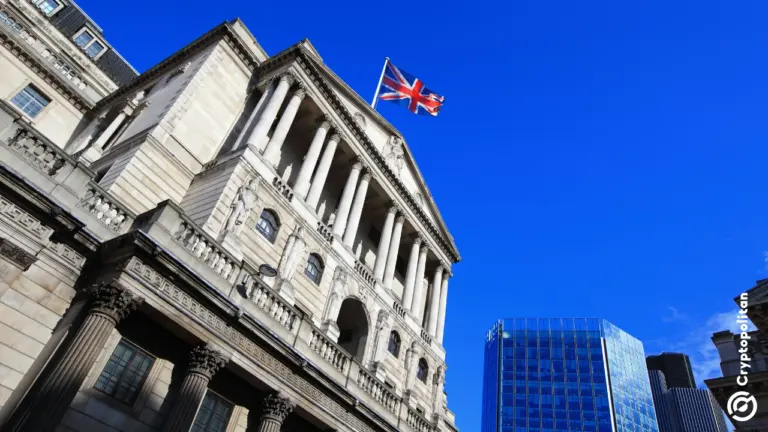
- The Bank of England plans to reduce its presence in London by shifting its financial regulation division.
- According to the bank, they regularly evaluate their national presence with offices located across the UK.
- In addition to the high cost of office, the BOE has also experienced financial challenges recently.
The Bank of England (BoE) plans to relocate its banking regulation department from its office on Moorgate Street in London, reducing its presence in the city. This decision is being considered due to increased remote work, budget cuts, and a surge in rental costs.
Sources close to the situation have indicated that in the next three years, the UK central bank will transfer its employees when their leases expire. Interestingly, many are set to resettle in the old building on Threadneedle Street nearby.
The 20 Moorgate building has served as the BoE’s Prudential Regulation Authority headquarters since it began renting out the space in 2012.
The London office market faces significant challenges as office costs rise rapidly
The UK central bank has announced plans to streamline its London office presence by mid-2028. According to the bank, it regularly evaluates its national presence with offices located across the UK. However, the BoE did not provide detailed information about the staff changes.
Regarding this decision to relocate, analysts have noted that this transition will enable the bank to optimize the use of its Threadneedle Street office, adapting to flexible working arrangements and budget constraints.
Meanwhile, it is worth noting that apart from its two locations in London, the BoE also runs an office in Leeds, northern England. Following recent reports, the bank plans to expand its Leeds-based office workforce to approximately 500 employees by 2027.
This situation illustrates a growing trend in the London office market, which sources highlight is currently undergoing many changes due to the adjustments firms are making to adapt to new working habits brought on by the pandemic.
Banks have taken various approaches to respond to such a scenario. For instance, some banks, such as Barclays Plc, motivate employees to spend more time in the office, while others reduce their rented space.
Another strategy employed by the BoE was to allow its workers to work from home for part of the week.
The BoE faces significant challenges in its operation
In 2012, the BoE signed a 15-year lease agreement for roughly 150,000 square feet of office space at 20 Moorgate. This new space was designed to house the newly established Prudential Regulation Authority (PRA). Sources also noted that the new office’s location was just a short walk from its main building on Threadneedle Street.
After careful consideration, they decided to extend the lease by a year; therefore, it will expire in the summer of 2028, when they plan to vacate the space.
Notably, office rents around the City of London have substantially escalated since the PRA occupied this space, now averaging around £55 ($74) per square foot. Sources highlighted this change after data from broker Savills Plc revealed that average prime rents in the area surpassed £100 per square foot at the end of the second quarter.
In addition to the high cost of office, the BoE has also experienced financial challenges recently. This was discovered after minutes from their July meeting underscored the need for an “ambitious” savings strategy as it ramps up investment in infrastructure.
According to reliable sources, this came after last year’s significant review by former Federal Reserve Chair Ben Bernanke, who criticized the bank’s predicting and communication methods.
In the meantime, the Bank of England reportedly assumed responsibility for supervising banks following the dissolution of the Financial Services Authority. Critics have long accused the authority of not paying sufficient attention to the risks banks took in the lead-up to the 2008 financial crisis.
The Governor of the Bank of England, Andrew Bailey, warned that recent events in US private credit markets have worrying echoes of the subprime mortgage crisis that triggered the global financial crash.
Talking before a House of Lords committee, the governor said it was important to have the “drains up” and analyse the collapse of two leveraged US firms, First Brands and Tricolor, in case they were not isolated events but “the canary in the coalmine”.
Don’t just read crypto news. Understand it. Subscribe to our newsletter. It's free.
Disclaimer. The information provided is not trading advice. Cryptopolitan.com holds no liability for any investments made based on the information provided on this page. We strongly recommend independent research and/or consultation with a qualified professional before making any investment decisions.

Nellius Irene
Nellius is a Business Management and IT graduate with five years of experience in the cryptocurrency industry. She is also a graduate of Bitcoin Dada. Nellius has contributed to leading media publications, including BanklessTimes, Cryptobasic, and Riseup Media.









